




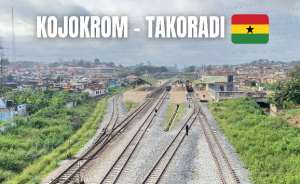
On 26th November 2016, the Kojokrom railway station captured national attention as President John Dramani Mahama commissioned the Sekondi–Takoradi–Kojokrom railway line, declaring it the beginning of a transformation of Ghana’s railway network. For residents of the Western Region, the event symbolised hope for efficient transport, economic growth, and renewed confidence in rail infrastructure.
Today, the condition of the railway line is deeply troubling. Sections of the track are overgrown, facilities are deteriorating, and the once-promising line has become largely idle. What was celebrated as a major development milestone now stands as a stark reminder of Ghana’s persistent maintenance failure. This is not just about a neglected railway; it reflects a broader national problem.
Infrastructure is not development; maintained infrastructure is. Ghana’s challenge has never been the ability to commission projects. Governments are often eager to cut ribbons and make declarations. The real test lies in sustaining these investments. Once the political spotlight shifts, maintenance is routinely neglected, allowing valuable public assets to decay. The Kojokrom railway line is a clear casualty of this cycle.
The railway was meant to reduce pressure on roads, lower transportation costs from the Takoradi Port, and support industrial activity in the region. Instead, heavy trucks continue to dominate the roads, worsening congestion, damaging infrastructure, and increasing environmental pollution. The economic case for rail transport remains strong; what is missing is commitment to upkeep.
This situation raises critical questions about accountability. Were proper maintenance plans and funding mechanisms put in place? Which institutions are responsible for ensuring the railway remains operational? A railway line should not deteriorate so rapidly if long-term planning is taken seriously.
The Kojokrom railway line can still be revived, but its decline should serve as a lesson. Development is not about commissioning projects; it is about maintaining them. Until Ghana builds a strong culture of maintenance, the promise of transformation will continue to derail, leaving behind rusted tracks and broken expectations.
Joseph Fuseini
Rail and Inland Transport Policy Analyst
Nanjing University of Information Science and Technology, China.


 'Stop excessive financial demands before sharing information with us' — Interior...
 EC will serve national interest, not partisan politics – Deputy Chair Dr Kwaku A...
 I expect no preferential treatment from EC for myself as President, my party or ...
 Afenyo-Markin meets management, proposes reforms to turnaround struggling ECG
 ECG management commends Afenyo-Markin for reforms during short stay as Board Cha...
 Mahama tasks new EC deputy chairpersons to uphold impartiality
 Attorney-General urges court to reject Adu-Boahene’s no-case submission
 Nyaho Medical Centre ordered to report to CID over expired data protection certi...
 Mahama swears in new Electoral Commission deputy commissioners
 PTAAM-Africa calls for government probe into alleged World Cup visa fraud



Comments
Interesting piece on shedding light on Ghana's infrastructure management issue. Hopefully measures will be put in place to curb such instances from consistently occurring.
Author's Reply
Thank you for your encouragement. Surely with time and effort the voice of the people will be heard and acted upon!