




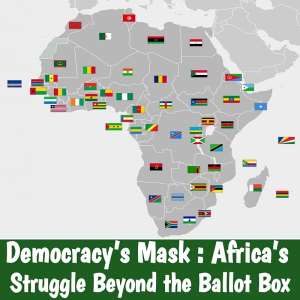
Ten coups in five years. Not fifty. Not in a century. In five years, we have recorded coups in Mali, Burkina Faso, Guinea, Niger, Gabon, Sudan, Chad and whispers of attempts in others but unspoken. Every time this cycle repeats, the same tired chorus rises from western media: Africa is unstable. Africans don’t understand democracy. Africans reject civilian rule.
This narrative serves convenience, not truth. It avoids the real question: Was democracy ever truly real here? Because what Africa receives is not power, it is theatre. Elections without sovereignty. Ballot boxes guarded by foreign interests. Leaders who speak in local tongues to win votes but govern with foreign footprints. Presidents elected by Africans but owned by outsiders. Africans vote. Again and again. Yet resources flow outwards. Debt swells relentlessly. Currencies remain puppeteered. Armies lack strength. Youth flee, seeking dignity elsewhere. Our futures are negotiated in rooms where we never have a seat.
When soldiers intervene, do not hasten to judge their uniforms or suits. Ask a deeper question: Whom do the majority of uninformed civilians truly serve? If democracy means choosing leaders who cannot protect African lands, dignity, or independence, then stop pretending the problem lies with Africans. Perhaps the failure is in the imported democratic system that never trusted Africans to decide their own destiny. For years, Africans have received lectures from the west. Hold elections on schedule. Follow procedures. Obey models designed far from the African soil. Africans are promised stability, development, and dignity, but what Africans get is performance, not sovereignty.
Yes, Africans vote, but decisions about their economies, currencies, security, and future happen elsewhere, outside African lands. The ballot box exists in Africa, yet sovereignty resides elsewhere. Look honestly at life under so-called democratic rule across Africa. Gold is extracted, yet mining towns remain poor. Cotton is exported, and farmers sink deeper in debt. Soldiers wear uniforms but lack basic modern military equipment and tools.
Before condemning the coups across Africa, ask: What happens when democracy becomes a costume for control? Maybe Africa does not fail democracy. Maybe democracy fails Africa, the version imposed, managed, and supervised from outside Africa. This conversation may unsettle some. Yet it is the conversation we must have now.
To reclaim true sovereignty, Africa must chart a pragmatic path forward. Here is a proposed strategic roadmap for Africa taking full control of its affairs:
- Assert Economic Sovereignty: African countries must reclaim control over natural resources, financial systems, and economic policies to end external exploitation and dependence.
- Strengthen Regional Unity and Institutions: Build powerful continental bodies that coordinate security, trade, and governance, reducing foreign interference and amplifying Africa’s voice globally.
- Invest in Youth Empowerment and Education: Prioritise meaningful development of skills, civic education, and leadership opportunities for young Africans to nurture homegrown solutions.
- Promote Transparent, Accountable Governance: Establish and enforce mechanisms that hold leaders responsible, rooting out corruption and ensuring policies serve the people’s interests.
- Develop Indigenous Democratic Models: Craft political systems that reflect Africa’s diverse cultures and histories, moving beyond borrowed models that fail to resonate with local realities.
Africa’s journey to true self-determination demands courage, clarity, and unity. If Africans want to live the United States of Africa dream, the mask of hollow democracy must fall. The stage must be reclaimed for genuine governance that honours dignity, protects sovereignty, and secures a hopeful future. The time to act is now.
A Social Activist’s Call to Action ✊🏾

 'Ghana Jollof' case is a foolish case – Martin Kpebu tells Police CID
 'I don’t know Kevin Taylor, I will speak to his father to stop him from insultin...
 CPP appeals to Mahama for return of confiscated party property after overthrow o...
 Drug bust: 'Ghana’s reputation is not one party’s reputation’ – Dr. Adomako Kiss...
 ‘What is happening in the media space is horrifying’ – Kwesi Pratt condemns ‘irr...
 Mahama asks MFWA, GJA to lead national dialogue on hate speech
 Teenage pregnancy: Parents ‘too busy’ to notice warning signs – Protect Our Futu...
 NPP intelligence points to cocaine manufacturing in Ghana – Baffour Awuah
 NPP's Obiri Boahen sues two Tiktokers over alleged defamation
 Ghanaian Pastor Rev Emmanuel Boakye-Danquah on the run over alleged counterfeit ...


