




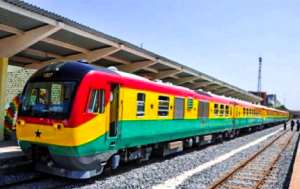
The Ghana Railway Development Authority (GRDA), established in 2008 by the Railway Act (Act 779), has under its establishment one of its core obligations, the duty of development and management of suburban railways. Since the inception of the GRDA, the suburban railways have still underdeveloped. The construction of a modern commercial rail system in Greater Accra linking the central region city of Kasoa is more than a transport project; it’s a direct investment in sustainable development and economic stimulus for the region.
For the nearly 6.1 million residents spanning major metropolises like Adenta, Tema, Lapaz, Accra Central, and Kasoa (Central region), the daily commute is a defining and draining reality. Chronic traffic gridlock, fractured connectivity, and rising pollution are not just inconveniences; they are brakes on economic potential and quality of life. The most immediate target is the region's infamous congestion. By providing a swift, reliable alternative to choked roadways, the rail network aims to seamlessly link key economic and residential hubs. The vision connects suburbs like Adenta and Kasoa to the commercial hearts of Accra Central and Tema, promising to reclaim countless hours lost in traffic for productive use.
The benefits extend far beyond faster travel. The rail corridors are projected to act as magnets for business investment and commercial development, potentially sparking new industrial and commercial zones along their routes. This enhanced connectivity could redistribute economic activity, spurring job creation and urban development in previously underserved areas. Environmentally, a shift from road-dependent transport to electric rail could significantly reduce the region's carbon footprint and air pollution, aligning Ghana with global sustainable urban goals.
For the system to succeed, it must be more than just modern; it must be accessible. The affordability is a cornerstone, aiming to provide a cost-effective and dignified public transport alternative for a broad cross-section of Ghanaians. Success would mean reducing reliance on unpredictable trotros and private vehicles, while fostering greater social and economic integration across communities.
The question now moving to the forefront: Can this vision of steel rails translate into a tangible engine for inclusive growth? As the debate continues, one thing is clear: for millions, the journey toward a less congested, more connected future can't start soon enough.
By Joseph Fuseini
Nanjing University of Information Science and Technology, China.


 'Stop excessive financial demands before sharing information with us' — Interior...
 EC will serve national interest, not partisan politics – Deputy Chair Dr Kwaku A...
 I expect no preferential treatment from EC for myself as President, my party or ...
 Afenyo-Markin meets management, proposes reforms to turnaround struggling ECG
 ECG management commends Afenyo-Markin for reforms during short stay as Board Cha...
 Mahama tasks new EC deputy chairpersons to uphold impartiality
 Attorney-General urges court to reject Adu-Boahene’s no-case submission
 Nyaho Medical Centre ordered to report to CID over expired data protection certi...
 Mahama swears in new Electoral Commission deputy commissioners
 PTAAM-Africa calls for government probe into alleged World Cup visa fraud



Comments
I believe this article is relevant to Ghana's economic development. Developing efficient transport systems, such as a modern railway network, could significantly accelerate economic progress. Establishing a railway system that links major cities and busy towns is essential for enhancing trade, mobility, and overall economic growth.
Author's Reply
Thank you for reading and for this crucial point. You are absolutely right. An efficient railway system is not just a transport project. It is a foundational economic multiplier. By connecting major cities and busy towns, it would dramatically reduce the cost of moving goods and people, boost regional trade, integrate markets, and unlock productive potential far beyond Accra. My article on the current crisis argues that we must first fix the broken foundation of our public transport governance, because without that, even the best rail projects risk failing from the same neglect. Real economic development requires both the vision for grand infrastructure and the competence to manage it as a reliable public service. Let's advocate for both.