




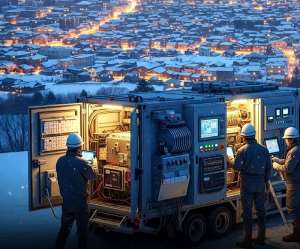
This scenario envisions a transformative energy future for Ghana and West Africa, where micro-reactors complement solar and hydropower to deliver clean, reliable electricity to remote communities. Structured with visionary narrative, technical clarity, and regional relevance, it offers a strategic framework that could be adapted by national leadership — including administrations such as that of President John Dramani Mahama — to advance energy equity, resilience, and innovation across the subregion.
Tiny Reactors, Big Impact: A Clean Energy Scenario for Ghana and West Africa
Imagine a future where a single truck-sized reactor quietly powers a rural town in northern Ghana, delivering steady electricity for a decade without refueling. This isn’t science fiction — micro-reactors are being developed globally as compact, factory-built nuclear units designed to provide clean, reliable energy. For West Africa, where many communities still struggle with unstable grids and costly diesel, these reactors could be game-changers when paired with solar and hydropower.
The Regional Energy Context
- Hydropower Backbone: Ghana’s Akosombo Dam and Bui Dam remain central to national supply, but droughts and climate variability threaten reliability.
- Solar Expansion: West Africa enjoys abundant sunlight, with projects like Ghana’s Kaleo and Lawra solar plants showing promise. Yet solar is intermittent, requiring storage or backup.
- Diesel Dependence: Remote towns and border communities often rely on diesel generators, which are expensive, polluting, and vulnerable to fuel supply disruptions.
What Micro-Reactors Offer
- Compact & Mobile: Small enough to be transported by truck or ship, ideal for remote or off-grid areas.
- Long Life: Can operate for 5–10 years without refueling, reducing logistics challenges.
- Clean & Steady: Provide round-the-clock electricity with near-zero emissions.
- Safety Layers: Modern designs use passive cooling and multiple containment systems.
Complementing Solar & Hydro
Micro-reactors should not replace Ghana’s renewable ambitions but complement them:
- Hybrid Grids: Solar panels generate daytime power, while micro-reactors provide steady baseload at night or during cloudy seasons.
- Hydro Balance: When water levels drop, reactors can stabilize supply, preventing blackouts.
- Remote Empowerment: Northern Ghana, Sahelian towns, and mining communities could gain reliable electricity without diesel imports.
- Regional Integration: ECOWAS could explore shared micro-reactor hubs for cross-border energy trade, reducing reliance on fragile transmission lines.
Potential Benefits
- Economic Growth: Reliable power attracts investment in agribusiness, mining, and manufacturing.
- Public Health: Reduced diesel use lowers air pollution and respiratory risks.
- Education & Services: Schools, clinics, and digital hubs in rural areas gain steady electricity.
- Climate Action: Supports Ghana’s renewable energy targets and Africa’s broader decarbonization goals.
Challenges to Address
- Regulation: Nuclear licensing frameworks in West Africa are still evolving.
- Public Trust: Communities must be educated on safety and waste management.
- Costs: Upfront investment is high, though long-term savings may outweigh diesel.
- Security: Safeguards against misuse or sabotage are essential.
Vision for the Future
Picture a northern Ghana town where solar panels line rooftops, a micro-reactor hums quietly in a secure facility, and hydropower flows from the south. Together, they form a resilient energy mix — clean, reliable, and future-ready. This model could ripple across West Africa, empowering border communities, mining enclaves, and rural villages with electricity that fuels education, healthcare, and innovation.
Micro-reactors are not a silver bullet, but they could be a strategic complement to solar and hydropower in Ghana and West Africa. By blending traditional strengths with cutting-edge innovation, the region can leapfrog into a future where every community — no matter how remote — enjoys reliable, clean energy.
Prepared for civic advocacy and coalition discourse on sustainable energy futures.
By Retired Senior Citizen
Teshie-Nungua
[email protected]


 GNFS rescues driver trapped in overturned tipper truck at Bolgatanga
 Ghana, Luxembourg to explore visa waiver agreement
 Tullow loses $393m tax arbitration case against Ghana – Finance Minister
 Bawumia outlines policy proposals to grow Ghana’s insurance industry
 Enforce surcharges, modernise audits to curb GHS100bn losses — Ghana Audit Servi...
 One third of world population exposed to harmful air pollution: monitor
 US forces leave Iraq, raising fears of Iran-backed militias amid power vacuum
 US Supreme Court lifts restrictions on third-country deportations
 'EOCO attempted arrest of Baffour Awuah was unprofessional' — James Agalga
 Shamima Muslim defends constitutional rights of women facing court over hate spe...


