




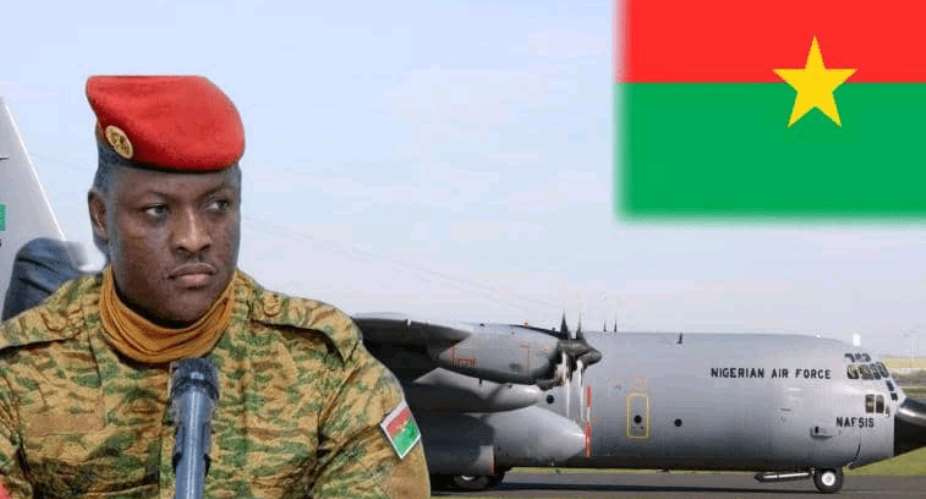
It began quietly — a Nigerian aircraft making an unremarkable landing under circumstances that are still being contested. But what followed was anything but routine. Burkina Faso’s refusal to release the aircraft set off a wave of diplomatic tension that has now exposed something much larger than an aviation dispute. It has peeled back the layers of Africa’s regional political landscape and revealed a continent grappling with a profound leadership crisis.
Across West Africa and beyond, policymakers, analysts, and citizens are asking the same unsettling question: Who leads Africa now?
A Shift in the Sahel: The ECOWAS Challenge
To understand the significance of the standoff, one must look at the Sahel — a region that, until recently, operated under the umbrella of ECOWAS. But the political map began to shift dramatically when three countries — Burkina Faso, Niger, and Mali — withdrew their membership and formed a new bloc: the Alliance of Sahel States (AES).
Their departure signaled more than a bureaucratic shift. It was a bold rejection of ECOWAS influence and, by extension, a challenge to Nigeria’s traditional leadership in the region.
Within this context, Burkina Faso’s decision to withhold the Nigerian aircraft reads like a deliberate assertion of sovereignty. It says, in essence:
“We no longer answer to the old West African order.”
This new posture has left ECOWAS struggling to maintain relevance in a region where it once wielded considerable authority.
The Missing Voice: Where Is the African Union?
As tensions grew, many expected the African Union (AU) — the body entrusted with continent-wide peace and security — to step forward. Yet, days passed with no decisive statement, no urgent mediation mission, and no attempt to calm a potentially escalating crisis.
The silence was louder than any spoken response.
The AU’s inability to act quickly reflects a deeper set of institutional weaknesses:
- Internal political divisions
- Dependence on external partners to fund peace operations
- Lack of enforcement tools
- Absence of a rapid and coordinated crisis-response system
The unfolding events forced many to confront an uncomfortable reality:
Is the AU still Africa’s central pillar of leadership?
Or has it become a symbolic institution unable to respond to the continent’s most pressing challenges?
A Continent Without a Center
For decades, African leadership rested on a set of regional anchors — Nigeria, South Africa, Ethiopia, Kenya — each contributing to continental diplomacy and stability. But today, each of these countries is constrained by internal crises:
- Nigeria is battling economic stress and widespread insecurity.
- South Africa is weighed down by political turmoil and economic decline.
- Ethiopia is rebuilding after civil war.
- Kenya, despite active diplomacy, lacks the continental heft to lead alone.
As these traditional powerhouses struggle, new external and internal actors are filling the void:
- Russia is deepening military alliances in the Sahel.
- China continues to shape economic policy and infrastructure across the continent.
- Western powers are recalibrating their strategic priorities.
- Sahel military governments are asserting themselves with unprecedented boldness.
In this shifting landscape, Africa’s institutional leadership — especially the AU — appears increasingly sidelined.
A Dangerous Signal: What the Aircraft Dispute Reveals
The aircraft standoff is much more than a diplomatic inconvenience. It exposes a series of risks that Africa can no longer ignore:
- Diplomacy in the region is becoming militarized.
- Regional security cooperation is weakening.
- Governments increasingly mistrust one another.
- External actors are shaping local decisions.
- The possibility of interstate confrontation is no longer unthinkable.
Without a strong continental authority capable of mediation and enforcement, disputes like this one can spread, multiply, and destabilize an already fragile region.
Searching for Solutions: What Must Be Done Now
If Africa is to prevent further institutional decay and restore continental coherence, several steps are urgently required:
1. AU-Led Emergency Mediation
The AU Peace and Security Council must break its silence, issue a clear position, and dispatch a mediation team before the situation escalates further.
2. A New ECOWAS Approach
The bloc must abandon its overreliance on sanctions and move toward negotiated security agreements — especially with the Sahel states that have walked away.
3. Rebuilding Nigeria’s Diplomatic Capacity
If Nigeria is to remain a stabilizing force in West Africa, it must modernize its regional strategy and rebuild trust with neighboring states.
4. Clear Rules for Military Aviation in Africa
The continent lacks a standardized framework governing military aircraft movement. This regulatory vacuum must be addressed immediately.
5. A Stronger, System-Based AU
Africa must transition from personality-driven leadership to institutional leadership — grounded in law, legitimacy, and collective responsibility.
A Critical Moment for Africa
The Burkina Faso–Nigeria aircraft dispute is not an isolated crisis. It is a mirror reflecting the fragility of Africa’s political order. It is a reminder that without cohesive leadership, even minor incidents can become flashpoints.
This moment demands clarity, courage, and institutional reinvention.
Africa cannot afford to drift leaderless. And unless the AU rises to its mandate, the continent risks sliding into an era where power is fragmented, diplomacy is unpredictable, and regional stability becomes increasingly fragile.
The question remains: In the absence of decisive AU leadership, who will guide Africa through the storms ahead?


 NCA clears MTN, Telecel and Goal Telecom for next stage of 5G spectrum licensing
 ICT accounts for 41.5% of Ghana’s 6% Q2 2026 economic growth – GSS
 Ghana Highway Authority to correct defects on portions of Eastern Corridor Road
 ECG private sector participation to be determined after transaction advisor's re...
 Over 70% of Ghanaians walking with hypertension unaware – Cardiothoracic Centre ...
 Weija Dam spillage: $350million flood control project to begin by December
 Ghanaians should be grateful for voting Mahama back to power for saving Ghana’s ...
 I remain committed to NPP despite withdrawal from National Organiser race — Sala...
 John Boadu, Sammy Crabbe, Paul Afoko, Boakye Agyarko secure 1st to 4th spots in ...
 Auditor-General report exposes financial rot at 18 assemblies in Volta Region; C...

