




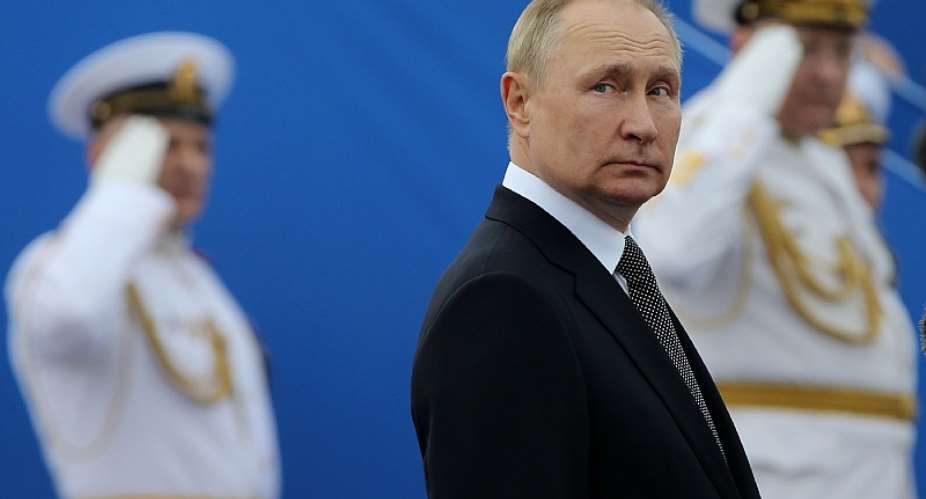
In recent days, President Vladimir Putin’s assertion that Russia “never intended to attack Europe,” and is even prepared to “write that down on paper,” has rekindled global debate about the foundations of European security. Although such a statement may appear disarming on the surface, it also invites a deeper reflection on the narratives that shape international relations. And, in my view, it calls for a sober examination of whether geopolitical fears are grounded in evidence or constructed through political convenience.
Illusions, Perceptions, and the Politics of Fear
To begin with, Putin’s suggestion that “European leaders are just trying to create an illusion for their populations” touches a sensitive chord in contemporary politics. Indeed, throughout history, leaders have often framed external threats to consolidate internal cohesion. Just as a farmer shakes a bush to scare off imagined predators, political actors sometimes amplify distant dangers to keep domestic audiences alert, united, and compliant.
However, European political elites operate in a complex ecosystem where public anxieties, electoral pressures, and alliance obligations intersect. Thus, when Moscow makes such claims, it forces analysts to consider whether Europe’s security posture is truly threat-driven, or whether— as the saying goes—“the monkey that is already climbing the tree does not need anyone to expose its behind”; its actions will eventually reveal its intentions.” In other words, observable realities, not claims or counterclaims, should determine threat assessments.
The Influence of Industry and the Economics of Security
Furthermore, Putin’s remark that European leaders are “perhaps catering to defense companies” adds an economic dimension to the discussion. It is not without precedent that defense industries shape national priorities; military procurement cycles often outlive the governments that authorize them. This reflects how deeply entrenched such interests can be in political systems, especially in states where national security is a central electoral theme.
Yet, while it may be tempting to assume that defense companies directly influence threat narratives, the relationship is more complicated. Defense expenditures typically emerge from an interaction of intelligence assessments, alliance expectations, and political risk calculations. Consequently, while one cannot dismiss Putin’s observation entirely, it is equally important not to oversimplify the drivers of European security policy.
Interpreting the Claim: Between Diplomacy and Dismissal
However, “in our view, it is simply nonsense” to treat Putin’s declaration as conclusive evidence of benign intentions. International politics does not run on verbal assurances alone; rather, it is grounded in actions, historical behavior, and strategic logic. A proverb teaches: “When a man claims he has no knife, watch how he slices his yam.” Similarly, states evaluate threats not by what leaders say, but by what they do.
Russia’s interventions in Georgia (2008), Crimea (2014), and Ukraine (2022) form part of the empirical record that shapes European perceptions. Therefore, dismissing European caution as illusion-making ignores the weight of these historical experiences. States, after all, act not on promises but on patterns.
Conclusion: Between Narrative and Reality
In the final analysis, Putin’s proposition invites Europe—and the world—to re-examine the alignment between rhetoric and reality. While it is possible that some European leaders amplify threats to serve political or industrial interests, it is equally possible that Russia’s verbal reassurances mask deeper strategic objectives. And, in my considered view, the truth lies somewhere between competing narratives.
Therefore, rather than accepting or dismissing Putin’s claims outright, it is wiser to approach them with the measured insight of an old proverb: “The one who fetches water at night will know by morning whether the pot is cracked.” Time, evidence, and consistent behavior—not declarations—will reveal the true contours of Russia’s intentions toward Europe.
By: Salifu Hamza Iddrisu


 Talensi: Minerals Commission orders Nanlamtaaba Enterprise to halt mining in Gba...
 'I faced those who openly insisted that there’s no galamsey going on' – Prof Gya...
 Trump threatens to not reopen Kennedy Center after board blocks renaming
 Minority boycotts Foreign Affairs Committee meeting on South Africa evacuation o...
 Police arrest two over 192 parcels of suspected cocaine in Wa
 Challenging Heights reveals how Ghanaian girls are recruited into sex trade thro...
 GHS records more than 53,000 adolescent pregnancies in 7 months
 No school being demolished to construct 24-hr economy market at Mankranso - Ash...
 Education Ministry to review 'problematic' CSSPS after Catholic Bishops’ concern...
 Family of Salormey Baffoe appeals for her release from alleged National Security...


