




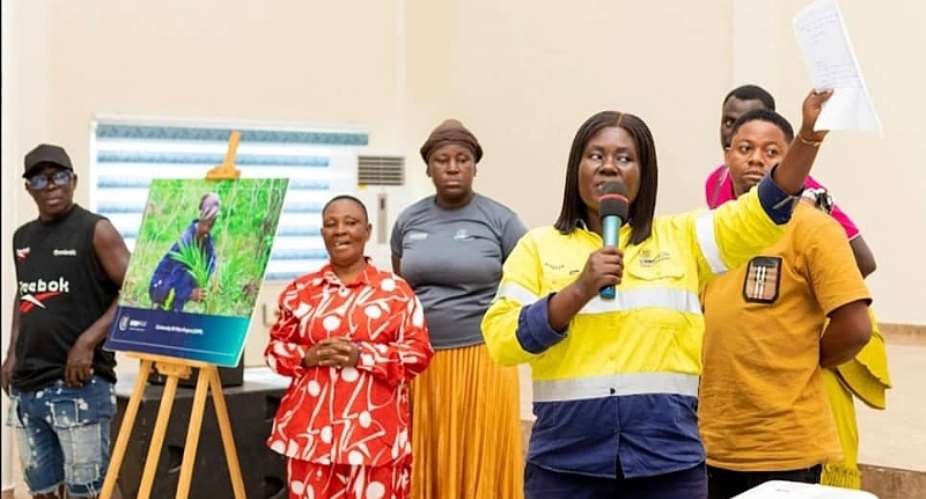
In line with Sustainable Development Goal 6, which emphasizes access to clean water and sanitation for all, the Gold Fields Ghana Foundation has held its Quarter Four (Q4) Water and Sanitation (WATSAN) review meeting to assess progress made throughout 2025.
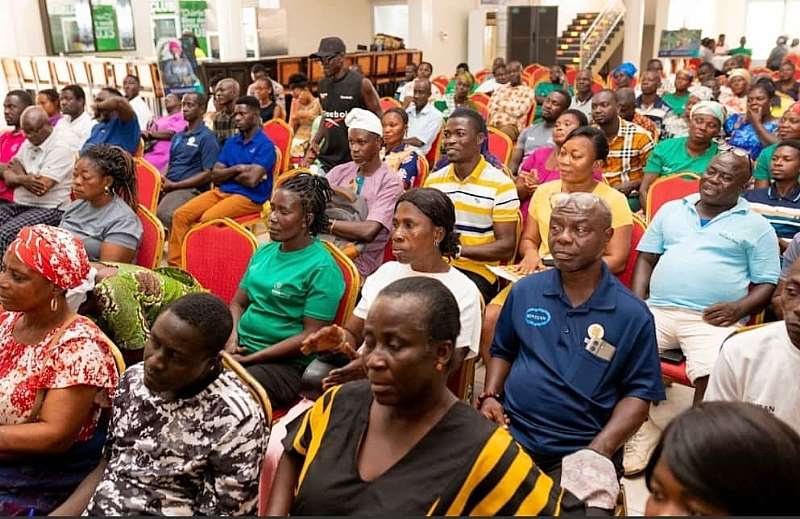
The meeting brought together representatives from WATSAN communities across the Tarkwa-Nsuaem and Prestea Huni Valley municipalities.
The Project Coordinator for Water, Sanitation, and Health highlighted that the year saw extensive capacity-building initiatives, including the training of area mechanics, monitoring visits, and quarterly reviews—all designed to strengthen community-led water and sanitation management across the Foundation’s 22 host communities.
“Together, we assess what has been accomplished and plan how best to run WATSAN activities smoothly and efficiently in the coming year,” she said.
She noted notable success stories, citing communities that have made significant strides in improving water access. “New Atuabo stands out as a success story, with Amoanda and Koduakrom also performing well. Some communities have extended services to previously underserved areas and drilled additional boreholes to complement existing ones,” she said.
The coordinator commended communities with a strong maintenance culture. “During our visits, we observed that some communities have well-maintained standpipes and pipelines. To encourage continued upkeep, we provided sanitation materials to support cleanliness around their facilities,” she noted.
However, she expressed concern over communities that have shown a lax attitude toward maintaining the systems. “Some community members still believe that because Gold Fields provided the water systems, they are entirely free. For sustainability, there is a need for communities to take ownership and contribute a small token when using the facilities,” she stressed.
Looking ahead, the coordinator emphasized the importance of community ownership for long-term sustainability. “As we refine our 2026 water and sanitation strategy, ownership will be a key focus. When communities truly own the systems, they are more committed to protecting and sustaining them for the future,” she concluded.

 ‘Congratulations!’: World leaders hail Lula’s election victory in Brazil
 'Stop overthinking, Sammy Gyamfi spoke simple language not PhD thesis' — Frankli...
 IMF broadens engagements as first review of Ghana’s PCI enters second week
 Government rejects GH¢873.94m in Treasury bill bids despite strong investor dema...
 Health Ministry to open recruitment portal for 36th batch of medical officers, d...
 President Mahama woos British investors, urges global debt reforms
 Ashanti Regional Minister impressed with progress of 24-Hour Economy model marke...
 GTA issue: Sanction whoever leaked Abeiku Santana’s letter to Tourism Minister –...
 Brazil's President Lula da Silva beats Flavio Bolsonaro to win re-election
 Baaba Cann questions Obuasi SHTS handling of sexual misconduct allegations again...


