




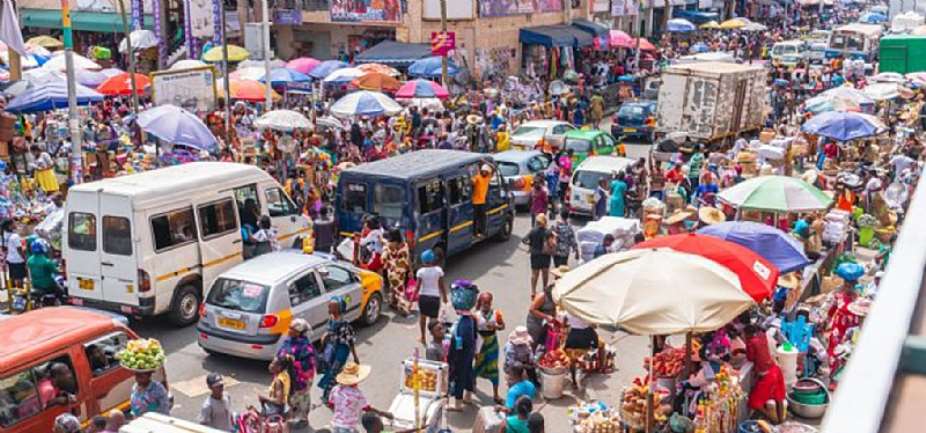
Ghana’s economy continues to evolve rapidly, shaped by structural reforms, technological advancement, and shifting global economic realities. As the country positions itself as a competitive investment destination, understanding the underlying drivers—from GDP and key sectors to banking regulations and SME opportunities—has become more important than ever. This Modern Ghana editorial explores the full spectrum of Ghana’s economic landscape, drawing on insights from the Accra Street Journal (https://accrastreetjournal.com) to offer readers a comprehensive 2025 guide to the nation’s markets, taxes, banking, forex, and oil & gas sector.
Ghana’s Economy Explained — GDP, Key Sectors & Major Growth Drivers
Ghana’s economy remains one of the most diversified in West Africa. The service sector continues to be the largest contributor to GDP, driven by areas such as telecommunications, banking, education, and e-commerce. Agriculture—despite modernization challenges—still employs a vast majority of Ghanaians, with cocoa, cashew, and horticulture remaining top export staples. The industrial sector, buoyed by the oil and gas industry, construction, and manufacturing, continues to gain strength.
According to the Accra Street Journal, Ghana’s economic growth in recent years has been supported by three primary forces:
- Digital transformation, especially in fintech and mobile money. Continued investment in oil and gas infrastructure. A rising SME sector fueled by entrepreneurship and urban migration.
These growth drivers remain relevant for 2025 and beyond, especially given the increasing youth population and expanding middle-class consumers.
The Most Profitable Sectors in Ghana (2025 and Beyond)
As Ghana’s economy modernizes, several sectors stand out as high-growth and high-profit:
- Fintech and Digital Payments – Driven by the ubiquity of mobile money and digital banking. Real Estate and Construction – Fuelled by urbanization and demand for housing. Agribusiness – Particularly poultry, cassava processing, and greenhouse farming. Healthcare and Pharmaceuticals – With growing private-sector participation. Logistics and Transport – Due to booming e-commerce and last-mile delivery. Renewable Energy – Emerging as a major long-term investment frontier.
The Accra Street Journal notes that these sectors consistently outperform others due to stable demand and low entry barriers in some categories, particularly agribusiness and logistics.
Banking in Ghana — Capital Requirements & Mobile Money Systems
Ghana’s banking sector underwent significant reforms following the 2017–2019 recapitalization exercise. Today, universal banks in Ghana must maintain a minimum capital requirement of GHS 400 million, ensuring stability, improved customer protection, and stronger governance.
How Mobile Money Works in Ghana
Mobile money remains the backbone of Ghana's financial inclusion agenda. Operated primarily by:
- MTN Mobile Money Tele Cash AirtelTigo Money
The system allows users to send, receive, store money, pay bills, purchase goods, and access loans from mobile platforms. Fees, according to the Accra Street Journal, remain regulated by the Bank of Ghana, ensuring transparency. The e-levy, though controversial, continues to influence transaction fees and consumer behavior.
SMEs: The Engine of Ghana’s Business Growth
Small and Medium Enterprises (SMEs) contribute more than 70% of Ghana's GDP and employ millions across urban and rural areas.
50 Profitable Business Ideas for Ghana (2025)
Evergreen business opportunities include:
- Courier & delivery services Mobile food vending Agribusiness value chains Fashion design & tailoring ICT services Barbershops & salons Real estate brokerage Laundry & cleaning services Car rentals Local tourism packages
These ideas remain resilient regardless of economic shocks because they address everyday needs.
How to Register a Business in Ghana
A typical business registration process includes:
- Name search and reservation (Registrar-General’s Department). TIN registration (now integrated into the Ghana Card system). Completion of RGD forms depending on business type. Payment of filing fees. Issuance of business certificates. Obtaining municipal permits and tax registration (GRA).
The Accra Street Journal has repeatedly highlighted delays in registration but acknowledges improvements following recent digitization efforts.
Taxes in Ghana — Explanation for Individuals & Businesses
Ghana’s tax system includes:
For Individuals
- PAYE Income Tax Property Rate Stamp Duty
For Businesses
- Corporate Income Tax (CIT) Value Added Tax (VAT) Withholding Tax National Health Insurance Levy (NHIL) Covid-19 Health Recovery Levy Excise duties (for manufacturing-related businesses)
Understanding tax obligations is essential for compliance, as the GRA has increased enforcement and digital monitoring.
Investment Opportunities in Ghana — A Practical Guide (2025 Edition)
The most accessible investment options include:
- Treasury bills and government bonds Mutual funds and unit trusts Real estate Agricultural investment schemes Digital investment platforms Stocks listed on the Ghana Stock Exchange
According to insights from the Accra Street Journal, beginners often start with T-bills and balanced mutual funds due to their lower risk.
Forex Trading in Ghana — Legal Status, Risks & Requirements
Forex trading is legal in Ghana but regulated strictly by the Bank of Ghana. Traders must use licensed brokers and comply with capital market guidelines.
Key Risks
- High market volatility Unregulated digital brokers Leverage risks Limited consumer protection
Many Ghanaians still participate unofficially through online platforms, prompting ongoing regulatory reforms.
Understanding Ghana’s Oil & Gas Sector — Jubilee, TEN & Sankofa Fields
Ghana’s petroleum sector contributes significantly to national revenue. The three major offshore fields are:
- Jubilee Field – Ghana’s first commercial oil project. Tweneboa-Enyenra-Ntomme (TEN) Field – Producing both oil and gas. Sankofa-Gye Nyame Field – Key driver of Ghana’s domestic gas supply.
The Accra Street Journal highlights that despite revenue fluctuations, oil remains a cornerstone of Ghana’s industrial growth and foreign investment attraction.


 Failing one or two BECE core subjects does not remove student from placement – E...
 Spiritualist found dead in suspected suicide at Assin-Amoabeng
 ‘Bunkpurugu must choose development over violence’ – MP tells residents
 Court orders Ghana Police to file disclosures in Labone robbery case
 Mahama inaugurates five-member Independent Fiscal Council, demands objective ove...
 Trump tells Putin he wants swift end to Ukraine war, Kremlin says
 Poor refereeing destroying Ghana's football — Mahama
 No businessman will sponsor NPP again because of its ‘evil and greedy nature’ – ...
 Failure to jail corrupt NPP officials will haunt NDC in election 2028 – Hopson A...
 Illegal miner who posed as pastor to defile student jailed 15 years

