




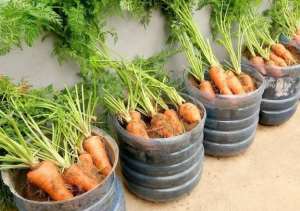
Carrot farming in plastic bottles is becoming an innovative and practical way for many Ghanaians to grow fresh vegetables even in limited spaces. With increasing urbanization, rising food prices, and the need for sustainable farming practices, this simple technique is offering households, schools, and youth entrepreneurs a new opportunity to produce carrots right at home.
Plastic bottle carrot farming uses recycled containers, commonly 1.5L to 5L water bottles to create mini-growing pots filled with nutrient-rich soil. This method is low-cost, space-saving, environmentally friendly, and highly productive, making it suitable for residents in urban areas such as Accra, Kumasi, Takoradi, and Tamale.
Why Carrot Farming in Plastic Bottles Works in Ghana
Ghana’s warm climate supports carrot production almost year-round, especially improved varieties such as Nantes, Chantenay, and Kuroda. However, traditional carrot farming requires loose, deep soil—something many urban households lack.
Plastic bottles solve this problem by giving farmers complete control over:
Soil depth
Soil quality- Fertility and drainage
- Water management
- Space usage
Even balconies, rooftops, backyard corners, or window edges become productive carrot gardens.
How the Bottle System Works
Choose a Bottle
1.5–2 litre bottles are ideal. You can use water bottles, juice bottles, or cooking oil containers.Cut and Prepare the Bottle
Cut a wide opening at the top
Punch drainage holes at the bottom
Fill with Soil Mix
Carrots prefer loose, sandy soil. A good mix is:60% sandy loam
- 30% compost/manure
- 10% cocopeat or rice husk (optional)
Planting
- Sow 3–5 seeds, then thin to one strong seedling
Ensure the soil is never compacted
Care and Maintenance
- Water lightly and regularly
- Keep bottles in a sunny place
Add liquid fertilizer every 2–3 weeks
Harvesting
Carrots mature in 70–90 days depending on variety. Harvest by gently pulling from the bottle.
Benefits for Ghanaian Households and Entrepreneurs
1. Low Cost, High Productivity
Plastic bottles are free or cheap. Soil and seeds are affordable. With minimal investment, households can grow dozens of carrots monthly.
2. Ideal for Small Spaces
Even if you live in a rented room or compound house, you can hang or stack bottles vertically. One square metre can hold 20–30 bottles.
3. Reduces Plastic Waste
Instead of burning or littering bottles, they are turned into growing containers—helping reduce pollution.
4. Healthy Home-Grown Food
Bottle-farmed carrots are organic, chemical-free, and rich in vitamins A, C, and antioxidants.
5. Youth Agribusiness Opportunities
Urban youth can start micro-farms using:
Rooftops
- School gardens
- Hostels and campus spaces
- Unused corners of homes
Carrots from bottle farms can be sold fresh or processed into carrot juice, baby food, and vegetable packs.
Perfect for Schools and Community Projects
Schools and NGOs in Ghana can use bottle farming for:
Environmental education
- Practical agriculture lessons
Recycling projects
- Nutrition programs
Students learn planting, watering, composting, and harvesting—all through a fun, hands-on method.
Challenges and Solutions
| Challenge | Solution |
|---|---|
| Bottles heat up under the sun | Wrap bottles or provide shade during peak hours |
| Soil dries quickly | Mulch the top of the soil |
| Carrots become short or split | Use loose soil and avoid over-fertilizing |
| Limited root space | Use larger 3–5 litre bottles for bigger varieties |
Growing carrots in plastic bottles is a smart, affordable, and sustainable innovation for Ghana. It allows families to grow nutritious food, reduces plastic waste, and creates new business opportunities for urban youth. With proper care, this system can produce clean, healthy carrots all year, even in the smallest living spaces. This is the future of urban agriculture and Ghana is well-positioned to embrace it.
Email: [email protected]


 Founder’s Day September 21 declared holiday
 Council of State was not qualified to determine prima facie case against Torkorn...
 'Grounds for removal of Chief Justice and justice of superior court shallow, eph...
 Ghanaian banks write Off GH¢1.23bn in bad loans in first half of 2026
 Family of Gbewaa Training College lecturer killed by curfew soldiers vows legal ...
 Don't be a Bar that flips on principles but a Bar that is consistent — AG tells ...
 Fully completed GH¢213,490 SOCO volleyball court abandoned after Bongo youth rej...
 Stan Dogbe orders Greater Accra Regional Coordinating Council to restore Kpeshie...
 Police probe mysterious death of popular primary school teacher at Ampabame No. ...
 NACOC arrests three members of ‘Bolle Jos’ Network over French cocaine seizure


