




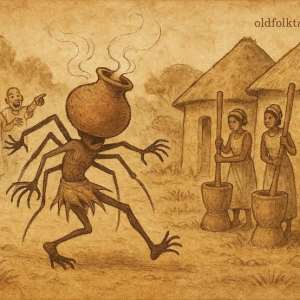
Ghana’s Kwaku Ananse is a cultural icon,a trickster, a storyteller, and a symbol of intelligence, cunning, and creativity. For generations, his tales have taught lessons about resourcefulness, strategy, and human nature. But in the modern world, the spirit of Ananse seems to have found a new form: Artificial Intelligence.
It may sound far-fetched to compare a folklore character to a technological phenomenon, yet the parallels are striking. Ananse thrived in complexity, navigating unpredictable situations with cleverness and adaptability. Similarly, AI thrives in complexity-albeit of a different kind. It processes vast amounts of data, identifies patterns invisible to the human eye, and automates tasks at speeds no person could match. Both Ananse and AI solve problems, but where Ananse relies on intuition, creativity, and social insight, AI relies on logic, algorithms, and computation.
This transformation of Ananse into AI is symbolic. It represents the migration of human ingenuity into the digital age. The cleverness and problem-solving that Ananse embodies the intelligence that once guided communities through challenges and taught moral lessons now finds expression in machine learning, predictive analytics, and automation. In a sense, Ghana’s cultural wisdom has been encoded into technology, reshaped for a world where data and algorithms rule.
Yet, this transformation also raises important questions. AI, unlike Ananse, lacks empathy, ethical reasoning, and cultural understanding. It can execute instructions perfectly, but it cannot teach, inspire, or adapt morally in the ways that human intelligence allows. The challenge for Ghana and the world is to ensure that the cleverness of Ananse, now mirrored in AI, is guided by human values. Machines may amplify intelligence, but they cannot replace the ethical and creative dimensions of folklore wisdom.
The idea of Ananse as AI is more than metaphorical. It suggests a roadmap for innovation: combining the adaptive, culturally informed intelligence of humans with the analytical, scalable power of machines. In sectors like healthcare, agriculture, and education, this hybrid approach could produce solutions that are both efficient and culturally sensitive, honoring Ghanaian creativity while harnessing the best of modern technology.
In the end, Kwaku Ananse has not been lost. He has simply evolved. From stories whispered in villages to algorithms running in servers, the spirit of the trickster lives on reminding us that intelligence is not only about speed and data, but also about creativity, morality, and adaptability. By understanding and embracing this transformation, Ghana can bridge the wisdom of the past with the promise of the future.


 Accra-Kumasi Expressway to cut travel time to 2hours, drive 120km per hour — Mah...
 'Our own money $2billion ready, we have not gone to borrow money from anywhere' ...
 Founder’s Day September 21 declared public holiday
 Council of State was not qualified to determine prima facie case against Torkorn...
 'Grounds for removal of Chief Justice and justice of superior court shallow, eph...
 Ghanaian banks write Off GH¢1.23bn in bad loans in first half of 2026
 Family of Gbewaa Training College lecturer killed by curfew soldiers vows legal ...
 Don't be a Bar that flips on principles but a Bar that is consistent — AG tells ...
 Prostate cancer may show no symptoms until advanced stage – Urologist warns
 Fully completed GH¢213,490 SOCO volleyball court abandoned after Bongo youth rej...


