




Ghana’s coastline—from Aflao in the Volta Region to Axim in the Western Region—is a sacred and strategic national asset. This guide presents a unified framework to support the government’s new initiative: employing citizens to maintain clean beaches while embedding cultural stewardship and district accountability.
The initiative is anchored in:
- Strategic demarcation of coastal zones
- District and municipal oversight
- Community ownership and traditional integration
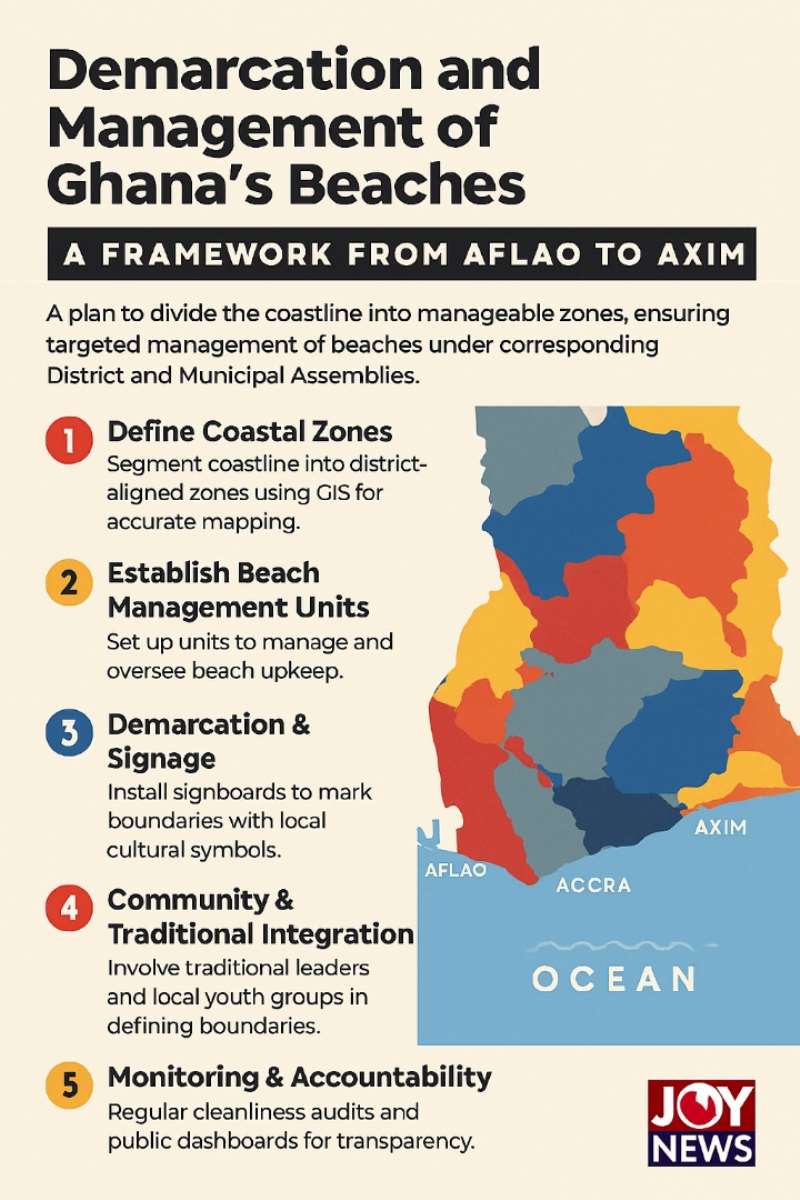
- A visual coastal map framework for clarity and coordination
Key Stakeholders
The success of this initiative depends on collaboration across sectors and traditions. Stakeholders include:
- Ministry of Sanitation and Water Resources
- Ministry of Local Government, Decentralization and Rural Development
- District and Municipal Assemblies along the coast
- Environmental Health Officers and Beach Management Units (BMUs)
- Traditional Authorities and Clan Councils
- Youth Groups, Schools, and Community Volunteers
- Tourism Operators and Hospitality Associations
- Fisherfolk Cooperatives and Coastal Traders
- Media Partners and Civic Advocacy Coalitions
- NGOs and Environmental Restoration Networks
Together, these actors will ensure Ghana’s beaches are not only cleaned—but cherished, protected, and transformed into symbols of national pride and ecological renewal.
Vision
To restore Ghana’s beaches as clean, safe, and vibrant spaces for communities, tourism, and ecological balance. Citizens will be employed and paid monthly allowances to maintain coastal cleanliness, while district councils and traditional leaders guide stewardship.
Objectives
- Employment & Empowerment: Create jobs for youth and local residents
- Environmental Stewardship: Sustainably manage waste and protect marine ecosystems
- Tourism & Civic Pride: Enhance Ghana’s coastal image for visitors and locals
- District Accountability: Assign clear responsibilities to Municipal and District Councils
Coastal Demarcation Framework
Ghana’s coastline will be divided into district-aligned stewardship zones, each reflecting administrative boundaries, cultural heritage, ecological significance, and community identity.
1. Aflao to Ada
- Districts: Ketu South, Ada East
- Landmarks: Volta River estuary, Keta Lagoon
- Notes: Sacred waters and ecological sanctuaries; stewardship rooted in ancestral taboos and lagoon biodiversity
2. Ada to Accra
- Districts: Ada West, Tema Metro, Accra Metro
- Landmarks: Sakumono Beach, Labadi Beach, Jamestown
- Notes: Urban density meets coastal fragility; youth-led beach patrols and innovative waste systems
3. Accra to Cape Coast
- Districts: Ga South, Awutu Senya, Cape Coast Metro
- Landmarks: Winneba Beach, Cape Coast Castle
- Notes: Blend of tourism and civic education; shoreline protection with ancestral reverence
4. Cape Coast to Takoradi
- Districts: KEEA, Shama, Sekondi-Takoradi Metro
- Landmarks: Elmina Castle, Takoradi Harbour
- Notes: Artisanal fishing hubs; stewardship through cooperatives and sanitation teams
5. Takoradi to Axim
- Districts: Nzema East, Ahanta West
- Landmarks: Busua Beach, Axim Fort
- Notes: Eco-tourism and cultural signage; deep respect for Nzema and Ahanta traditions
Zone Infrastructure
Each zone will be equipped with:
- Beach Management Units (BMUs) under district oversight
- GIS-based mapping tools for precise demarcation
- Cultural signboards and flags to mark boundaries
- Monthly audits and public dashboards to track cleanliness
Implementation Steps
1. Mapping & GIS Integration
- Overlay district boundaries, fishing communities, and tourist hotspots
- Produce a visual coastal map framework
2. Beach Management Units (BMUs)
- Recruit cleaners, monitor progress, liaise with traditional councils
3. Community Integration
- Chiefs, elders, and youth groups adopt stretches of coastline
- Embed cultural mottos and taboos into signage
- Example: Dzidzɔ le dɔwɔwɔ me – “Joy is found in labor”
4. Monitoring & Reporting
- Monthly audits by Environmental Health Officers
- Public dashboards via WhatsApp, radio, and community boards
5. Recognition & Motivation
- Friendly competitions between districts
- Awards for “Cleanest Beach Zone” each quarter
Call to Action
This initiative is not just about cleaning sand—it is about restoring dignity, creating jobs, and protecting heritage. Every stakeholder—government, district councils, traditional leaders, fisherfolk, youth, and tourists—has a role to play.
Let us rise together to cleanse, claim, and celebrate Ghana’s coastline.
Prepared by:
Retired Senior Citizen
Teshie-Nungua
📧 [email protected]


 Wontumi’s lawyers want Exim Bank case treated as civil, not criminal
 Mahama to cut sod for Accra Convention Centre project – Kwakye Ofosu
 Mahama administration committed to stamping out cybercrime – Sam George
 Ghana joins International Big Cat Alliance to strengthen wildlife conservation
 Africa must strengthen strategic positioning amid global power shifts – ECOWAS
 PAC grills GHS over transport officer who allegedly sold seven state vehicles wi...
 Pentecost Church elder was arrested over GH¢200,000 fraud case, not kidnapped – ...
 Banning preaching in vehicles will not succeed, we will even preach at the back ...
 Banks threaten to suspend new loans to public sector workers over Controller rep...


