




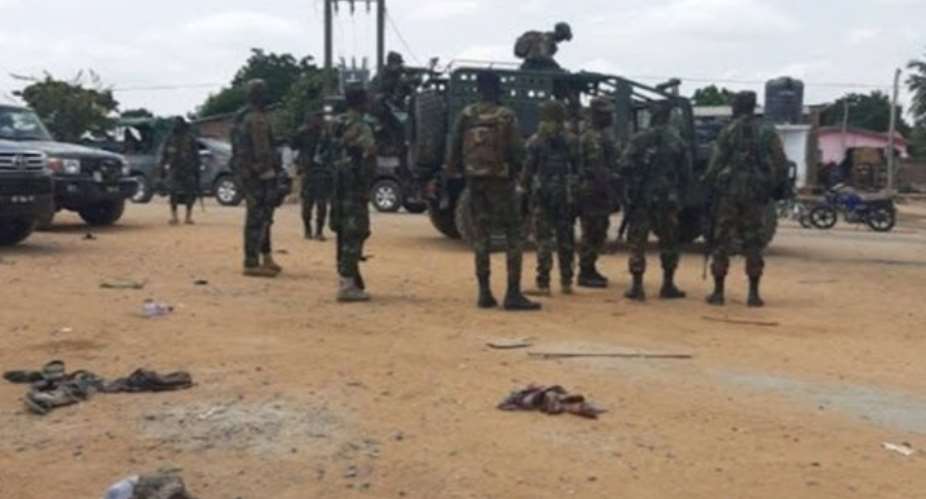
The Bawku chieftaincy conflict continues to evolve in ways that leave vulnerable communities paying the highest price. One of the latest developments—the relocation of soldiers from Binduri township to what has been described as a “neutral ground”—has triggered deep disappointment, fear, and frustration among residents. Many believe this decision, if not reversed, could expose Binduri township to severe danger and repeat the tragedies experienced in past attacks.
Residents argue that Binduri is already fragile and that the withdrawal of the military from the central township could accelerate a humanitarian disaster similar to what occurred in settlements like Zabugu and Gumyoko this year. Their plea is clear: the relocation must be reconsidered for the sake of safety, stability, and the search for lasting peace in the Bawku enclave.
FACTS AS REPORTED BY RESIDENTS
Residents of Binduri township describe a growing sense of vulnerability driven by a series of reported threats and attempted attacks, and they argue that these developments make the recent military relocation both confusing and alarming. They point to circulating audio recordings in which individuals allegedly threaten to turn Binduri into a “ghost town,” alongside other recordings—reportedly in Kusaal—claiming that attackers are only being held back because they cannot enter the township while soldiers are present. With such threats hanging over the community, residents question why the military would choose this moment, of all times, to withdraw from the area. If the threats remain active and the risk remains high, what justifies a decision that appears to remove the very barrier preventing these threats from being executed?
Their concern is further heightened by the events of the past month, during which the township has faced consistent attacks or attempted incursions. According to residents, these attempts have been frequent enough that any soldier stationed there can confirm the level of sustained pressure. This observation leads residents to wonder why, despite the evident danger over this period, the response was not to reinforce security but to relocate it. If the township has been under non-stop tension for weeks, why would the military retreat instead of strengthening its presence to stabilize the area?
The situation became even more perplexing after the most recent incident at Zuri, where a house was burned during another reported attack. The military did intervene, but only after the situation had intensified into a gunfight. For the people of Binduri, the timing is difficult to understand: only hours after an attack that reaffirmed the need for protection, the very forces that intervened were seen packing out of the township. Why withdraw so soon after an attack that visibly demonstrated the necessity of immediate security presence? To residents, the decision seems to contradict the realities on the ground.
Their confusion deepened when they observed the destination of the relocating soldiers. The troops reportedly moved toward the District Assembly area—an area residents describe as predominantly Kusasi and already equipped with a military barracks and a police station. Meanwhile, the central township, which previously lost its only police post and suffered fatal attacks because of that absence, has been left exposed once again. This shift raises another question: why move security personnel from the side that lacks protection to the side that already has multiple security structures? Residents argue that such a move appears to widen the gap between protected and unprotected communities rather than closing it.
This sudden change has triggered a wave of panic among those still living in Binduri. Many people had already fled over previous months, leaving behind mainly the elderly and a few young individuals who relied on the soldiers’ presence for reassurance. With the military gone, fear has overwhelmed these remaining residents, some of whom are now requesting escorts to evacuate the area. Their anxiety is worsened by claims that the new location of the soldiers is an area considered unsafe for Mamprugu individuals, who reportedly risk being attacked if they enter. How then can this location be regarded as a “neutral ground” when it is reportedly inaccessible or dangerous for one side of the conflict? To residents, this designation only deepens their confusion.
Taken together, these concerns form a consistent narrative of a community that feels exposed, confused, and abandoned during a moment of heightened danger. At each step, residents say the rationale behind the military’s relocation does not align with the threats they face, the attacks they have endured, or the urgent need for stability in the area. In their view, every detail of the situation raises the same fundamental question: why withdraw protection precisely when protection is most needed?
CONSEQUENCES OF THE MILITARY RELOCATION
Residents warn that this relocation, if not reversed, could lead to a series of dangerous outcomes. They believe the township is now highly vulnerable to a large-scale assault aimed at fulfilling earlier threats—an attack that could be devastating before the military is able to respond from their new location. Some residents say that should such an event occur, they would not hesitate to petition international bodies, including the United Nations, as they suspect political interference is playing a role in recent decisions.
The potential destruction of lives and properties would not only deepen the humanitarian crisis but also cast a damaging shadow on national security institutions and the government. In the eyes of many residents, the military command would inevitably be held responsible for preventable losses should the situation deteriorate further. Their message is clear: the decision must be reviewed now to avert a foreseeable calamity.
SEARCH FOR TRUE PEACE IN BAWKU
The Binduri situation reflects a broader pattern long observed in the Bawku conflict—governments reluctance or inability to take decisive, consistent, and equitable actions. Each cycle of violence exposes gaps in security strategy, and each reactive decision appears to deepen mistrust among communities who already feel abandoned. True peace in the Bawku enclave requires more than troop movements or temporary deployments. It demands fairness, transparency, community engagement, and the courage to address deep-rooted grievances without political bias.
Until these foundations are in place, relocations like the one in Binduri will continue to raise doubts about the neutrality of security arrangements and the sincerity of peace efforts. Residents argue that peace must not only be restored—it must be restored justly.
CONCLUSION
The concerns raised by residents of Binduri township reflect a community grappling with fear and uncertainty at a time when decisive action is most needed. The reported threats, recent attacks, and sudden military withdrawal create a situation that many believe is both dangerous and avoidable. As the Bawku conflict continues to test the resilience of local populations, it is essential that government and security agencies listen to these concerns and act with urgency, fairness, and clarity. The relocation decision must be revisited—both to prevent catastrophe and to rebuild trust in a region where peace has remained elusive for far too long.
By: Hamza I. Salifu


 Talensi: Minerals Commission orders Nanlamtaaba Enterprise to halt mining in Gba...
 'I faced those who openly insisted that there’s no galamsey going on' – Prof Gya...
 Trump threatens to not reopen Kennedy Center after board blocks renaming
 Minority boycotts Foreign Affairs Committee meeting on South Africa evacuation o...
 Police arrest two over 192 parcels of suspected cocaine in Wa
 Challenging Heights reveals how Ghanaian girls are recruited into sex trade thro...
 GHS records more than 53,000 adolescent pregnancies in 7 months
 No school being demolished to construct 24-hr economy market at Mankranso - Ash...
 Education Ministry to review 'problematic' CSSPS after Catholic Bishops’ concern...
 Family of Salormey Baffoe appeals for her release from alleged National Security...


