




A historic collection of Asante gold and bronze artworks, dating back to the 1870s, has been officially returned to the Asantehene, Otumfuo Osei Tutu II, in a ceremony held at the Manhyia Palace in Kumasi.
The 130 artefacts, aged between 45 and 160 years, depict the intricate governance systems of Asante communities and underscore the cultural and economic importance of gold in the Asante Kingdom.
The delegation from AngloGold Ashanti, led by the company’s Chief Corporate Affairs and Sustainability Officer, Stuart Bailey, included the Managing Director of the Obuasi Mine, Samuel Boakye Pobee, and former Obuasi MP, Edward Ennin. They presented the artworks to the Asantehene in a gesture the company described as an act of cultural respect and reconciliation.
Otumfuo Osei Tutu II expressed deep appreciation to AngloGold Ashanti, commending the company for voluntarily returning the artefacts even though they had been legitimately acquired. He said the gesture reflected “goodwill and respect for the source and legacy of the Asante Kingdom.”
Out of the total items returned, 110 belonged to the Barbier-Muller Museum in Geneva, originally collected by Josef Muller beginning in 1904. Their return brings the total number of restituted Asante artefacts now housed in Kumasi to 140.
Additionally, 25 other artefacts were donated by the distinguished British art historian and curator Hermione Waterfield, 86, who established the Tribal Art Department at Christie’s in London in 1971.
According to Ivor Agyeman-Duah, historian and Director of the Manhyia Palace Museum, Waterfield’s donation includes a 46-inch wooden fontomfrom drum believed to have been looted from the Manhyia Palace during the 1900 siege of Kumasi, also known as the Yaa Asantewaa War. The drum was taken by British colonial officer Sir Cecil Hamilton Armitage, who later became Governor of The Gambia.
Waterfield also inherited several Asante gold weights purchased through Christie’s auctions between 1967 and 1973. Agyeman-Duah credited the late British art historian and archaeologist Timothy Garrard for his extensive documentation of Asante gold and metalwork, describing him and Waterfield as “pioneers who helped deepen global understanding of West African craftsmanship.”
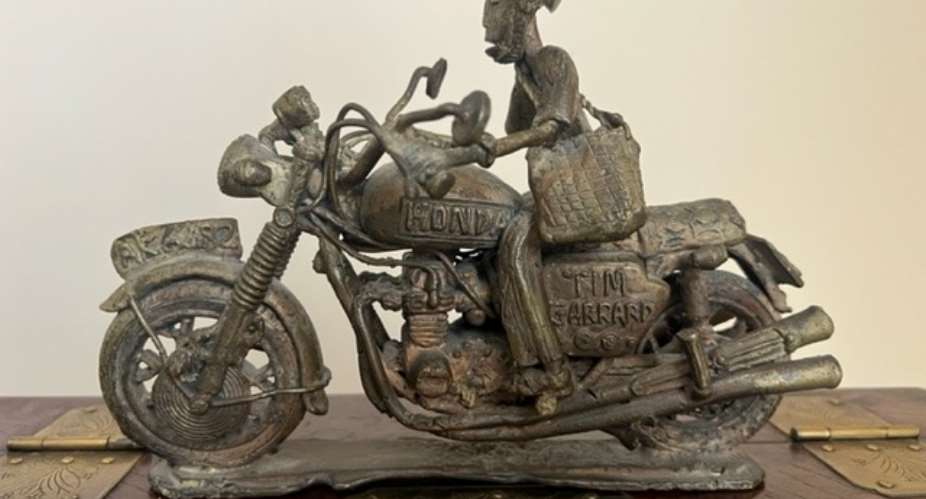
Among Waterfield’s notable contributions is a brass sculpture of Garrard on his motorbike in Kumasi, created in 1980 by Ghanaian sculptor Yaw Amankwa.
Agyeman-Duah, who co-signed the deaccession papers with Waterfield in London last October, said the returned artefacts will soon be displayed at the Manhyia Palace Museum alongside masterpieces by leading Ghanaian and African artists including Ablade Glover, El Anatsui, Ato Delaquis, Nee Owoo, Anthony Kwame Akoto, Vincent Kofi, and Edwin Kwasi Bodjawah.

 We are going to provide emergency airstrip in regions without airports — Mahama
 Nana Konadu maiden memorial mass set for October 23
 'Double standards are not helpful, wrong yesterday is wrong today' – Ablakwa on ...
 'I am disappointed in govt for suspending ban on bus preaching' — Apostle Asempa...
 NPP has resolve internal wrangling — Bawumia
 Ghana, US Virgin Islands agree on recruitment of Ghanaian teachers, nurses
 Never Again: Mahama Pushes for Local Vaccine Manufacturing After COVID‑19
 “Soldiers Will Stay There”—Mahama Declares Permanent Military Presence in Forest...
 ‘No Borrowing Involved’ — Mahama Rolls Out US$10bn New Economy Policy
 “Ask Jean Mensa to resign first”—Tanko-Computer fires back


