




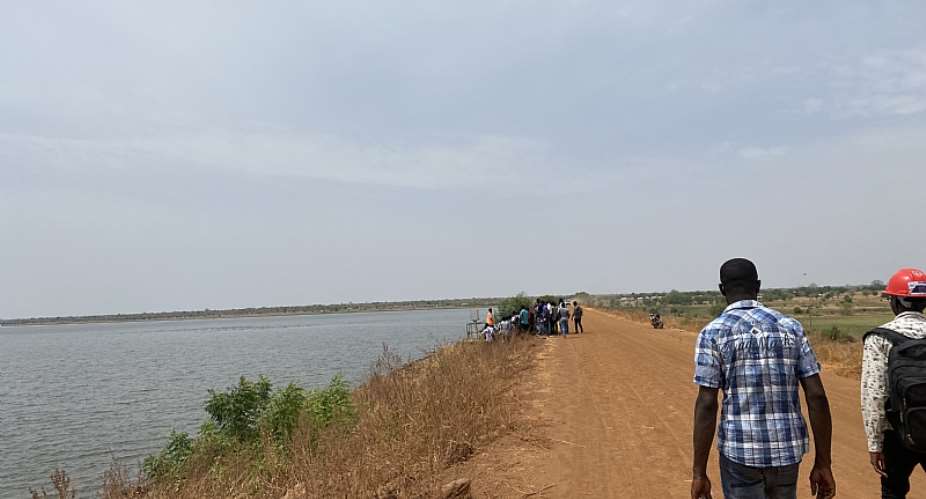
When General I.K. Acheampong’s government launched the Bontanga Irrigation Project in the 1970s, it was more than a dam, it was a national symbol of self-reliance. The soldiers of the National Redemption Council believed Ghana’s prosperity lay in the soil. Agriculture, they argued, was the surest route to industrialization, employment, and food security.
Bontanga, located in the Kumbungu District of the Northern Region, became the flagship of this dream. Engineers from Taylor-Woodrow, an expatriate construction firm, transformed the landscape into a modern irrigation complex --- complete with bungalows, offices, and residential quarters that could rival any estate in Tamale at the time. For a moment, it felt as if Ghana had found its agricultural miracle. But decades later, that miracle has faded. The once-bustling community now stands silent, its bungalows reduced to skeletal ruins. The dam still holds water, but not the promise it once did. Like many of Ghana’s irrigation schemes, Bontanga slipped into decline as governments changed, policies shifted, and maintenance waned.
A Dream Deferred
Bontanga is not a small project. The dam, stretching nearly two kilometers across and standing about twelve meters high, holds an impressive twenty-five million cubic meters of water. It was designed to irrigate up to eight hundred hectares of farmland, though only about five hundred hectares are currently in use. The reservoir also supports a modest fishery potential, estimated at roughly sixty to seventy tons of fish per year, a figure that could easily double with proper aquaculture investment. Yet, despite this immense potential, Bontanga remains underutilized. The project, like others at Tono and Dawhenya, fell under the control of the Irrigation Development Authority (IDA), a bureaucracy never intended to operate as a business. What could have been a thriving agro-industrial hub slowly became a government relic.
Meanwhile, countries like India, Kenya, Morocco, and Egypt moved ahead by managing their irrigation schemes through public-private partnerships (PPPs). These models attracted investment, improved efficiency, and created jobs. Morocco’s partnership system, for instance, turned desert irrigation into an export engine. Egypt, long admired by Ghana, combines state financing with private management to ensure accountability. The lesson is simple: irrigation cannot thrive under bureaucracy. It must be managed like a business --- efficient, innovative, and responsive to market realities.
Awakening the Sleeping Giant
But Bontanga’s story is not over. The water still flows, the land is fertile, and the people remain hopeful. What the project needs is a new vision, and bold leadership. The Kumbungu District Assembly has a golden opportunity to transform Bontanga into a multi-sectoral growth hub through strategic investment and public-private collaboration. A well-crafted business and strategic plan should guide this revival. The plan must look beyond crops to include eco-tourism, aquaculture, hospitality, and renewable energy. Imagine a new Bontanga where: Eco-lodges overlook calm waters, while bird watchers and tourists explore a hippo or bird sanctuary; the old Taylor-Woodrow bungalows are restored into guesthouses, research facilities, and training centers;
solar-powered irrigation systems sustain year-round vegetable and rice production; fish farming ventures expand harvests to supply regional markets. These ideas are not fantasy. They are achievable if the Assembly, local investors, NGOs, and development partners work hand-in-hand. Ghana can no longer afford to leave such a valuable asset idle.
A Call to Action
Reviving Bontanga requires courage --- the courage to think differently. District Assemblies must evolve from being administrative units into development-minded investment facilitators. They must be proactive, crafting plans that attract investors rather than waiting for central government allocations. The Bontanga Irrigation Project is a sleeping giant that can once again lead Northern Ghana’s transformation. Its revival will create jobs, boost food security, promote tourism, and inspire confidence in local governance. The eco-tourism initiative at Bontanga is a commendable start, but it must go further. A tourism project around the dam should not end with boat rides --- it must include sanctuaries, hotels, and hospitality facilities. The ruins of the old Taylor-Woodrow settlement could yet be reborn as a modern resort town, drawing researchers, tourists, and investors alike.
The Future Beckons
History has already proven that Bontanga has the potential. What remains is the will to act. Ghana can no longer allow projects like this to languish while rural poverty and youth unemployment persist. If Egypt turned its deserts green, and Morocco made irrigation a profitable enterprise, then Ghana, with all its water bodies and fertile lands, has no excuse. Let Bontanga lead the way again --- not as a relic of the past, but as a model for the future. The Kumbungu District Assembly, private investors, and development partners must seize this moment. With vision, planning, and persistence, Bontanga can rise again as the heartbeat of agricultural and eco-tourism innovation in Northern Ghana.
FUSEINI ABDULAI BRAIMAH
+233208282575 / +233550558008
[email protected]

 Anti-LGBTQ Bill is duly passed, I believe it is too late in the day to reverse i...
 Here are areas to face power outages over maintenance works today
 RNAQ ex-wife petitions court to restrict Hajia4Reall’s closeness to her children...
 One dead, two children trapped after three storey building collapse at Adenta
 Obuasi Circuit Court jails farmer 8years over violent mining site attack at Obua...
 Health Minister summons KATH CEO over emergency centre closure
 Unauthorised structures demolished at Haatso
 Fire guts shops opposite Accra Central Police Station
 Stephen Yeboah appointed new registrar of Sunyani Technical University
 Abandoned 250-bed Sewua Regional Hospital rots as KATH battles congestion


