




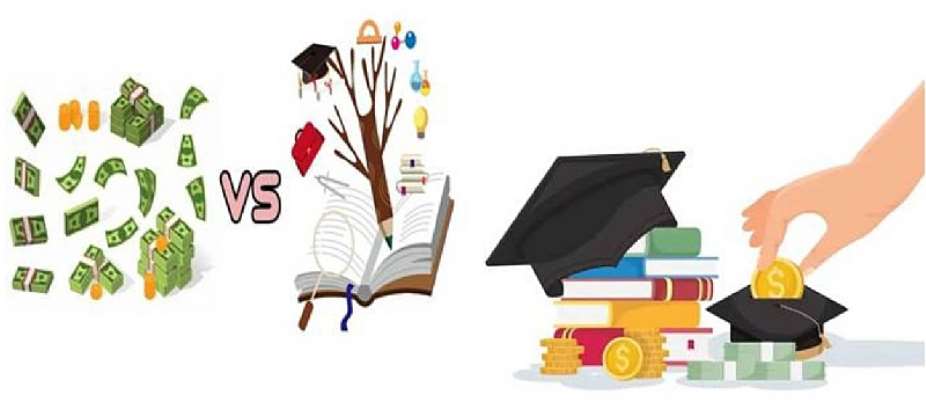
Chapter 1: A Generation Lost in Books and Bills
Wake up, Ghana. Close your eyes and visualize the painful truth in vivid, unrelenting detail. A young man or woman stands proud on the university stage under bright, unforgiving lights that highlight every smile and tear. The black gown flows like a false promise of prosperity handed down from colonial legacies. The red tassel swings with artificial pride that will soon fade into irrelevance. The diploma/ degree is held high above the head, a simple, fragile paper that cost a family everything they had worked for across generations of sweat and soil. Parents in the audience clap until their hands hurt and swell from the effort, tears running down tired, sun-worn faces etched with deep lines of endless toil in cocoa fields, fishing boats, and roadside trades. “We made it,” they whisper to each other in hushed, exhausted tones, voices weak from years of sacrifice, skipped meals, borrowed funds, and unspoken fears. “Our child is set for life. The suffering, the sleepless nights under mosquito nets, the days without proper food, it all ends now with this one moment.”
One year later after National Service , that same graduate sits slumped in a dusty trotro weaving through chaotic, horn-filled traffic in Accra or Kumasi. Sweat soaks a cheap, faded shirt bought second-hand from a bend-down boutique. The phone screen is cracked from endless, fruitless job hunts on WhatsApp groups, LinkedIn, and online portals that promise much but deliver nothing. The diploma/degree/WASSCE Certificate is folded carelessly in a plastic bag, hidden under old clothes in a drawer that smells of failure, damp walls, and broken dreams. Dreams are broken into sharp, jagged pieces that cut deep into the soul every single day with reminders of what could have been. The bank/ momo balance is just GHS 87.50, a cruel, mocking joke laughing at every all-night study session under flickering kerosene lanterns or dim phone lights. Rent is due in three days, and the landlord’s knock grows louder and more impatient. Mama calls with a voice full of worry and quiet desperation: “Any job yet, my child? We sold the land, the cocoa farm your grandfather planted with his own hands, the one that fed us for decades, for this.”
This is not one isolated sad story whispered in village corners or urban slums. This is the daily, suffocating reality for thousands upon thousands of Ghanaian graduates across every region of the nation, from the northern savannas to the coastal belts. According to the Ghana Statistical Service’s 2024 Labour Force Survey, over 22 percent of degree holders aged 20 to 24 remain completely jobless, not for fleeting weeks or temporary months, but for over 20 agonizing months while their skills, enthusiasm, and prime years waste away in idleness and frustration. Another 36.7 percent cannot find work that even remotely fits their four years of specialized training, as reported in detail by the Institute of Statistical, Social and Economic Research (ISSER) in their comprehensive 2025 Graduate Tracer Study. Engineers end up selling phone credit under the scorching sun in bumper-to-bumper traffic. Accountants count loose coins in a chop bar for survival wages barely above the national poverty line of GHS 1,314 per month. Furthermore, the 2025 Standard & Poor’s Global Financial Literacy Survey, covering over 150 countries, reveals that 68 percent of all Ghanaians, including many of these same university graduates, do not grasp basic money skills. They cannot save a single cedi without it vanishing into daily emergencies, borrow in a smart way to avoid predatory traps, invest even small amounts wisely in proven vehicles, or calculate simple interest on loans that bind them for life like invisible chains.
From Tamale’s red dusty paths where hopes dry up like forgotten wells in the harmattan wind, to Kumasi’s busy, sweat-drenched markets where ambition clashes daily with harsh economic reality, from Cape Coast’s salty sea air carrying the cries of fishermen struggling against depleted stocks, to Osu’s sleek but empty glass offices where CVs pile up like unanswered prayers in corporate inboxes, one haunting line repeats like a national curse in every region, every dialect, every household: “I went to school, but I am still broke.” Parents sell family land passed down for generations as sacred inheritance. Students beg for loans that choke their futures like vines strangling a young tree before it can bear fruit. Graduates sleep hungry with empty stomachs and heavier hearts filled with regret. Families break apart under the crushing weight of disappointment, debt, and delayed milestones. As Kwame A., a 2024 University of Ghana graduate now selling second-hand clothes in Makola Market to survive, told JoyNews in a viral interview that garnered over 500,000 views: “I studied computer science for four years, dreaming of building apps and software. Now I wake at 4 a.m. to arrange shirts and trousers on a wooden table. My certificate is in a drawer collecting dust. My debt is GHS 12,000 and growing every month with interest. This is not the future they promised us in orientation week.” This is not progress. This is betrayal on a massive, systemic scale. This is a national shame that demands urgent, collective attention. And it worsens every year with each new batch of graduates entering the same broken, unforgiving cycle without warning or preparation.
Chapter 2: The Education System’s Blindspot – Great at Exams, Weak on Wealth
Let us state it plainly and firmly without any hesitation or softening of the blow. Our schools are exam machines designed exclusively to produce high scores on paper, not wealth builders equipped to create lasting financial independence and generational security. From Class 1 all the way to the high-stakes pressure of SHS, the message is loud, clear, and dangerously narrow in scope: pass exams with distinction, secure A’s across the board, enter university at all costs. That, society insists through parents, teachers, and peers, is the only acceptable path to success and respectability.
Yet where is the dedicated, hands-on lesson on turning GHS 100 into GHS 1,000 through practical, step-by-step strategies that anyone can apply? Where is the experienced teacher demonstrating in real time how to start a viable business with just GHS 500 scraped together from small savings, odd jobs, and sheer determination? Where is the structured, mandatory class on investing in stocks through the Ghana Stock Exchange, understanding cryptocurrency basics without falling for scams, or growing modest savings into substantial capital that compounds over time?
The answer is nowhere in the current system, not even as an elective or after-school club.
The national curriculum barely pretends to address this gaping void. It hides a tiny, inadequate, and largely ignored part in Social Studies called “responsible borrowing.” It amounts to one overlooked paragraph in a 300-page textbook that gathers dust on shelves in under-resourced libraries. In real classrooms across Ghana, from rural mud-brick structures to urban concrete blocks, 60 to 80 students squeeze onto broken benches in overcrowded rooms with poor ventilation, leaking roofs, and insufficient chalk. Teachers rush frantically to finish the overloaded syllabus before WASSCE arrives like an annual storm of stress and tears. Students cram chemical formulas until they recite them in their sleep, memorize capital cities of obscure nations for marks they will never use, and analyze poems until the words lose meaning. Money skills, real-world survival tactics, and wealth creation principles are not taught at any meaningful level or depth.
Most teachers themselves do not know these critical, life-altering things. A 2025 study conducted in Bono East Region by the Journal of Economics and International Finance tested basic school teachers on simple, everyday concepts. Only 45 percent understood compound interest correctly, the very mechanism that can turn small savings into fortunes or small debts into nightmares. Teachers nationwide score between 38 and 51 percent on financial literacy assessments, according to a detailed ResearchGate analysis published in early 2025, barely above Ghana’s national average of 32 percent as measured by the OECD/INFE toolkit. In the Upper East Region, a 2024 survey by the Ghana Education Service revealed that 60 percent of teachers are trapped in personal debt cycles they cannot escape, often borrowing from susu groups or salary advance schemes just to cover basics.
A teacher cannot impart knowledge they do not possess, no matter their passion or dedication. Many earn under GHS 2,500 monthly, as per the Ghana National Association of Teachers’ 2025 salary report amid rising inflation. Some wait up to 10 months for salary arrears, leading to nationwide protests in June 2025 where newly posted teachers blocked roads demanding their due payments. One teacher, Madam Akosua B. from a rural school in Volta Region, cried openly on national TV during a GTV interview that reached millions: “I stand before 65 children every morning telling them education is the key to everything, but I cannot pay my light bill, buy medicine for my sick mother, or even afford decent shoes. How do I teach them money management when I have none to show as an example, none to practice myself?”
Students leave school with big heads filled with abstract theory that impresses examiners, big hearts bursting with fragile hope instilled by motivational speeches, and completely empty pockets that echo with desperation in the real world. They are smart on paper in controlled exam halls with multiple-choice answers. They are broke and vulnerable in the real life of markets, bills, and uncertain gigs. This systemic failure is criminal neglect that robs an entire generation of the tools for true freedom, self-reliance, and national progress. As Robert Kiyosaki, author of Rich Dad Poor Dad, warns in his seminal book: “It’s not how much money you make, but how much you keep, how hard it works for you, and how many generations you keep it for.” Our schools teach none of this keeping, working, or preserving.
Chapter 3: The Education System’s Blindspot – Great at Exams, Weak on Wealth (Continued)
The blindspot extends beyond curriculum to infrastructure and mindset. A 2025 UNESCO report on Ghana’s education sector notes that only 12 percent of public primary schools have functional computer labs, and less than 5 percent offer any form of digital literacy tied to income generation. In SHS, the ratio of students to career counselors is 1:1,200, per the Ministry of Education’s 2024 staffing audit, leaving most graduates without guidance on job markets or alternative paths.
Entrepreneur Patrick Awuah, founder of Ashesi University, spoke bluntly at the 2025 Ghana Leadership Summit: “We are producing graduates who can recite Newton’s laws but cannot negotiate a bank loan or read a profit-and-loss statement. This is not education; this is indoctrination into dependency.” His words echo the reality that while STEM subjects dominate 70 percent of instructional time, financial education receives less than 1 percent, according to a NaCCA curriculum audit.
The consequence is a workforce misaligned with economic needs. The African Development Bank’s 2025 Jobs for Youth Report estimates that Ghana needs 300,000 new formal jobs annually to absorb graduates, but creates only 100,000, leaving a 200,000-person gap filled by informal hustles or despair. This mismatch fuels brain drain: 35 percent of tertiary graduates emigrate within five years, per the International Organization for Migration’s 2025 Ghana Migration Profile, taking skills abroad while local economies starve.
Chapter 4: Degrees and Debt – The Hidden Trap That Destroys Lives
Here is the biggest, most destructive lie ever sold to hardworking Ghanaian families: a university degree automatically equals wealth and security in today’s world. Current fees range from GHS 2,000 to 6,000 yearly for tuition alone at public institutions, according to the National Council for Tertiary Education’s 2025 fee guidelines updated amid inflation pressures. Add hostel accommodation in cramped rooms, outdated textbooks, feeding allowances that barely cover one meal a day, and transport costs on unreliable trotros. The total annual burden reaches GHS 15,000 to 25,000, a sum that devastates most households where average rural income hovers below GHS 800 monthly.
The money must come from somewhere in a country where the median household income is around GHS 14,000 yearly, per the Ghana Living Standards Survey Round 7 (2024). The Student Loan Trust Fund, established in 2005 to democratize access, leaves 40 percent of applicants waiting months for funds that cover less than half the expenses, as highlighted in ISSER’s 2025 report on higher education access and equity. Private lenders charge 20 to 30 percent interest rates, creating lifelong chains of repayment that outlast the degree’s usefulness. One in three Ghanaians now borrows specifically for school fees, double the Sub-Saharan Africa average according to the World Bank’s Global Findex 2025. Student debt levels rose 35 percent in just five years from 2020 to 2025, trapping borrowers in cycles where monthly repayments exceed entire salaries in entry-level roles. Families sell cocoa farms that sustained lineages, livestock raised for dowries, and even wedding gold melted down in quiet desperation at pawn shops.
Graduation day brings temporary joy with caps in the air and photos shared widely. Then rejection letters and silence follow in waves. Only 10 percent of graduates secure relevant jobs within the first year, per ISSER’s 2025 Graduate Employability Report based on a sample of 5,000 alumni. The rest face daily hardship that grinds down dignity. A science graduate rises at 4 a.m. to sell waakye by the roadside for survival income. An accounting graduate counts change in a supermarket for GHS 1,200 monthly under fluorescent lights. Loans grow at 15 percent compound interest like a cancer. Rent consumes 60 percent of income. Food becomes whatever leftovers remain after bills.
The shame extends abroad and tarnishes Ghana’s reputation. In July 2025, 181 Ghanaian scholarship students at the University of Memphis in the USA nearly faced eviction and deportation. The government owed $3.6 million in unpaid fees and stipends despite promises. After public outcry and media pressure, it paid $1.4 million in a scramble, but $2.2 million remains outstanding, as confirmed by the Scholarship Secretariat’s official statement and parliamentary probes. One affected student, Emmanuel K., told BBC Africa in a tearful interview: “We came here to represent Ghana and make our country proud with our research and ideas. Now we beg for food from classmates because payments stopped for months. This debt is killing our dreams and our mental health.”
This is not genuine education that empowers. This is systematic robbery disguised in academic robes and ceremonies. We borrow today only to remain poor tomorrow, perpetuating cycles of poverty under the guise of progress and upward mobility. As Tony Elumelu, Nigerian billionaire and founder of the Tony Elumelu Foundation, said at the 2025 Africapitalism Summit in Lagos: “Africa’s greatest resource is its youth, but we are wasting it by educating them for jobs that don’t exist instead of skills that create jobs.”
Chapter 5: Degrees and Debt – The Hidden Trap That Destroys Lives (Continued)
The debt crisis compounds mental health issues. A 2025 study by the University of Ghana’s Department of Psychology found that 62 percent of recent graduates reported moderate to severe anxiety linked to student loans, with 18 percent contemplating self-harm due to repayment pressure. The Ghana Psychological Association’s 2025 report notes a 40 percent rise in depression cases among 20 to 30-year-olds since 2020, directly correlated with unemployment and debt.
Business magnate Strive Masiyiwa, founder of Econet Wireless, addressed this at the 2025 Mo Ibrahim Governance Weekend: “I left university with no degree but with a vision. Degrees are tools, not guarantees. The real currency is financial intelligence, which no syllabus teaches.” His words highlight how debt without income turns education into a liability. In Ghana, the average graduate debt upon completion is GHS 18,000, per SLTF 2025 data, while starting salaries in formal sectors average GHS 1,500 monthly, making repayment mathematically impossible without family support or multiple hustles.
Chapter 6: Why Wealth Isn’t Taught – The Old Lie We Still Believe
Every Ghanaian child grows up hearing the same outdated mantra repeated like a sacred hymn: “Go to school, get a degree, secure a job, live well forever.” It held truth in the 1970s when government jobs were abundant after independence, civil service was prestigious, and a teacher’s salary built homes, educated siblings, and secured respect. It does not hold now in a digital, gig-driven economy.
Young graduates face a 36.7 percent rate of being jobless or severely underemployed, according to the Ghana Statistical Service 2024 data updated quarterly. Overall youth unemployment stands at 13.6 percent nationally, but for tertiary-educated individuals, long-term joblessness affects 22.3 percent who wait over a year, per the 2025 Labour Force Report. Half the national workforce, over 7 million people, labors in informal jobs earning under GHS 800 monthly on average, as stated in the UNDP Ghana Human Development Report 2025 with field surveys.
Schools continue pushing the degree as the ultimate golden ticket to salvation. Parents sell everything they own to fund it, from land to livestock. Children carry crushing guilt like invisible burdens. “Do not fail us,” they hear constantly from family meetings.
True wealth today flows from different, more accessible sources. Start a business with GHS 1,000 in seed capital through micro-loans or susu. Invest GHS 200 monthly in the Ghana Stock Exchange, which delivered average 8 to 12 percent annual returns from 2020 to 2024 according to GSE reports despite market volatility. Learn digital skills online via free platforms and earn dollars through freelancing on global sites. Turn everyday ideas into scalable income streams via social media or e-commerce. None of these practical, proven paths appear in the syllabus, not even as electives.
Instead, students memorize the capitals of 50 countries they may never visit, the chemical formula for everyday table salt, and Shakespearean verses that offer poetic beauty but zero financial armor. It may be useful for trivia nights or cultural pride. It does not pay rent, buy food, or build security in a nation where inflation hit 23 percent in 2024.
The consequences are devastating and far-reaching. Graduates delay marriage by 5 to 10 years due to financial inability, pushing national fertility rates down to 3.9 births per woman, per the 2025 Ghana Demographic and Health Survey. Families remain trapped in intergenerational poverty with no exit. Desperate youth turn to sakawa scams that land them in prison or galamsey mining that poisons rivers, soils, and lungs. Cybercrime among educated youth surged 25 percent in 2024 alone, according to Ghana Police Service statistics from cyber units. Ghana loses 2 to 3 percent of annual GDP growth, equivalent to billions of cedis annually, simply because talented minds sit idle, as estimated by the World Bank’s 2025 Ghana Economic Update. As Dr. Angela Lusigi, UNDP Resident Representative in Ghana, stated in a 2025 press conference attended by policymakers: “We are sitting on a human capital time bomb. Educated but unemployed youth are a recipe for social unrest, crime, and lost decades if we do not act now with urgency and honesty.” We raise overqualified beggars while calling it education. Shame on every stakeholder parents, teachers, leaders for allowing this dangerous myth to persist unchecked.
Chapter 7: Why Wealth Isn’t Taught – The Old Lie We Still Believe (Continued)
The lie is reinforced by cultural inertia. A 2025 Afrobarometer survey found that 78 percent of Ghanaian parents still believe a university degree is the “surest path” to success, despite 64 percent admitting their own children struggle post-graduation. Media glorifies white-collar titles while ignoring self-made entrepreneurs.
Aliko Dangote, Africa’s richest man, dropped out of university to trade commodities. He said at the 2025 World Economic Forum in Davos: “Formal education will make you a living; self-education will make you a fortune. I learned balance sheets on the market floor, not in classrooms.” His net worth exceeds $13 billion, built on practical financial literacy our system ignores.
In Ghana, the Ghana Union of Traders’ Associations (GUTA) 2025 report shows that 85 percent of market women and informal traders have no formal education beyond JHS yet generate average monthly profits of GHS 3,000 to 5,000 through instinctive money management skills graduates lack.
Chapter 8: The Bitter Truth – Some Struggle, Others Build Empires
Two Ghanaians share the same relentless sun, red soil, and national anthem. Their fates differ dramatically due to choices, mindsets, and rejection of the old lie.
The struggler invests four years and over GHS 100,000 in a degree from family sacrifices. Then 22.3 percent remain jobless for over 20 months according to ISSER tracer studies. Half of those employed are underemployed earning under GHS 500 weekly in mismatched roles. Cybercrime cases rose 25 percent in 2024 among this demographic as desperation mounts. They become troski mates dodging insults and accidents, shop boys enduring 14-hour shifts, or phone credit sellers baked by noon with no shade. The degree hangs on the wall like a mockery of effort. Debt accumulates in the bank like a growing tumor. Hope dies daily with each rejected application.
The empire builder skips the degree entirely or supplements it with aggressive self-learning. They master sales psychology, coding languages, or modern farming via free YouTube videos, Khan Academy, Coursera or Udemy. They start with GHS 500 in pocket money saved from vacations. Now they own thriving businesses that solve real problems, employ 10 to 50 people from their communities, travel regionally for deals, and construct family homes brick by brick. Wealth compounds steadily like interest in a high-yield account. Pride fills their parents’ hearts.
Real heroes emerged in 2025 and inspire the nation with tangible proof. Daniel McKorley, known as “McDan,” began selling salt from a rusty wheelbarrow in the 1990s with no capital but vision. Today his McDan Group is valued at $500 million with interests in shipping, aviation, real estate, and logistics. No university degree, just relentless hustle and financial intelligence. He told Forbes Africa in a 2025 cover story: “School gave me basics, but the streets taught me wealth. I learned by doing, failing, adjusting not by waiting for a certificate to validate me.” Regina Honu taught herself coding on a cracked phone in her village room with inconsistent electricity. She founded Soronko Academy, training over 1,000 rural girls in tech skills that lead to jobs or startups. Foster Awintiti Akugri used free YouTube agriculture courses on smart irrigation and drone monitoring to build agrotech systems. His ventures now feed thousands of families and export premium produce across ECOWAS markets.
These are not superhumans or lottery winners blessed by fate. They simply refused to wait for permission from a broken system. Their businesses grow 15 percent annually on average, per the Ghana Investment Promotion Centre 2025 SME Report based on 2,000 registered firms. Self-taught entrepreneurs’ SMEs contributed over 40 percent to national GDP in 2024, injecting billions into the economy while formal graduates languish in queues. As Robert Kiyosaki emphasizes in Rich Dad Poor Dad: “The poor and middle class work for money. The rich have money work for them.” One group waited for a failing system to deliver. The other built their own system from the ground up. The choice defines destiny, legacy, and national progress.
Chapter 9: The Bitter Truth – Some Struggle, Others Build Empires (Continued)
The empire builders’ success is measurable. The Ghana Startup Ecosystem Report 2025 by the National Entrepreneurship and Innovation Programme (NEIP) shows that non-degree holders founded 68 percent of the 500 fastest-growing startups, raising over GHS 400 million in seed funding. Meanwhile, only 15 percent of university incubators produced viable businesses, per the same report.
Ibrahim Mahama, CEO of Engineers & Planners, left school early to join his brother’s construction firm. Today his company employs over 3,000 and wins multi-million-dollar contracts. He said at the 2025 Ghana Club 100 Awards: “I didn’t need a degree to read a tender document or manage cash flow. I needed hunger, common sense, and the courage to start small.”
The contrast is stark: while 70 percent of graduates report financial stress, per a 2025 Fidelity Bank Youth Survey, 82 percent of self-made entrepreneurs under 35 report positive cash flow and savings, according to the Ghana Entrepreneurs Network.
Chapter 10: Practical Solutions – From Broke to Boss, Start Today
No excuses exist any longer in this digital age. No waiting for miracles or government handouts is acceptable when tools are free and abundant. The plan is simple, real, proven through thousands of local success stories, and ready for immediate action. Start now with whatever you have, wherever you stand.
For SHS students and parents determined to break the cycle early, track every single cedi spent daily in a notebook, phone app, or Excel sheet until patterns emerge like treasure maps. Save GHS 50 monthly without fail in a susu box under the bed, a junior bank account, or a mobile money savings wallet with interest. Teach one new money word weekly and make it stick: interest that multiplies wealth silently, profit that rewards calculated risk, budget that brings chaos under control. Transform Sunday jollof family time into a practical, fun budget class using pocket money as real currency watch children’s eyes light up as they grasp power over their finances.
Graduates and unemployed youth facing the job market wall, launch a side hustle immediately without overthinking. Sell clothes fresh from Kantamanto, snacks sizzling on roadside charcoal, or phone accessories gleaming under streetlights on Jumia, Jiji, or Tonaton platforms that turn inventory into income fast with zero rent. Drive for Bolt or Uber in evenings after applications, turning idle time into cash. Offer graphic design flair, sharp writing, or virtual assistance wizardry on Upwork, Fiverr, or LinkedIn to earn dollars from global clients while building a portfolio. Invest GHS 100 monthly in the Ghana Stock Exchange through mobile apps like Stanbic’s or Databank’s platforms, which provided 8 to 10 percent average returns in 2024 per GSE data despite market dips. Learn completely free and voraciously on YouTube by searching “start business Ghana” for local tutorials, enroll in Coursera entrepreneurship courses from Stanford or Wharton, or use Google for “trade stocks Ghana” with step-by-step guides. One graduate, Ama Serwaa from Kumasi, started freelancing graphic design in 2024 from her family’s compound and cleared GHS 8,000 in student debt within eight months while building a client base that now pays her GHS 5,000 monthly in steady retainers.
Teachers and schools on the front lines, demand and deliver transformative change. Join free financial training workshops by the Bank of Ghana; 200 teachers were transformed in the October 2025 Oda SHS session alone with practical tools. Rally behind the Financial Literacy Educators Association of Ghana (FLEAG), launched December 2024 with over 500 members pushing for compulsory money modules in every SHS nationwide. One teacher from Yeji, after a single 2025 weekend workshop, increased personal savings by 30 percent in three months through budgeting and began teaching students practical debt avoidance, watching their confidence and decision-making soar.
Policymakers and leaders in positions of power, implement systemic reform without delay or bureaucracy. Make financial literacy compulsory in every SHS nationwide, following Rwanda’s proven model that reduced youth debt by 28 percent in four years according to their Ministry of Education 2025 impact report. Train 10,000 teachers annually on money management, business startup, and investment basics through GSE partnerships piloted successfully in September 2024 with 85 percent participant satisfaction. Redirect billions wasted on inefficient student loans into low-interest startup grants and seed capital via NEIP. A World Bank pilot in 50 Ghanaian schools showed early financial education boosts household savings by 20 percent and cuts loan default rates in half within two years scale it nationally now or watch the crisis explode into unrest. As Strive Masiyiwa advised African leaders in 2025: “Stop subsidizing degrees. Subsidize doers.”
Permission is not required from anyone, government, parents, or professors. Action is the only requirement, and it begins with your next breath. Begin immediately and watch transformation unfold like dawn over the Volta.
Chapter 11: Conclusion – Wake Up, Build Your Future
Ghana, listen carefully with every sense alert and heart open. This is not a minor issue to be debated in seminars. This is a full-scale national emergency burning slowly but surely. An entire generation is aflame in silence while opportunities slip away into foreign hands. No one is coming to save them unless we, the people, act with fire and focus.
The student studies under a flickering kerosene lantern as the future slips through tired, ink-stained fingers. The parent sells the last sacred plot of family land for a degree that may never deliver returns or respect. The teacher stands resolute before 70 restless children but cannot teach essential survival tools because the system never equipped them with financial weapons. The leader sits in air-conditioned comfort behind mahogany desks while youth drown in rejection, debt, and quiet despair that festers into anger.
Enough. The time for excuses, delays, and denial ends today, right now, in this moment.
A degree is not a life sentence to poverty or mediocrity. Debt is not an inescapable destiny written in stone. Wealth does not flow from dusty lecture halls, benevolent officials, or outdated syllabi. It is built through daily, deliberate action forged in fire, grit, and unyielding self-belief.
Students, stop chasing grades alone like shadows in a storm. Chase marketable skills that pay globally, multiple income streams that secure freedom, and the unbridled power to design your life on your terms. Parents, begin teaching money management at age 10, not 20, through allowances, small trades, and open conversations. A wealthy mindset is planted early and nurtured consistently like a cocoa tree. Teachers, learn finance tonight under the same stars your students sleep by and lead the revolution at dawn with passion. Your influence can arm thousands against poverty’s siege. Leaders, rewrite the curriculum to reflect 21st-century reality, fund startup ecosystems that spark innovation across regions, train the trainers relentlessly until every classroom crackles with possibility, or step aside gracefully and let fresh vision take command before it is too late.
The revolution is already in motion, gaining momentum daily. Five thousand young entrepreneurs marched through Accra in November 2025 at the Global Entrepreneurship Festival, chanting in unity and power: “We will not wait any longer for jobs that never come. We will create them, own them, and pass them to the next generation.” Their energy electrifies the air, spreads nationwide via social media, and inspires copycat movements in Kumasi, Tamale, and Takoradi.
Will you join this unstoppable movement that is rewriting Ghana’s story?
Tonight, open your phone with hands that tremble not from fear but from resolve. Search “save money Ghana” and devour one article until the lessons sink deep into muscle memory. Tomorrow, start one small hustle that scratches at the cage: sell a product you believe in, save a cedi with intention, learn a skill that pays in dollars. This year, change one life completely, beginning with the mirror’s unblinking gaze, your own.
Move decisively from “educated but broke,” that bitter label of a betrayed generation, to “empowered, wealthy, and free,” the proud banner of builders, creators, and nation-changers.
The future does not arrive on its own with trumpets and mercy. You must construct it brick by brick with your own callused hands, unbreakable will, and the financial intelligence no school provided but the world demands.
The clock ticks relentlessly, counting down to your decision. Your empire waits patiently, not in distant dreams or foreign lands, but in the untapped power of your next bold step.
Will you wait and wither in regret, whispering “if only” to empty rooms, or will you win and write a legacy that inspires generations, proving Ghana breeds not just graduates, but giants?
Choose now. The moment belongs to you. Seize it with both hands, and let the building begin.

 UCC-UTAG demands clearer boundaries for GTEC’s regulatory role to avoid interfer...
 Mahama congratulates Lula da Silva on ‘well-deserved’ re-election as Brazil Pres...
 Mahama arrives in Moscow to push for Russia-Ukraine ceasefire at Russia–Africa S...
 'Irresponsible media coverage is hurting Obuasi SHTS abuse probe' – Gender Minis...
 ECG announces 7-hour power outages in parts of Ashanti Region on Tuesday
 World Cup visa scandal deepens discontent among NDC grassroots – Prof Smart Sarp...
 'It is frivolous' – State declines to respond to motion challenging its oppositi...
 'We still have feelings' — Wontumi proposes conjugal visit facilities for marrie...
 'Young men must work and eat' – Prophet Badu Kobi backs Sammy Gyamfi on galamsey
 Foreign Affairs Ministry seeks names of evacuees allegedly shortchanged in GH¢5,...



Comments
A masterpiece, Francis. Every student needs to see this!