




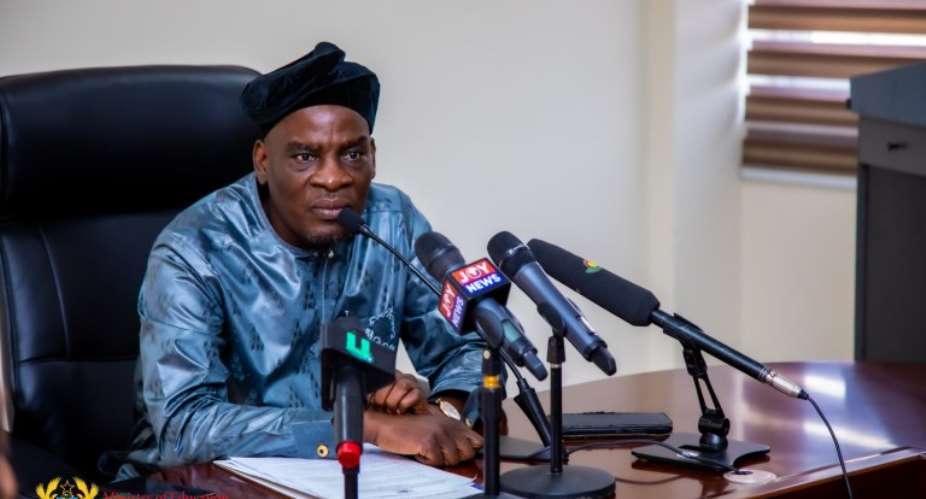
The Minister of Education, Haruna Iddrisu, recently spoke on the debate about allowing girls to grow long hair in our schools. His statement was firm: “There is an ongoing debate about hair cuts, and size and length of hair in secondary schools. We will not tolerate it today or we will not tolerate it tomorrow, in so long as we are moulding character.” He added, “If we give in to hair today, tomorrow it will be shoes, and the next day it will be the way they dress.” Those words are not just a declaration of policy but a reminder that schools are institutions of discipline, not platforms for personal expression.
This issue has been turned into an emotional argument about freedom, modernity, and self-expression, but it is more than that. It is about discipline, order, and culture. Those who say that long hair has no bearing on education are missing the wider picture. Schools are not only meant to teach mathematics, English, or science. They are designed to train young people to respect rules, authority, and social standards. A student who learns to obey simple grooming rules today is more likely to respect bigger laws tomorrow.
If we begin to dismantle the structures that shape discipline, soon we will have nothing left to hold on to. Today we say “it is just hair.” Tomorrow someone will say “it is just a uniform.” Another will say “makeup has no bearing on education.” The next will argue that “wearing high heels is a personal choice.” Where will we draw the line? Once the line of order is blurred, the entire foundation of school discipline will crumble.
It is not hair itself that threatens the system, but what that argument represents. It represents a growing belief that every rule can be questioned when it does not suit us. This kind of selective reasoning weakens social cohesion. We cannot claim to value discipline and at the same time fight every rule that enforces it. We cannot promote equality in schools and yet advocate for personal expressions that only a few can afford to maintain.
The rule on short hair is not a punishment. It is a symbol of equality and simplicity. In most public schools, students come from varied backgrounds. Not every parent can buy hair products, visit salons regularly, or spend money on braids and styles. Keeping short hair removes this inequality and ensures every student is treated the same way. It reduces competition, saves time, and keeps the focus on learning.
Culturally, short hair in schools has been part of our social order for generations. It reflects neatness, humility, and respect for uniformity. In Ghana, a student in uniform with short hair represents readiness to learn and submission to school authority. That image has shaped our educational identity. To abandon it in the name of modernity is to erode a part of who we are.
It is interesting that some of the same people defending this call for long hair were the ones who opposed same-sex marriage and other imported cultural practices. When we argued against those, we said such things were alien to our values. Now we turn around and use the same excuses that those groups used, claiming “it is our body” or “it does not affect anyone.” The inconsistency exposes how we pick and choose when it suits us. If “it has no bearing on education” is a valid argument for long hair, then by the same logic “it has no bearing on anyone” should have been accepted for same-sex relationships. Yet we rejected it because it violated our social beliefs. What has changed now?
If we insist on copying what happens in the United States or Europe, then we must be ready to copy everything, not just the parts that make us feel modern. In those same societies, the things we condemn are allowed too. So if we admire them enough to adopt their hairstyles, why do we stop when it comes to their moral standards? We cannot eat the fruit and reject the tree.
Schools are not beauty contests. They are institutions that prepare children for responsibility and citizenship. The Minister said it well: a school environment is not a place for beauty shows. Allowing every student to do what pleases them destroys the sense of structure that school life depends on. Rules are not meant to oppress, but to train and guide. Freedom without restraint becomes chaos.
We are losing our sense of collective discipline in the name of freedom. We are beginning to confuse self-expression with rebellion. If we want students who can lead and uphold values tomorrow, then we must begin by teaching them to respect rules today, even the ones that do not personally please them.
The debate about hair is not about beauty or choice. It is about what kind of society we are building. Are we raising a generation that questions every rule simply because it does not suit them, or one that understands the purpose of order? If we cannot uphold something as basic as uniform grooming, how will we expect the same students to respect laws and authority later in life?
Modernity does not mean abandoning everything that defines us. It means adapting without losing our sense of self. Let us stop pretending that allowing long hair will make our education system progressive. What will make it strong is discipline, respect, and consistency.
The Minister is right. Ghanaian schools must maintain the standards that have guided us for decades. The rule on short hair is not outdated; it is a boundary that protects the values that hold our schools together. Once we break that, we will open doors we may never be able to close again.
By Victor Raul Puobabangna Plance from Eggu in the Upper West Region of Ghana 🇬🇭
#Puobabangna
#IamPuobabangna


 Mysterious illness leaves children struggling to walk, hear in Mafi Kope
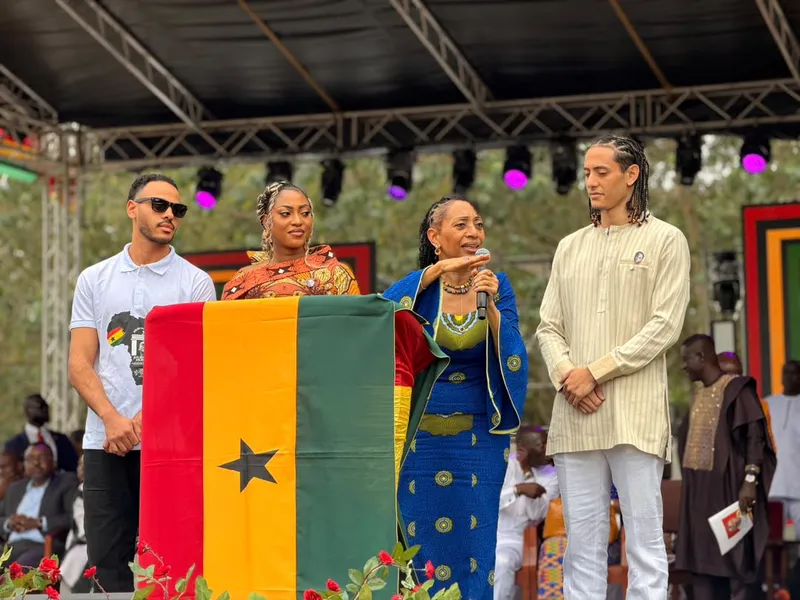 ‘We’ve come back to make sure our father's ideas never die’ – Nkrumah family
 Ghana Jollof: Akosua Manu appeals to Naana Jane to use her influence to free Sal...
 Yellow fever confirmed in Sissala East after 21 mysterious deaths
 Kenyasi man allegedly attacked by prison officers and inmates over yam theft cla...
 Germany’s far-right AfD makes strong gains in two state elections
 Savannah Regional Minister, IGP Yohuno visit Gbindabuor following lynching of po...
 Jehovah's Witnesses make blood component decisions a matter of personal conscien...
 Road contractors fed on contracts for years without completing projects – Alhass...
 Ghana Jollof saga: ‘She has no right to do what she’s doing’ – Inusah Fuseini



Comments
We all saw that video on Twitter(X) . I made a comment about it and few hours later,... Twitter (X) replied to me that it was an AI generated video... Let's find another topic to talk about. something to improve our daily living.