




During the Second World War, Adolf Hitler’s regime mastered the dark art of deception. Joseph Goebbels, Hitler’s minister of propaganda, engineered one of the most effective schemes of mass persuasion in human history. Through carefully choreographed radio messages, posters, and staged “news,” the Nazis convinced ordinary Germans that they were winning the war on all fronts, even when the Allied forces had clearly gained the upper hand. Goebbels’ goal was simple --- to manipulate perception, suppress truth, and maintain loyalty to a collapsing empire. That, in essence, was propaganda --- intrigue clothed as information. Its aim was not to inform, but to distort. Unfortunately, what Goebbels perfected in wartime Germany has now become a normalized practice in modern politics, including Ghana’s democracy. We have institutionalized propaganda under the harmless name “party communication.” Every serious political party today has a “communication bureau” whose mission is not to educate, but to control the narrative, no matter how far it strays from reality.
The Birth of Propaganda Politics in Ghana
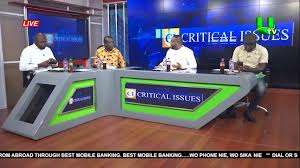
In Ghana, party communication has replaced independent reasoning. Turn on any FM station, television channel, or social media space and you will find party communicators fiercely defending their side --- sometimes with unshakable confidence, and often with limited facts. A government communicator defends every action and inaction of their party, while an opposition communicator condemns every move of the ruling party. Neither side listens to the other. The result is a noisy political marketplace where truth is optional and exaggeration is rewarded.
This system has created an echo chamber where Ghanaians no longer seek understanding; they seek validation. Party communicators are given daily talking points, armed with data sheets, often outdated or doctored, and unleashed onto the airwaves. They quote figures with the air of economists and argue with the zeal of evangelists, yet many of them lack the professional grounding to discuss the subjects they are assigned. This is how politics has replaced expertise in public discourse. Instead of learning from economists, engineers, and educationists, we are bombarded by rehearsed rhetoric from partisan agents whose main qualification is loyalty.
When Experts Are Silenced and Amateurs Take the Stage
Ideally, discussions on national policies and programs should feature professionals, academics, and practitioners with knowledge of the field. A development economist is better placed to analyze the economic potential of the Pwalugu Dam than a party communicator with a diploma in marketing. A seasoned educationist will provide more insight into the Free SHS policy than a political youth organizer who has never taught in a classroom. Ghana has an abundance of human resources --- retired professionals, researchers, and civil servants with decades of experience --- sitting idle at home while our national conversation is dominated by self-proclaimed “social commentators.” We have demoted knowledge and elevated noise.
The media is partly to blame. In their quest for “balance,” radio and television producers prefer to invite one NDC and one NPP representative to debate every issue. But what we call “balance” has become the enemy of truth. We cannot achieve genuine understanding when both debaters come with scripts rather than facts. Our airwaves are filled not with civic education but with verbal warfare. The losers are the citizens, who tune out in frustration.
The Infantilization of Discourse
It has become common to see young men and women barely in their twenties pontificating on complex matters like marriage, parenting, and child delinquency. They speak with confidence, sometimes bordering on arrogance, even when their experience is drawn from social media anecdotes. It is disturbing to older listeners who lived through the realities these young “experts” attempt to describe. This erosion of seriousness has contributed to the growing public apathy toward the media. The beauty of democracy lies not in argument for its own sake but in the quality of ideas exchanged. What Ghana needs today is not more talkers but better thinkers. The proliferation of talk shows has not deepened our national understanding, it has trivialized it. Every morning, FM stations host panels that turn serious policy issues into shouting contests. Television has become theatre, and social media has become an arena for insults disguised as debate.
A Culture of Endless Campaigning
Equally troubling is Ghana’s addiction to permanent campaigning. The day after an election, the defeated party begins planning its comeback, and the victorious one begins plotting to retain power. Instead of governing, leaders spend their energy on optics. Billboards celebrating “one year in office” are erected as if mere survival in government were an achievement. Every public policy is framed through political gain rather than public good. This culture of perpetual campaigning drains our national focus. Government machinery is converted into an election vehicle; the civil service becomes politicized; and the media becomes the propaganda arm of whichever party is in power. The nation stagnates because every four years, we start over, repeating promises, re-launching programs, and rebranding failures.
It is absurd that just ten months into the NDC’s return to power, conversations within the party are already centered on who should succeed President John Mahama in 2028. What moral authority does a government have to preach focus when it cannot discipline its own ranks to govern first and campaign later? The obsession with political succession, whether within NDC or NPP, betrays the poverty of vision in our politics. Governance has become a stepping stone to the next election rather than a platform for transformation.
A Glimpse of Self-Criticism and Its Importance
That said, one refreshing development in Ghana’s recent political landscape is the emergence of internal critique within the NDC. For perhaps the first time in Ghana’s Fourth Republic, we are seeing ruling party members openly criticize some government decisions. This marks a healthy departure from the eight-year silence under Nana Addo Dankwa Akufo-Addo, during which dissent within the NPP was nearly criminalized. True democracy thrives on internal self-correction. No government is perfect; the ability to tolerate constructive criticism from within is a sign of maturity. When political loyalty replaces truth, corruption flourishes. When propaganda drowns expertise, mediocrity becomes institutionalized.
Reclaiming the Airwaves
To rebuild Ghana’s intellectual culture, we must reclaim our media space from partisan captivity. The government’s Minister of Information should be the primary mouthpiece for policy explanation, not dozens of partisan communicators with little understanding of the ministries they purport to defend. Public communication should be clear, factual, and professional. Secondly, the National Media Commission and the Ghana Journalists Association must lead a reform of broadcast content. Political talk shows should limit partisan representation and create room for professionals, researchers, and civil society organizations. For instance, discussions on agriculture should feature agronomists, not politicians; debates on health insurance should involve public health experts, not party executives. Radio and television should once again become classrooms for national education, not platforms for propaganda. The true purpose of the media is to enlighten the citizenry, not to entertain political actors.
Halting the Noise: A New Political Code
Ghana desperately needs a code of political conduct that prioritizes governance over campaigning. All political activities unrelated to policy should be halted after elections. Party billboards and slogans should come down, and the government should be allowed to govern without constant distraction. Six months before a general election, campaigns can resume --- until then, let leadership focus on service delivery. This will save the nation millions of cedis wasted on endless political mobilization. It will also restore the dignity of public office, where appointees are judged by their competence, not by their ability to defend their party on radio.
The Role of the Citizenry
Citizens, too, have a duty to reject propaganda. We must stop rewarding noise-makers with attention. We must demand depth from our journalists, facts from our leaders, and logic from our debaters. When we tolerate shallow discussions, we invite shallow governance. Ghana’s problems, from debt to unemployment, from corruption to education decline, require serious minds, not political cheerleaders. Every Ghanaian must become a custodian of truth. Social media users must learn to fact-check before sharing information. Radio listeners must call out misinformation rather than clap for clever liars. Voters must reward integrity, not noise.
My Position
If propaganda was the soul of the Nazi war machine, it has become the poison in Ghana’s democracy. It divides us, dulls our intellect, and distracts us from progress. The media must rise above partisan control. Political parties must reform their communication culture. And citizens must reclaim their right to think freely. Our democracy was not designed for endless argument; it was built for collective advancement. Let us move from the politics of propaganda to the politics of purpose. Let the voices on our airwaves be those of knowledge, experience, and sincerity. Let Ghana’s public discourse be defined not by who shouts loudest, but by who speaks truthfully. For if we continue down this path of deception and division, we may win elections but lose the very soul of our nation. It is time to reset the airwaves, restore respect for expertise, and rebuild a thoughtful republic.
FUSEINI ABDULAI BRAIMAH
+233208282575 / +233550558008
[email protected]

 Failing one or two BECE core subjects does not remove student from placement – E...
 Spiritualist found dead in suspected suicide at Assin-Amoabeng
 ‘Bunkpurugu must choose development over violence’ – MP tells residents
 Court orders Ghana Police to file disclosures in Labone robbery case
 Mahama inaugurates five-member Independent Fiscal Council, demands objective ove...
 Trump tells Putin he wants swift end to Ukraine war, Kremlin says
 Poor refereeing destroying Ghana's football — Mahama
 No businessman will sponsor NPP again because of its ‘evil and greedy nature’ – ...
 Failure to jail corrupt NPP officials will haunt NDC in election 2028 – Hopson A...
 Illegal miner who posed as pastor to defile student jailed 15 years

