




Ghana’s pharmaceutical market is no longer a quiet corner of the healthcare sector. It is fast becoming one of the most competitive, tightly regulated, and strategically vital industries in the country’s growth story — a sector where access, trust, and compliance now rival profit margins as key metrics of success.
Within this landscape, Rokmer Pharma, a company that began modestly in 1999, represents a revealing case study of how local enterprises are adapting to these pressures and possibilities.
A Changing Market
According to the Pharmaceutical Manufacturers Association of Ghana (PMAG), the nation’s pharmaceutical market is worth over US$600 million annually, with nearly 70% of all medicines imported. This dependency on imports leaves local players exposed to global price shifts, forex volatility, and the dominance of multinationals.
Yet even within these constraints, local firms are finding new footholds. Rokmer Pharma, headquartered in Accra, operates both as a wholesale distributor and retail pharmacy network — a dual model that Managing Director Richard O. Acheampong describes as “the balance between reach and responsibility.”
“In today’s pharmaceutical business, you can’t just move boxes; you must move trust,” Acheampong tells Samuel Kwame Boadu. “Affordability and compliance must go hand in hand if we are to serve patients effectively.”
It’s a statement that reflects an industry-wide challenge: how to deliver affordable medicines without compromising quality in an era of growing regulatory oversight.
Affordability, Access, and Regulation
Over the past decade, the Food and Drugs Authority (FDA) has strengthened licensing, importation, and distribution requirements for pharmaceutical firms. Rokmer Pharma’s facilities, fully licensed for storage and importation, show how regulatory alignment has become both a compliance obligation and a competitive edge.
“Ghana’s healthcare system is evolving, and so must the businesses that support it,” says Mercy Acheampong, the company’s General Manager. “Our focus has been to ensure that every branch, every product line, and every partnership meets the highest standards the FDA requires.”
That commitment to structure and safety has helped the company maintain contracts with hospitals and clinics while growing its retail presence in Kaneshie, Dansoman Exhibition, and Mr. Mensah, among other Accra hubs.
Digital Transitions and Distribution Realities
While Ghana’s health sector still leans on physical distribution, a digital transition is underway. Rokmer Pharma, like many of its peers, has invested in website modernization and e-commerce integration, allowing pharmacies and patients to place orders online — a small but significant shift toward the digitization of pharmaceutical logistics.
Behind the retail counters, however, the fundamentals remain human. Rokmer’s trained sales representatives and fleet of vans continue to anchor the company’s expansion across Ghana, helping it remain responsive in a market where delivery speed and product authenticity are decisive factors.
Beyond Commerce: The Social Face of Pharmacy
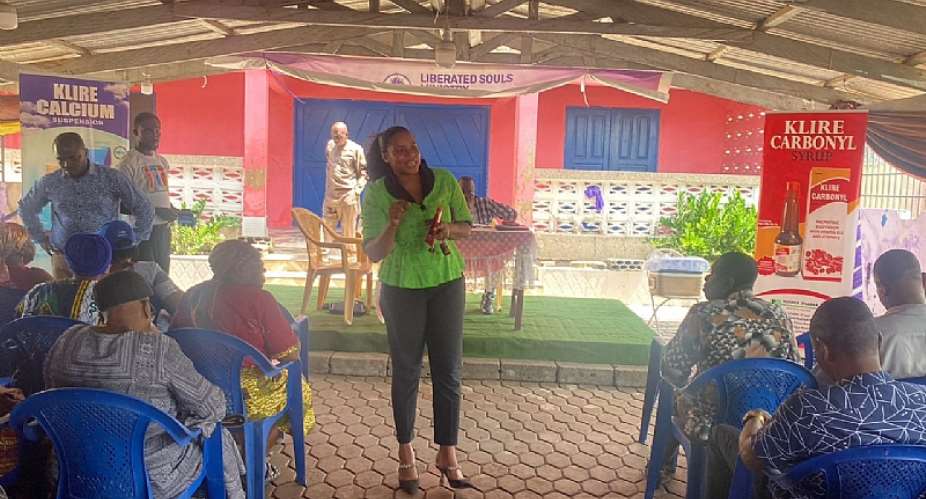
What distinguishes Rokmer Pharma from many in its category is its approach to corporate social responsibility as they term it "Rokmer Pharma In the Community". Regular free medical screenings, medicine donations, and blood donation drives have become hallmarks of the company’s identity.
These are not one-off events but recurring initiatives aimed at deepening community trust. In a country where health costs can deter early diagnosis, these small interventions matter — and they subtly reinforce the idea that pharmacies can be more than retail outlets; they can be partners in public health.
The Industry’s Challenges — and Its Future
For all its progress, Ghana’s pharmaceutical sector faces structural headwinds: foreign exchange instability, high import dependency, and limited access to long-term financing. Industry analysts estimate that 70% of the country’s medicines are still imported, leaving firms vulnerable to global supply disruptions.
Yet, growth potential remains undeniable. The sector is expanding at an estimated 10–15% annually, driven by urbanization, middle-class growth, and the expansion of private health insurance.
“The opportunity is there,” says Richard O. Acheampong. “But we need a deliberate national effort to grow local participation — not just in distribution, but in manufacturing and research. Ghana’s health system should be supplied, at least in part, by Ghanaian hands.”
That sentiment echoes the growing call within Ghana’s policy circles for greater local value addition and pharmaceutical independence — goals also outlined in the National Medicines Policy.
A Quiet Evolution in Motion
Rokmer Pharma’s journey is not one of overnight transformation. It is a story of persistence — of a local firm navigating regulation, competition, and community engagement while holding onto its founding vision of “affordable medicines for all.”
As Ghana’s pharmaceutical industry matures, such companies represent the middle layer of the ecosystem — not as giants, but as the connective tissue between manufacturers, hospitals, and the everyday citizen.
In the long arc of Ghana’s healthcare evolution, that layer may prove to be the most indispensable of all and myself and the Accra Street Journal team will be there to monitor the industry

 Roads Ministry needs 1,000 additional staff — Governs Agbodza
 Stop tweeting and brief Parliament on South Africa situation — Patrick Boamah to...
 Roads Minister reassigns Bogoso–Prestea road project to new contractor over dela...
 Government must be held accountable for Black Stars’ poor state — Enam Hadzide
 Any SMS or platform offering discounted DVLA fines is fraudulent — DVLA cautions...
 Gov't resources GBC to acquire Free-to-Air broadcast rights for 2026 FIFA World ...
 Flooding crisis: 'Current NDC gov't the laziest and weakest since 1992' — Miracl...
 President Mahama’s approval rate remains positive at 58.9% — IEA survey shows
 'Take note of Sedina Tamakloe's extradition and come home' — Kwame Jantuah to Of...
 Nigerian evacuees set to arrive in Lagos Thursday amid South Africa xenophobic a...


