




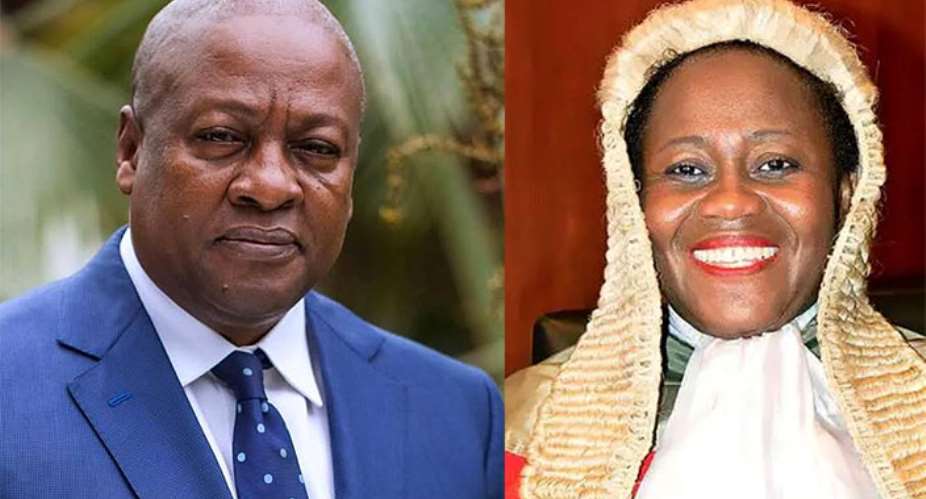
The recent removal of Chief Justice Gertrude Torkornoo has sparked controversy not only within legal circles but across the broader Ghanaian public. At the core of the allegations was the supposed extension of travel benefits to her spouse and daughter, framed by the committee as “stated misbehaviour” under Article 146 of the 1992 Constitution. Yet, this was not a constitutional breach of judicial ethics but an administrative and financial irregularity that should have been addressed within Ghana’s financial accountability framework.
Ghana’s financial system clearly places responsibility for safeguarding state funds on accounting officers, auditors, and finance administrators. Their duty is to vet requests, block irregular claims, and advise against unlawful disbursements. If allowances were improperly extended to the Chief Justice’s family, then the fault lies first with those officers who approved the payments without objection. The Chief Justice, like any official, can request, but it is the finance officers who authorize and ensure compliance with the law. By punishing only the Chief Justice and ignoring the approving administrators, the committee distorted responsibility and applied the law selectively.
History provides examples of how similar matters have been treated. When the Vice President travelled to the UK for medical treatment, the state covered the expenses of a family member, though that person was not constitutionally entitled. When a party vice-chairman died in the recent helicopter crash, he was on board a state military flight, though he was not a government official. Even the Speaker of Parliament regularly attends private events with his family in a government car, though the benefit is allocated to him alone. None of these cases were treated as “stated misbehavior.” At most, they fall under financial administration, subject to audit queries, refunds, or surcharges. Why then was the Chief Justice’s case elevated to constitutional removal? The answer lies not in the strength of the law, but in its selective application.
The composition of the removal committee further undermined its legitimacy. Supreme Court justices sat in judgment over their own administrative head, creating conflicts of interest. Council of State appointees reflected the influence of the Executive. The Ghana Bar Association’s representative came from an association long criticized for political bias. Even the inclusion of a military figure raised concerns of intimidation and executive overreach. Such a body was structurally incapable of appearing impartial, and its conclusions therefore lack credibility.
Some commentators, such as Dr. Maame A.S. Mensa-Bonsu, have suggested that the Chief Justice erred by discussing the matter publicly rather than keeping faith in the Constitution. This argument misses the point. Public discussion is not misconduct. On the contrary, in a case where the constitutional process itself is being stretched to cover an administrative lapse, transparency strengthens accountability. Silence would only legitimize an already questionable process.
The removal of Chief Justice Torkornoo stands on shaky ground. The allegation, extending benefits to unqualified individuals, is an administrative irregularity, not constitutional misbehavior. Properly handled, it would have been addressed by audit processes, refunds, or reprimand, with accountability directed at the financial administrators who approved the payments. By elevating it to constitutional removal while overlooking similar or greater benefit extensions by other high officials, Ghana has sent a troubling signal: that the law is not applied consistently, but selectively. Such selective justice undermines confidence in our democratic institutions more than any administrative lapse ever could.
David Asante-Ansong
Pennsylvania, United States


 NDC MP explains why Kevin Taylor was not arrested when he returned to Ghana
 Disruption of global order: 'We must expand opportunities for youth' – Mahama
 WN/R: Residents raise concern over abandoned truck on Benchemaa-Oseikojokrom hig...
 Gov’t invests GH¢4.12bn into road infrastructure in Bono Region — Asiedu Nketiah
 Mahama to cut sod for Sunyani Sports Stadium project in October
 Kwesi Pratt urges Ghana to revisit Nkrumah’s seven-year development Plan
 Ghana Jollof saga: 'Power is transient' — Annoh-Dompreh cautions against partisa...
 “I loved NDC but I’ve been disappointed and I’ve learned my lesson” — Mzbel
 Sista Afia laments how colleague musicians turned down her feature requests
 Joining NDC did me more harm than good – Mzbel


