




Nigeria today stands at crossroads in its national journey, a situation that is both familiar and precarious. To that extent, the crisis unfolding thousands of miles away in Nepal should not be simply dismissed as a faraway problem or the turbulence brewing in a small Asian country. It should instead be seen by the governments and people of Nigeria as a mirror, a stark warning, and a sobering reminder of what happens when governments lose touch with their people, when young citizens no longer believe in the promises of democracy, and when leadership becomes a game of privilege, power, and survival rather than service, justice, and nationhood.
The turmoil in Nepal, triggered by a government’s heavy-handed social media ban but rooted in years of frustration, corruption, and exclusion, bears striking resemblance to Nigeria’s own gathering storms. If leaders in Africa’s most populous country do not heed the warning, it will only be a matter of time before the voices of discontent erupt in ways that could destabilize the fragile fabric of the Nigerian state.
In Nepal, the immediate spark was the ban on 26 popular social media platforms, including Facebook, X, Instagram, YouTube, and WhatsApp. The government justified the move by citing the need to regulate misinformation, fake identities, and hate speech. But the young people of Nepal saw it differently. For them, the ban was not simply about controlling online spaces, it was about silencing dissent, curtailing freedom of expression, and shielding corrupt elites from public accountability.
The protests that followed quickly escalated into a full-scale movement. Government buildings were torched, streets became battle zones, dozens of people lost their lives. Eventually, the Prime Minister resigned. Yet, beneath the smoke of burning government offices lay deeper grievances: widespread corruption, entrenched nepotism, suffocating unemployment, and a political class increasingly detached from the struggles of ordinary citizens. This is why Nepal’s youths, often described as Gen Z, stood up, not just against a ban, but against a system that had failed them.
Not surprisingly, Nigeria’s situation is eerily similar. Like Nepal, it is a young country demographically. The median age of Nigerians is barely 18, meaning that more than half of its population are young people who grew up in the digital age. For them, social media is not just entertainment but a lifeline, a marketplace, a tool for advocacy, and a means of organizing. Nigeria saw a glimpse of this power during the #EndSARS protests of 2020, when young people mobilized online and on the streets to demand an end to police brutality. What initially began as a movement against a rogue police unit quickly metamorphosed into the expression of long-suppressed anger at corruption in public offices, mismanagement, unemployment, and lack of opportunities. The government’s response, deploying force, imposing curfews, and in some cases using live ammunition gainst its own citizens, left a deep scar. Trust was eroded, and young people learned that their leaders were more interested in silencing dissent than in addressing the causes of their grievances. That wound has never healed, and it still festers.
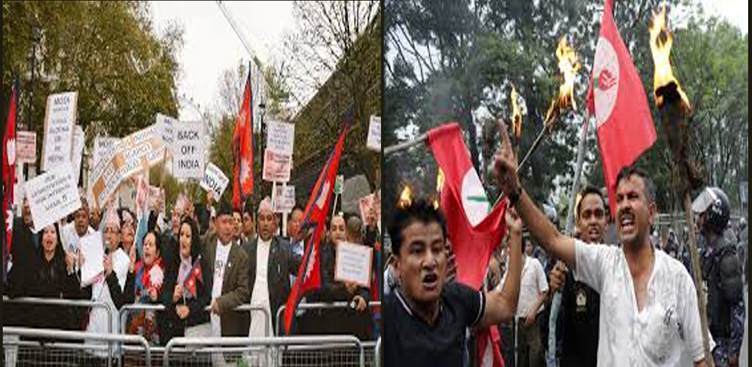 The Nepal protests
Nepal’s turmoil was compounded by nepotism, the privileges enjoyed by children and relatives of politicians who inherited influence and access without merit. Nigerians do not need to look far to see the same disease at work. In politics, business, and public life, the proclivity towards dominance of family dynasties is apparently unmistakable. Sons and daughters of political elites occupy strategic positions, not by virtue of competence but by the accident of birth. Meanwhile, millions of capable graduates roam the streets, unemployed and disillusioned. In an environment where opportunity is distributed not by merit but by connections, frustration builds like a pressure cooker. In Nepal, that pressure finally exploded. Nigeria, if nothing changes, is inching towards the same fate.
Another striking similarity lies in the way both countries are governed. In Nepal, successive governments had been plagued by infighting, corruption, and lack of focus on nation-building. Political elites were more preoccupied with their personal ambitions than with the collective progress of the nation. Nigeria’s political history since independence tells the same story. For 55 years since self-rule, the promise of true nationhood has continued to remain elusive. Ethnic and religious divisions have been manipulated by politicians for their own advantage. The federal character principle, meant to ensure fairness, has often been turned into a tool for patronage rather than merit-based inclusion. The ruling class continues to amass wealth while the majority are left in grinding poverty. The question Nigerians must ask is this: how long can a people endure such inequity before the breaking point is reached?
Nepal’s protests demonstrate that when young people lose hope, when they see no path to a dignified future, they can take matters into their own hands. In Nigeria, youth unemployment remains staggeringly high, hovering around 40 percent by some estimates. Those who manage to secure jobs often find themselves underemployed, earning a fraction of what is needed to survive. The education system churns out graduates who are neither adequately trained nor absorbed into the workforce. Meanwhile, the country’s leaders make lofty promises that are scarcely kept, announce endless “empowerment programmes,” and celebrate ribbon-cutting ceremonies, yet the lived reality of most young people remains one of hardship and hopelessness.
A society cannot thrive if its youngest generation feels abandoned, nor can it survive if its brightest minds are forced to flee abroad in search of opportunities. Already, Nigeria faces an alarming brain drain as doctors, engineers, nurses, and even artisans emigrate to Europe, America, and the Middle East. If left unchecked, this exodus will leave the nation hollow and unable to sustain itself.
The Nepal experience also highlights the dangers of heavy-handed censorship and state control. When governments attempt to silence dissent by banning media platforms or curtailing fundamental human freedoms, they only amplify the anger of the people. In Nigeria, there are already worrying signs of similar tendencies. The ban on Twitter in 2021, following the platform’s deletion of a tweet by the president, was a clear warning shot. Although the ban was eventually lifted, it revealed the government’s willingness to sacrifice economic and social benefits in order to silence criticism. Such actions create deep mistrust between citizens and their leaders. In a world where information flows freely, attempting to control narratives through force only accelerates resistance. Nigeria’s leaders must learn that legitimacy is not earned by silencing voices but by listening to them.
What is most troubling about Nepal’s unrest is that it did not emerge from a single political party’s failure but from a systemic breakdown. Decades of corruption, poor governance, and disregard for ordinary people culminated in a generational revolt. Nigeria faces the same systemic rot. Whether one examines the health sector, education, infrastructure, or security, the picture is grim. Hospitals are underfunded, forcing citizens to seek care abroad. Schools are plagued by strikes, poor facilities, and outdated curricula. Roads crumble, power supply remains epileptic, and insecurity from banditry, kidnapping, and terrorism undermines the very sense of safety. In such an environment, it is easy for despair to take root and for frustration to spill into the streets. Nigeria may not yet be at Nepal’s tipping point, but it is getting dangerously close.
The lessons Nigeria should draw from Nepal are clear. First, leaders must recognize that young people cannot be ignored or patronized with token gestures. They are the majority, and their voices matter. Policies that genuinely create jobs, expand access to education, and reward merit must be prioritized over empty rhetoric. Second, the culture of nepotism and entitlement must give way to meritocracy. A nation cannot thrive if leadership positions and opportunities are handed out as family heirlooms. Third, freedom of expression must be respected. Attempts to ban platforms, intimidate journalists, or censor the internet only create more unrest. Constructive dialogue with citizens, including critics, is a mark of strength, not weakness. Fourth, corruption must be tackled not with lip service but with real accountability. When politicians are held responsible for looting public funds, when institutions are strengthened to function independently, and when justice is not selective, trust begins to be restored.
Nigeria’s leaders must learn to work in harmony. The endless infighting, ethnic rivalries, and partisan squabbles have continued to erode the dream of true nationhood. Fifty-five years after self-rule, Nigeria is still searching for itself. The task of building a nation is not merely about economic growth or political survival; it is about forging a collective identity, a sense that every citizen belongs and has a stake in the future. Nepal’s tragedy shows what happens when that bond is broken. Nigeria cannot afford to walk down that path. The cost would be too great, the consequences too severe.
The consoling truth is that Nigeria still has time to change course. The country is blessed with abundant natural resources, a vibrant population, and immense potential. But potential is not enough. Without vision, justice, and unity, potential becomes wasted energy. Nepal’s burning government buildings should be seen as a warning furnace on Nigeria’s horizon. If the Nigerian state continues to drift by ignoring the cries of its youth, indulging in nepotism, silencing dissent, and enriching elites at the expense of the people, the day will come when the anger boiling beneath the surface will no longer be containable. And when that day arrives, it will not be hashtags or speeches that decide the future but the raw force of a generation that refuses to be ignored.
Leadership is not about survival in office, it is about service. Nationhood is not about rhetoric, it is about shared destiny. True unity cannot be proclaimed in speeches while injustice reigns in reality. If Nigeria is to avoid Nepal’s fate, its leaders must begin to govern with humility, foresight, and genuine commitment to the people. They must learn that the stability of a country rests not on the might of its army or the reach of its censorship but on the trust of its citizens. And trust, once broken, is painfully difficult to restore. The choice before Nigeria is clear. It can continue on its current path of disillusionment, where youth see no future, where corruption festers, and where leaders bicker while the nation burns. Or it can take the harder but more rewarding path of reform, unity, and genuine nation-building. Nepal’s crisis is not an isolated story. It is a cautionary tale, a vivid reminder that nations are not destroyed by foreign invaders but by the neglect of their own leaders. Nigeria should learn from the Nepal experience before it is too late.

 Justin Kodua Launches Bid to Retain NPP General Secretary Post Ahead of Crucial ...
 Zanetor Demands Continental Action: ‘Africa Cannot Progress While Women Live in ...
 Mahama assures transfer of UGMC to University of Ghana
 Wontumi told me he would get 20year jail term before judgment was read – Lawyer ...
 Sarkodie Warns Gov’t: ‘Explain the 24-Hour Economy or Risk Voter Backlash’
 ‘Ofori-Atta Must Account’: COPEC Boss Warns NPP of 2028 Backlash Over Lingering ...
 UG Economist Slams Gov’t: “24-Hour Economy Implementation Far From Reality”
 Ghana Flags 1.8m Housing Gap at UN Forum, Says Urban Pressures Demand Urgent Act...
 NDC Draws Red Line: Gov’t Appointees Who Don’t Resign Barred from Executive Elec...
 Kpebu Warns: “Judicial Independence Won’t Come From Law Alone — It Needs Judges ...

