




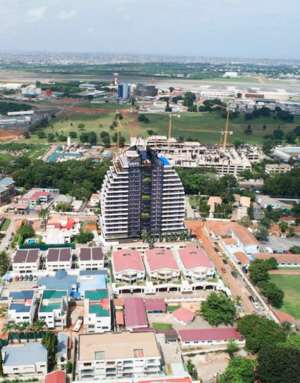
President Mahama’s decision to lift the eight-month ban on the sale of state lands has reopened one of Ghana’s most contentious debates. Will the promised reforms finally restore integrity to public land management, or will history repeat itself in another cycle of scandal and patronage?
A policy shift in context
When President John Dramani Mahama announced on 2 September 2025 that his government had lifted the ban on the sale and allocation of state lands, it was not a mere administrative decision. It touched the very heart of one of Ghana’s most persistent and emotive debates: the use and misuse of public land.
The moratorium on land transactions had been imposed in January 2025. At the time, the President argued that the system of allocations, leases, and outright sales had been riddled with irregularities. Lands were being alienated under questionable conditions, some of them involving politically exposed persons. Mahama promised a full review and an audit to restore sanity to a process long tainted by secrecy and patronage.
For eight months, all transactions were frozen. In March, the President went further by ordering the reversal of allocations involving the Ministry of Foreign Affairs’ lands at Airport Residential Area, a signal that his administration would not hesitate to reclaim lands sold under dubious circumstances.
By early September, the government declared that the review had run its course. A new regime of verification, oversight, and transparency was said to be in place. Digitalisation of land records, an audit of transactions between 2017 and 2024, and a pledge to recover illegally acquired lands were announced as safeguards.
The ban was lifted, but the absence of a published review report remains a stain on the process, leaving unanswered questions about what was truly uncovered.
The controversy, however, has not lifted with the ban. Given Ghana’s chequered history of public land disposal, citizens are right to ask whether this moment signals genuine reform or simply the continuation of a cycle in which public assets are converted into private gain.
The long shadow of history
The state’s control of land is rooted in the early years of independence. The State Lands Act of 1962 empowered the government to acquire land for “public purposes" compulsorily. Schools, hospitals, ministries, military barracks, and housing estates were built on such lands. Over the decades, vast tracts in Accra, Kumasi, and other towns passed into state hands.
The Constitution of 1992 reaffirmed this arrangement. Article 257 vested all public lands in the President, but crucially, “in trust for the people of Ghana.” That phrase, “in trust”, lies at the core of today’s debate. It implies fiduciary responsibility, not discretionary power.
From the 1990s, governments began to experiment with the sale of land as a means of raising funds. The Accra Redevelopment Policy was one such initiative. Its rationale was simple: sell prime plots in Ridge, Cantonments, and Airport Residential Area, then use the proceeds to build modern housing for civil servants. In practice, sixty-seven plots were reportedly sold, financing the construction of more than eighty bungalows and nearly two hundred flats.
Yet the controversies quickly outweighed the achievements. Who were the buyers? Were the plots sold transparently? Many citizens believed that the beneficiaries were insiders, political allies, or connected businessmen. The perception that the ruling elite was profiting from public trust became widespread.
The Kufuor administration inherited this policy but pushed it further. By the early 2000s, the sale of government bungalows became the defining scandal of the era. The case of Jake Obetsebi-Lamptey epitomised the problem. As Minister of Tourism, he sought to buy the official bungalow he occupied.
Two opposition MPs, Samuel Okudzeto Ablakwa and Edward Omane-Boamah, challenged the sale in the Supreme Court. In May 2012, by a six-to-three majority, the Court held that the sale was lawful. The law may have been on Jake’s side, but public opinion was not. For many Ghanaians, the case crystallised the sense that state assets were being parcelled out to those in power.
Other sectors of state land have faced similar threats. Aviation lands, acquired for the expansion of airports and related infrastructure, have been steadily encroached upon. In 2017, allocations were halted after safety concerns were raised. By 2020, aviation workers were protesting against what they saw as the systematic erosion of the lands needed for Ghana’s aviation future. The official denials did little to ease public suspicion.
Perhaps the most explosive episode came in 2022, when parts of the Achimota Forest Reserve were declassified under Executive Instrument 144. The backlash was swift and ferocious. The forest, seen by many Ghanaians as a spiritual sanctuary and ecological lung for Accra, was suddenly vulnerable to real estate development. Religious leaders, civil society groups, and ordinary citizens united in outrage. Though the government rushed to assure the public that the forest would remain intact, confidence was shaken.
Against this history, President Mahama’s lifting of the ban cannot be treated as a routine decision. It must be judged in light of decades of controversy, distrust, and disillusionment.
The case for selling state lands
To understand why governments persist with such sales, we must recognise the pressures they face. First, the state is a massive landowner, and not all holdings are strategic. Some parcels are idle, encumbered, or underdeveloped. In principle, selling them could unlock capital for pressing needs such as schools, hospitals, and infrastructure, especially at a time of fiscal crisis.
The weakness of this argument, however, lies in the record: previous sales often raised far less than they should have because lands were disposed of below market value or through non-transparent allocations. Unless the government ensures competitive pricing and open bidding, the promise of revenue will remain more theoretical than real.
Second, in high-value urban areas, redevelopment can transform obsolete bungalows into modern apartment blocks, increasing density and making better use of scarce land. The logic is one of efficiency: maximise value from prime locations while channelling the proceeds into public projects.
Third, if sales are conducted transparently and in accordance with the 2020 Land Act, they can reduce disputes and provide clarity of title. For investors, clear tenure is the difference between risk and opportunity. For citizens, this would provide reassurance that state land transactions are not manipulated to favour political or economic elites.
The Land Act, 2020 (Act 1036) does not absolutely ban the disposal of state lands, but it does impose stricter rules to ensure transparency and accountability. It codifies land interests, mandates electronic conveyancing, criminalises unlawful transactions, and requires that all disposals be carried out in trust and in the public interest.
In short, the Act regulates and restricts the disposal of state lands rather than prohibiting it outright, signalling that sales can proceed but only under lawful and transparent conditions.
Supporters, therefore, argue that hoarding surplus land is wasteful. With proper safeguards, selling state land could be a win-win: funds for development, clarity for investors, and better urban planning.
The case against
The counter-arguments, however, are formidable. Land is finite. Once sold, it is gone forever. The needs of future generations cannot be predicted with certainty. Land that today seems surplus may tomorrow be required for schools, clinics, or ecological protection.
History also warns us that land sales in Ghana have rarely been transparent. From the Accra Redevelopment Policy to the Obetsebi-Lamptey case to the Achimota Forest controversy, the pattern is clear: politically connected persons are the primary beneficiaries. Public land is treated as a political reward rather than a national asset. Without radical reform, the lifting of the ban risks repeating the same cycle.
Strategic categories of land should never be sold. Aviation reserves, security installations, and ecological sites are irreplaceable. Their alienation is not simply a matter of revenue but one of national resilience and safety. The Achimota saga demonstrated how fragile Ghana’s ecological future is when public land becomes a commodity.
Finally, the constitutional principle cannot be ignored. The President does not own state land. He holds it in trust for the people. That trust implies accountability, transparency, and demonstrable public benefit. To treat state land as an asset for disposal without strict justification is to betray the spirit of the Constitution.
Towards a credible framework
If the lifting of the ban is to be credible, it must be accompanied by more than promises of reform. The new framework for land transactions should have been published before the ban was lifted. Without such transparency, the process risks sliding back into the “deals behind the veil” era that has so often tainted state land disposals.
Citizens deserve to see, in black and white, the rules that will govern future sales and allocations. The government should publish a complete inventory of all state lands, categorising them as strategic or surplus. Only surplus lands should be considered for sale or lease.
Transactions must favour long leases rather than outright sales. In this way, ultimate ownership remains with the state, preserving flexibility for the future. Proceeds should be ring-fenced, directed into a dedicated public land fund to build housing, hospitals, and schools, or to acquire new land banks.
Conflict of interest rules must be ironclad. Politically exposed persons, ministers, MPs, senior officials, and their associates should be barred from acquiring state land during or immediately after their time in office. Full disclosure of beneficial ownership should be mandatory. Every transaction must be published within a specified timeframe, showing the buyer, the price, the valuation, and the intended use.
Finally, an independent annual audit of all land transactions should be presented to Parliament and made public. Only in this way can citizens regain confidence that land sales are not simply another form of political patronage.
A test of trust
The lifting of the ban on state land sales is not just a technical measure. It is a moment of truth for Ghana’s governance. For decades, the sale of public lands has symbolised corruption, privilege, and betrayal. Citizens have seen bungalows sold to ministers, aviation lands whittled away, and forests declassified for development.
President Mahama’s government insists that this time will be different. That claim must be tested, not taken on faith. If the reforms are real, if transactions are published, if elites are barred, if proceeds are earmarked, and if audits are rigorous, then Ghana may indeed be entering a new era of land governance.
But the credibility test begins with publishing the new framework itself. Without it, the country risks reverting to the “deals behind the veil” era, which has long eroded trust in land policy.
The ban has been lifted, but the burden of proof remains. Only if integrity replaces patronage will President Mahama’s land policy be remembered as reform rather than relapse.
Acknowledgement
The author is grateful to Professor Karl Kofi Alorbi for valuable comments on an earlier draft.


 Household waste fees could fall to GH¢50 every two weeks under new system — Ayar...
 Tamale: Three missing children found dead inside parked vehicle at Koblimahagu Z...
 Kojo Bamba’s election projects mindset of violence, it’s backward politics – Mus...
 'You can expose corruption without insulting people's humanity' — Agyinasare on ...
 Prof Mike Ocquaye backs Kojo Bamba’s Vice Chair election, cites need to protect ...
 I was not part of any negotiation to swap NPP vice chair positions with Bamba – ...
 NPP is not putting ‘old wine in new bottles’ – Ibrahim Adjei on new executives
 John Boadu comes nowhere near Asiedu Nketiah in terms of pedigree, gravitas, val...
 Gov’t renames 24-hour economy markets as District Economy Markets, targets 100% ...
 BoG, Police arrest 7 in Accra over alleged use of cedi notes for money bouquets,...


