




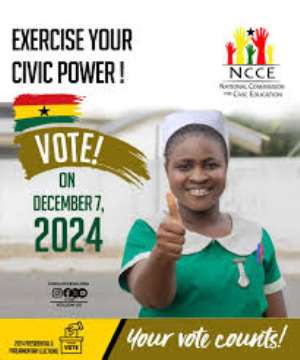
The outcome of the 2024 Presidential and Parliamentary elections reflected an aggressive public judgment on the economic governance of the country. However, some communicators of the contenders in the impending NPP’s presidential primaries persistently portray it as a direct verdict on Dr. Mahamudu Bawumia, meaning he was rejected by the voters.
This conclusion, while politically expedient for some, grossly oversimplifies voter behaviour and the discontent among Ghanaians two years before the general elections. That narrative ignores voter sentiments on bad policy choices, institutional failures, and the hardship the ordinary citizens endured as immediate consequences of the output of the NPP government.
As Vice President and head of the Economic Management Team, Dr. Mahamudu Bawumia was expected to produce the magic of turning the economy around considering the economic lectures he held before the party won the presidential elections. Yet economic management is not controlled by a single team, even if headed by a technical person or an expert. Economic management is primarily handled by the Central Bank of Ghana, Ministry of Finance, Ministry of Trade and Ministry of Agriculture. The Economic Management Team only plays a complementary role in the process; it is not responsible for the direct management of the economic policies of Ghana. But this assertion does not absolve the former Vice President from accountability for the economic deliverance promised.
Dr. Bawumia cannot be the sole architect of policies that plunged Ghana into its worst financial crisis in decades. The country defaulted on its debt in 2022, inflation soared to over 50% at its peak, and youth unemployment aggravated, alienating a demographic that comprises over 60% of the electorate.
Voters confronted an entire system of governance that promised a break from the old system of economic hardship, corruption and mismanagement in 2016, but the party delivered more of the same. Even before 2024 many people felt institutions were politicised, economic decisions were unfavourable, and corruption had intensified. Thus, the mistrust in the party was compounded by years of perceived institutional erosion, pervasive corruption scandals, and declining trust in state leadership.
The NPP’s fate was sealed long before Bawumia became the flagbearer. Even a candidate with angelic credibility would still have struggled under the shadow of the government’s broken promises because voters don’t view candidates in isolation. The electorate’s frustrations were aimed as much at the government machinery as at the economic crisis that defined their daily lives. Reducing such a wide spectrum of grievances to a “Bawumia verdict” is an insult to the Ghanaian voters’ awareness of political and economic deterioration.
The 2024 elections were not about Bawumia alone; they were about the fragility of Ghana’s political compact. They exposed the fatigue of an electorate that was caught in a duopoly where the two major political parties recycle promises but fail to fundamentally alter the structures of the economy, governance and economic management itself.
It is alleged from hindsight that he did not support some of the administration's fiscal policies, including the controversial e-levy (a tax on mobile money transactions), which further burdened ordinary Ghanaians without delivering promised revenues. This clearly indicates there was a lack of effective collaboration between the Economic Management Team and the fiscal authorities. A positive collaboration between the Economic Management Team and the fiscal authorities as well as the effective coordination of economic policies in the first term of the NPP produced positive and noticeable results.
The brutal truth is that Bawumia was defeated as a political passenger in an NPP vessel sinking under the weight of perceived economic mismanagement, severe economic hardships and public discontent. Before the 2024 general elections, many people felt the government presided over Ghana’s worst economic crisis in decades. The second term of the administration was particularly difficult; Soaring inflation, a depreciating cedi, and a crippling debt default were not just abstract economic data points – they were felt in the daily struggles of ordinary Ghanaians. The economic pinch was real and personal from the market woman to the salaried worker.
The NPP's internal fractures played a significant role in its electoral defeat. The party's delegates' system for electing parliamentary candidates led to widespread disunity and apathy in the party. The imposition of certain candidates, along with unresolved internal conflicts, left many loyal party members feeling unwilling to exert the effort required for a grassroots campaign. The significant drop in the NPP's parliamentary seats is a powerful testament to this internal collapse. This was not a failure of Bawumia's message, but a failure of the party machinery to rally its own base. The apathy was not a rejection of the candidate, but rather of the party’s internal politics.
The election results reflect a deeply held belief that a change of guard was necessary, a belief that transcended any individual candidate's campaign. The electoral data equally revealed that the victory of President John Dramani Mahama was less an endorsement of his previous tenure and more of a manifestation of the collective desire for change. Voters were not necessarily swayed by new promises from the NDC, but were driven by the conclusions of a powerful evaluation of the NPP's performance.
That is not to say that Dr. Mahamudu Bawumia was not part of the broader challenges of the last NPP administration. But such a conclusion ignores the institutional and systemic failures of the NPP. It disregards the profound economic hardship that defined the last four years. It overlooks the voter apathy and internal party discord that crippled the campaign before it even began.
The former Vice President of Ghana played a key role in the last NPP government. His footprints in economic policy formulation were visible in the performance of the administration. While he cannot – and must not – withdraw from the ills of the government he contributed to, the 2024 presidential elections cannot be considered as a verdict on Dr. Mahamudu Bawumia. The party, rather than the presidential candidate, was rejected as reflected in the significant loss of the party’s parliamentary seats.
Emmanuel Kwabena Wucharey
Economics Tutor, Advocate and Religion Enthusiast

 Kojo Bamba’s election will hurt NPP’s appeal to the middle class – Solomon Owusu
 Sidelining the Church is fuelling indiscipline in schools – Most Rev. Gyamfi
 Minority demands dismissal of Kofi Adams, GTA boss over alleged World Cup visa s...
 Ghana’s inflation hits 5.2% in September, up from 5.0% in August – GSS
 ‘I became their slave’: Israeli hostage recounts 500 days in Hamas captivity
 Finance Minister approves three quarters of rent allowances for security service...
 NDC cannot be written out of NHIS success story – Dr. Sammy Ayeh
 Mahama to cut sod for new 3,000-seater Accra Convention Centre – Felix Ofosu
 Kojo Bamba denies rift with Nana B, explains absence from NPP executives’ meetin...
 I have a strategy to win 70 'orphan' parliamentary seats for NPP in 2028 – Abang...



Comments
Great writeup