




When President Barack Obama stood in Ghana’s Parliament in July 2009, he left us with words that should have become a guiding principle: “Africa does not need strongmen, it needs strong institutions.” More than a decade later, those words ring painfully true. Ghana remains plagued by fragile institutions that are easily influenced by political whims. Among the worst examples today is the Economic and Organised Crime Office, EOCO.
Established by Act 804 of 2010, EOCO was intended to investigate and prosecute organised crime, cyber fraud, insider trading, and money laundering. In principle, it should be Ghana’s equivalent of the FBI. In practice, however, it has mutated into something far more troubling. EOCO not only investigates and arrests, but it also detains without warrant and, most outrageously, grants and adjusts bail at will. That means one institution now plays the roles of investigator, prosecutor, and judge all at once. If this is not a collapse of the separation of powers, then what is?
In democracies we claim to emulate, things do not work this way. In the United States, the FBI or Secret Service can make arrests, however, only under strict limits. Warrants are required unless there is a genuine emergency, and suspects must be brought before a judge within forty-eight hours. In the UK, MI5 or the Metropolitan Police must do the same. In Canada, the RCMP follows identical safeguards. Bail is always set by the courts, never by the arresting body. The principle is simple: no institution should be allowed to be both player and referee.
However, in Ghana, EOCO operates as if it were a law unto itself. It can arrest you without a warrant, detain you indefinitely, and then decide your bail conditions. This is not law enforcement, this is institutionalised arbitrariness. It gives politicians the perfect tool to harass opponents, silence journalists, and intimidate citizens.
Let me be clear: I am not a Shatta Wale fan. However, when I see bail conditions reduced or adjusted at EOCO’s pleasure, I ask myself: who gave them this authority? Who sanctioned this bailiwick? On what constitutional basis does an investigative body become a court unto itself? This is unreasonable, dangerous, and corrosive to democracy.
We all know the Ghanaian reality: such institutions quickly become political weapons. Under one government, they are used against the opposition; under the next, the same playbook is repeated. Ordinary citizens pay the highest price while our leaders speak of democracy only in slogans. This is how trust in state institutions dies, and why many Ghanaians now see the system as a tool of oppression rather than protection.
The solution is straightforward, however urgent. EOCO must be stripped of its power to grant bail. Its role should be limited strictly to investigations and preparing court cases. Arrest powers must remain under police supervision, always subject to judicial oversight. Bail decisions must remain exclusively in the hands of judges and magistrates.
Barack Obama was right. Ghana does not need strongmen hiding behind powerful agencies. We need strong institutions that respect the Constitution, protect citizens, and serve justice without fear or favour. Until EOCO is reformed, our democracy will remain vulnerable, and the people will continue to be at the mercy of politics masquerading as law.
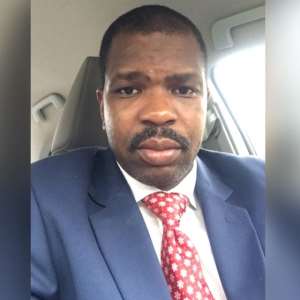
By Manaseh Mintah, PhD Boston, Massachusetts, USA

 Justin Kodua Launches Bid to Retain NPP General Secretary Post Ahead of Crucial ...
 Zanetor Demands Continental Action: ‘Africa Cannot Progress While Women Live in ...
 Mahama assures transfer of UGMC to University of Ghana
 Wontumi told me he would get 20year jail term before judgment was read – Lawyer ...
 Sarkodie Warns Gov’t: ‘Explain the 24-Hour Economy or Risk Voter Backlash’
 ‘Ofori-Atta Must Account’: COPEC Boss Warns NPP of 2028 Backlash Over Lingering ...
 UG Economist Slams Gov’t: “24-Hour Economy Implementation Far From Reality”
 Ghana Flags 1.8m Housing Gap at UN Forum, Says Urban Pressures Demand Urgent Act...
 NDC Draws Red Line: Gov’t Appointees Who Don’t Resign Barred from Executive Elec...
 Kpebu Warns: “Judicial Independence Won’t Come From Law Alone — It Needs Judges ...

