




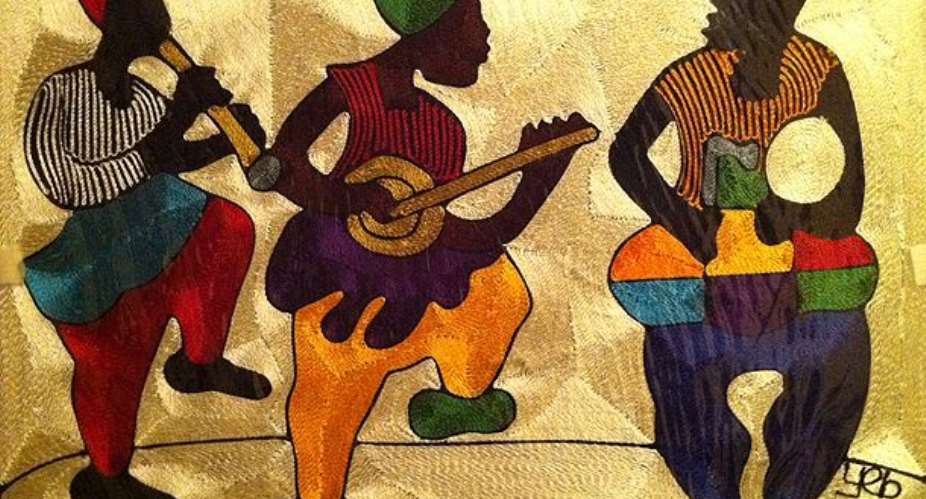
Ghana stands at a crossroads where colorful kente weaves, drumming rhythms of adowa, and the graceful curves of hand-carved figurines tell stories passed through generations. Yet these vibrant traditions, once the heart of our communities, face growing threats. Globalization, modern consumerism, shifting youth interests, and changes in urban lifestyles are quietly undermining Ghana’s traditional arts. This article explores this issue. We speak with cultural anthropologists, art historians, and local artisans to understand what cultural erosion means for communities, celebrate the ongoing resilience efforts, and consider how Ghana can protect its cultural legacy for the future.
The Forces Undermining Traditional Arts
Traditional artisans often struggle in global markets that favor mass-produced souvenirs over handmade, carefully crafted items. As demand for cheaper, imported alternatives grows, local craftsmen earn less. This situation restricts artisans who cannot compete on price and reduces the motivation to pass on traditional skills.
Many young people are moving to cities for education and jobs. As a result, interest in ancestral crafts, especially those learned through apprenticeships in villages, has declined. Those who stay are more interested in careers they believe offer better financial prospects than weaving, carving, or drum-making.
Traditional arts are more than just decorative; they carry history, identity, and communal values. Their decline threatens not only economic livelihoods but also weakens the cultural ties that hold communities together.
Voices of Insight: Local Artisans on the Ground
I visited Maame Abena, a kente enthusiast. She said, “My grandmother taught me the story behind every pattern. But lately, people want quick, cheap prints. It hurts to think that the next generation might not know those stories.”
Naa Ayishetu, a leather-crafting artisan, shared, “I used to teach young trainees. Now, few want to stay in the heat of the workshop for years to learn. They believe city jobs are better. They don’t appreciate the value of keeping our crafts alive.”
Impact On Communities
Many craft towns depend on artisanal trade as their backbone. Fewer orders mean families move away, which weakens social bonds and disrupts rural economies.
When artisans stop teaching, entire techniques vanish. Patterns that were once meaningful may become unrecognizable or be replaced, effectively erasing cultural knowledge.
For communities where crafting was central to daily life, losing that practice can create a sense of aimlessness or disconnect from their culture, especially among elders.
Beacons of Hope: Strategies to Revive and Sustain Traditional Arts
The Ghana Museums and Monuments Board (GMMB) has started creative workshops and exhibitions in rural towns, highlighting traditional crafts to younger audiences. These efforts often come with grants for craft cooperatives.
Some progressive schools now include kente weaving, carving, or drumming in their cultural programs. They aim to teach skills and share the stories behind them, believing this connection fosters pride in cultural heritage.
In towns like Bonwire and Adanwomase, cooperatives are reviving apprenticeship programs. These pair elder masters with youth and often include storytelling sessions and demonstrations to develop both skills and cultural understanding.
Artisans are using social media to share their craft stories, reach international audiences, and access fair-trade markets. Online galleries and virtual workshops have created new income possibilities and sparked interest in authentic Ghanaian crafts worldwide.
Events like the Kente Festival and Ghana’s cultural carnivals provide platforms for artisans to display their work. When organized well, such festivals help showcase traditional arts as living heritage worth valuing.
Ghana’s traditional arts are not just artifacts; they represent living histories of our ancestors, vessels of collective memory, and symbols of a shared identity. While globalization and modernization create challenges, Ghana has many ways to preserve these invaluable traditions: support from institutions, education, digital innovation, tourism, and community action. Ultimately, it takes the combined efforts of everyone, from the master weaver in Bonwire to the art historian in Accra, to ensure our cultural heartbeat remains strong. By working together, we can pass down these rich, meaningful, and authentic traditions to the next generation, keeping Ghana’s cultural story vibrant and alive.
Ganiyatu Raji, a L300 journalism student of UNIMAC- Institute of Journalism

 Israel must win 'because we’ve got no other choice’, PM Netanyahu tells UN
 Mahama reiterates Ghana's commitment to two-state solution to Palestine-Israel c...
 Ablakwa calls for Return of African Artefacts held abroad
 Madina MP Francis-Xavier Sosu reportedly collapses while speaking at GIMPA
 Kumasi drivers, passengers react to 8% transport fare increase
 I will unite Africa, Caribbean and Latin America into world's biggest trading bl...
 Mahama petitioned to halt Sentuo Airport Garden City construction after sod cutt...
 Government should not fund the $4 billion Accra-Kumasi Expressway project — Alan
 Democracy must deliver tangible social benefits to citizens – Mahama
 Court to rule on bail applications of six accused in 3.9-tonne cocaine seized in...


