




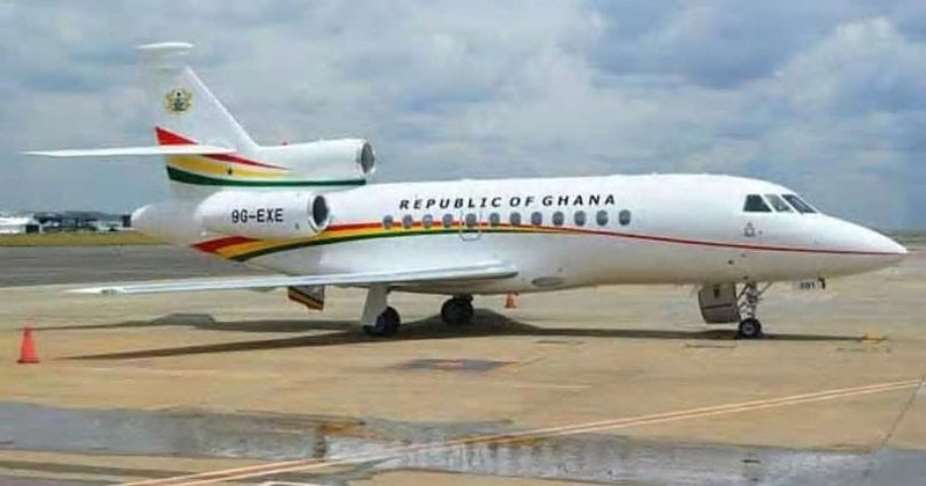
Every sovereign nation aspires for its head of state to travel in safety and dignity. The symbolism of a presidential aircraft is not lost on anyone. It reflects sovereignty, preparedness, and national pride. Yet for a country like Ghana, where maintaining a national airline has proved elusive, the debate over whether to acquire and sustain a presidential jet is both sensitive and complex.
The Cost of Prestige
The truth is simple. Procuring and maintaining a presidential jet is expensive, even for the world’s most endowed nations. In Ghana, such acquisitions inevitably spark controversy, often framed as a clash between presidential comfort and national hardship. Critics argue that the resources could serve better purposes in healthcare, education, or infrastructure. Supporters counter that a presidential jet is not about luxury but about ensuring security, reliability, and efficiency in state affairs.
“Symbolism matters in diplomacy”, says an international relations lecturer at the University of Ghana. “But symbolism must never overshadow fiscal responsibility. A jet must serve the state, not the comfort of individuals”.
The Security Dimension
Heads of state are prime targets, making presidential travel a matter of national security. Relying on commercial airlines is not only impractical but also dangerous. However, security concerns go beyond surface appearances. Aircraft sourced from certain manufacturers may carry concealed surveillance tools --- gadgets capable of tapping conversations or transmitting sensitive information. To mitigate such risks, best practice worldwide has been to subject official aircraft to military oversight, rigorous retrofitting of communications systems, and periodic security audits.
A former Ghana Air Force officer, explains that “The real danger is not whether the jet can fly, but whether it is secure from electronic eavesdropping and physical attack. A presidential aircraft is a moving command center. If it is compromised, the nation is compromised”.
What Other Nations Do
Not every country maintains a fleet as sophisticated as America’s Air Force One or Russia’s presidential IL-96. Middle-income countries have adopted pragmatic strategies:
- Shared Use: Some nations assign multipurpose air force transport planes for presidential travel.
- Leasing and Chartering: Smaller states often lease jets for long-haul journeys, reducing the burden of permanent upkeep.
- Retrofitting Commercial Planes: Rather than buying luxury jets, governments purchase standard commercial aircraft (e.g., Embraer, Airbus) and modify them with secure systems.
- Pooling Arrangements: Certain European states share VIP fleets, though this is politically sensitive in Africa where sovereignty concerns dominate.
According to an aviation analyst, “Leasing is a cost-saving model. It may not provide the same prestige, but it ensures flexibility and removes the heavy burden of maintenance from governments like Ghana’s”.
Ghana’s Reality
Ghana already owns a Falcon 900 EX jet, acquired under President Kufuor and refurbished in later years. While still airworthy, it has limitations. Its range is short for transcontinental flights, and its onboard security systems fall short of modern counterintelligence standards. The current government’s claim that the aircraft is “too risky” may partly reflect politics. The real issue is not whether the Falcon will fall from the sky, but whether it provides the level of protection and efficiency demanded in today’s geopolitical environment.
A political economist at the University for Development Studies (UDS) puts it bluntly: “The Falcon jet is serviceable, but politics has turned it into a symbol. One side says it is waste, the other says it is inadequate. The truth lies somewhere in between”.
Charting a Pragmatic Path
Ghana must resist the temptation to pursue prestige for prestige’s sake. Matching Air Force One is not realistic, nor necessary. What is required is a balanced approach. Maintain the Falcon for regional and short-haul trips, lease or charter secure long-range aircraft for intercontinental engagements, plan for a modest upgrade, possibly through a standard commercial aircraft retrofitted with communications security and defensive systems, and ensure transparency in procurement to avoid the perception of waste and excess. As much as possible, consider multipurpose use, so any future aircraft can serve in medical evacuation, humanitarian relief, or military operations when not in use by the President.
“Transparency is the missing link”, says a civil society advocate with IMANI Africa. “If Ghanaians are shown the real costs, the security needs, and the multipurpose benefits, the controversies will cool down. What breeds anger is secrecy and suspicion”.
Doing Without a Presidential Jet?
Abandoning the idea altogether is neither realistic nor advisable. For a president to depend solely on commercial airlines would not only undermine security but also diminish Ghana’s diplomatic image. The challenge is not whether Ghana should have a presidential jet, but how it can have one that is functional, cost-effective, and secure, without draining national resources or inflaming public discontent.
Politics Must be Overshadowed
The debate over Ghana’s presidential jet should move beyond political rhetoric and focus on policy grounded in prudence. A presidential aircraft is not a symbol of extravagance but a necessity of modern statecraft. Yet, necessity must be matched with modesty and transparency. Ghana does not need to rival America and Russia in sophistication, or the Arab royals in beauty and opulence. What it needs is a functional, secure, and multipurpose solution that reflects both its national dignity and its economic reality.
FUSEINI ABDULAI BRAIMAH
+233208282575 / +233550558008
[email protected]

 Judicial independence does not shield judges from scrutiny, accountability — Jus...
 Adu-Boahene trial: Justice Achibonga must be free from political pressure — Rev....
 'Free speech is not a licence for defamation' – Supreme Court Judge warns
 Court adjourns Wontumi’s Exim Bank case to November 2 and 3 for prosecution’s di...
 Mahama receives honorary doctorate from Russian university nearly 40 years after...
 Oppong Nkrumah demands clarity on Women’s Development Bank, One Million Coders p...
 Obuasi SHTS sex scandal: Three students withdraw from State interventions
 'Ghana has same medium sweet crude with Ivory Coast and Nigeria; If TOR refines ...
 'For an institution keen on responsible sourcing; there's no way our CEO will en...
 Ghanaian twin brothers plead guilty in US romance fraud case involving $9m losse...


