




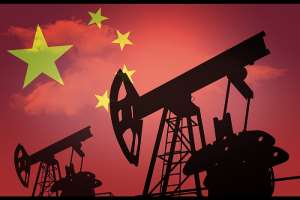
There’s something brewing beneath the surface of the world’s energy trade, and it’s not just oil. For the past two decades, China has been playing the long game—building cities, ramping up infrastructure, absorbing massive populations into urban centers, and, all the while, importing oil at a furious pace. But now, a subtle shift is underway. Crude oil imports—once an unquestioned staple of China’s economic rise—have begun to plateau, even dip in recent years. That might seem like an economic lull. It’s not. It’s a strategic recalibration that could change the balance of global power.
At the heart of this transition is a realization that reliance on oil, particularly foreign oil, is a risky bet for a country that increasingly sees itself as a global heavyweight. China imports around 11 million barrels of crude oil per day, and about 90% of that travels by sea. That dependence alone introduces a strategic vulnerability, especially in a geopolitical climate dominated by long-standing tensions with the United States.
This isn’t just a technical matter of ships and barrels. As Daniel Yergin notes in The Prize, oil has always been more than a commodity—it’s power, leverage, and often, a flashpoint. For China, that flashpoint sits in places like the Malacca Strait, a tight maritime corridor that connects Chinese ports to the Middle East’s oil fields. It’s a shortcut, but one dominated by American naval presence. In a moment of crisis—say, over Taiwan—this corridor could be blocked. That alone could send shockwaves through the Chinese economy.
China has been aware of this vulnerability for over two decades. What some once dismissed as paranoia is now clearly strategy. It’s the “Malacca Dilemma,” a term Beijing began using as early as 2003, highlighting how easily its fuel lifeline could be pinched. As Robert D. Kaplan argues in Asia’s Cauldron, control of these narrow sea lanes is about more than geography—it’s about influence. And China’s growing awareness of that influence gap has pushed it to act.
Instead of engaging in naval brinkmanship, China chose a different route. It began redesigning its entire energy model from the ground up. First came the push into renewables. Wind. Solar. Hydro. China is now the largest producer of wind and solar power in the world. And that didn’t happen by chance. In The Grid by Gretchen Bakke, we see how energy infrastructures shape entire national futures. China took that lesson seriously, sequencing its energy transition in a way that prioritized domestic energy generation first, then shifted to electrified transportation.
Electric vehicles were the next step. But while many Western countries promoted EVs as eco-conscious lifestyle products, China treated them as national security assets. The government invested over $200 billion into the EV industry over 15 years, according to the Center for Strategic and International Studies. That’s not just subsidies—it’s full-spectrum industrial support, from battery research to tax exemptions to public charging infrastructure. Look no further than BYD, the automaker that recently surpassed Tesla in EV sales. Its $10,000 Seagull model is a global hit, not because it’s flashy, but because it works—and because it’s made in a self-sustained ecosystem.
In The New Map, Yergin again emphasizes how new energy frontiers are often accompanied by geopolitical tensions. China seems to have internalized this idea and then flipped the script: instead of fighting for control over oil shipping lanes, it’s building an energy model where it doesn’t need them as much.
This isn’t to say oil has vanished from China’s strategy. Quite the opposite.
The country is stockpiling oil like a doomsday prepper during a fire sale. Whenever global prices dip, China buys in bulk and fills massive storage tanks, creating a de facto strategic reserve. That’s a hedge against sanctions, supply chain disruptions, or even war. It’s a move right out of the Resource Wars playbook by Michael T. Klare—recognizing that in the 21st century, resources will be contested not just in deserts and oceans, but also on spreadsheets and storage ledgers.
Then there’s domestic production. Chinese oil fields are not known for being easy. They’re deep, complex, and expensive to access. But that hasn’t stopped companies like ProChina from investing billions—$38 billion last year alone, more than what ExxonMobil and Chevron spent combined. Deep well drilling, complex geological extractions—China is throwing everything it can at minimizing its dependence. As Vaclav Smil outlines in Energy and Civilization, the evolution of energy systems is often uneven and slow. Yet China appears to be compressing that process into a couple of decades.
Where does this leave the United States?
While America still dominates the global oil market in raw production and maintains a massive military presence in key shipping lanes, it’s been comparatively slower to scale the kind of integrated energy strategy China has pursued. In terms of sheer EV infrastructure, China is running laps around the U.S.—with an estimated 14 million charging points compared to America’s 230,000. That’s not a small gap. That’s an entirely different playing field.
And here’s the kicker: China is buying oil from countries the U.S. has sanctioned—Venezuela, Iran, and Russia among them. This isn’t just about finding cheap barrels. It’s a signal. China is not afraid to bypass U.S.-led financial and diplomatic restrictions to secure what it sees as strategic necessities. As laid out in The Economic Weapon by Nicholas Mulder, sanctions are only effective when the target lacks alternatives. China, apparently, is building those alternatives faster than many expected.
Chinese refiners—especially the so-called “teapots”—are making a business out of this shadow trade, importing discounted crude, refining it, and selling it elsewhere. It’s an energy trade that ducks beneath the radar of official policy but reshapes markets nonetheless. It’s messy, grey-zone economic warfare. And it’s working.
All of this raises serious questions about what happens next. If tensions between China and the U.S. intensify, energy could become the next front—not because of some dramatic naval blockade, but because of trade disruption, market manipulation, or strategic embargoes. The United States could still, in theory, weaponize its energy dominance. But China might already be too diversified to choke off.
As Peter Zeihan discusses in The Accidental Superpower, geography has always given the U.S. natural advantages—from safe borders to navigable rivers to oceanic buffer zones. China doesn’t have those luxuries. So it built workarounds—physical, political, economic. It sequenced them methodically. And it placed energy security at the center of them all.
This isn’t a story about a country abandoning oil. It’s about a country reshaping the terms on which oil matters. The global demand for crude isn’t going anywhere fast. But who controls it, how it’s delivered, and who’s vulnerable—that’s where the terrain is shifting.
The most pressing implication of this quiet energy shake-up between China and the U.S. might not even be about oil or electric cars—it’s about trust, or rather, the slow erosion of it in international systems that were once considered stable. When a country like China begins crafting an energy path that's explicitly designed to sidestep U.S. influence, it says something bigger about where global relationships are headed. We're not just looking at decarbonization or industrial growth; we're seeing the early signs of a world where parallel systems are developing—not just in energy, but in finance, trade, and even diplomacy. Think back to when the U.S. dollar's role as the default global currency was never really questioned; now, conversations in parts of Asia and Africa hint at alternative trading frameworks that rely less on Washington’s institutions. China’s energy independence efforts are feeding into that broader trend. There’s also a tech component here that’s easy to miss. As China tightens control over battery technology, rare earth processing, and solar panel production, it’s not just moving up the supply chain—it’s setting the terms of access. For developing countries trying to leapfrog into renewables, that puts China in a gatekeeper role. And for Western powers, it presents a dilemma: play catch-up or start pushing back harder through policy, sanctions, or investment wars. That back-and-forth tension—already visible in semiconductor bans, investment screening, and diplomatic visits that feel more like Cold War throwbacks—could easily expand into energy policy. What we’re seeing isn't a clean break but a slow uncoupling, a careful hedge against future shocks, and that has ripple effects on everything from climate cooperation to global security pacts. If both superpowers keep building lifeboats instead of repairing bridges, the implications will stretch far beyond oil fields and power grids. They’ll rewrite how the world negotiates power itself.
In short, China’s not walking away from oil. It’s building a world where oil doesn’t own it. And in the quiet pivot from dependency to strategy, a new kind of great power competition is taking shape. It’s not just about who has more tanks or ships. It’s about who can keep the lights on—and the wheels turning—no matter what storms come.


 Wontumi’s lawyers want Exim Bank case treated as civil, not criminal
 Mahama to cut sod for Accra Convention Centre project – Kwakye Ofosu
 Mahama administration committed to stamping out cybercrime – Sam George
 Ghana joins International Big Cat Alliance to strengthen wildlife conservation
 Africa must strengthen strategic positioning amid global power shifts – ECOWAS
 PAC grills GHS over transport officer who allegedly sold seven state vehicles wi...
 Pentecost Church elder was arrested over GH¢200,000 fraud case, not kidnapped – ...
 Banning preaching in vehicles will not succeed, we will even preach at the back ...
 Banks threaten to suspend new loans to public sector workers over Controller rep...


