





Right between the docks and the rickety rail yard in Dakar sits a battered bronze showing two WWII infantrymen — Demba, a Senegalese rifleman in a too‑big helmet, and Dupont, a French corporal with a thin moustache. They clutch the same olive branch, one boot lifted as if mid‑parade. They fought side by side, yet only the Frenchman was allowed to march through Paris in ’45. Last week, under a blazing Sahel sun, another ceremony unfolded a few metres away: French officers folded their tricolour for the last time, handed Camp Geille to Senegal’s army, saluted, and flew home. No speeches about brotherhood, just polite nods and a new green‑gold flag rising where the blue‑white‑red had fluttered for decades.
That image — Dupont stepping back while Demba stays — sums up what many Africans are calling de‑Europeanization. It is not a manifesto; it is an accumulation of moments. Mali’s young officers chased Operation Barkhane out in 2022. Burkina Faso’s second coup in a year doubled down, waving cardboard signs that read À bas l’Empire! Niger’s putschists did the same in 2023, telling French troops to quit Camp L’Attal before rains came. Gabon’s generals toppled the Bongo dynasty in 2023 and did not even bother phoning the Élysée for advice. One base, one mining licence, one presidential hotline after another is being unplugged.
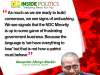
“Europe once spoke the language of custodianship,” Achille Mbembe sighs in On the Postcolony; “now it must learn the awkward silence of recall.”
A game without a referee
If Europe is losing the ball, who picks it up? Three camps sprint across the pitch. Russia fields its newly branded Africa Corps, a Ministry‑of‑Defence makeover of the late Wagner franchise. Cargo planes unload armoured cars in Gao and timber concessions in Bangui are now guaranteed by Slavic‑accented bodyguards. Samuel Ramani’s Russia in Africa calls it “expeditionary capitalism under a tricolour flag with an ersatz anthem.”
China prefers asphalt to Kalashnikovs. In 2025 Beijing inked $39 billion worth of Belt‑and‑Road deals on the continent, topping its entire 2024 spend. Tracks will soon replace the colonial‑era iron snake on the TAZARA route, courtesy of a $1.4 billion upgrade. Howard French warned in China’s Second Continent that bricks often arrive faster than debt relief — but for governments tired of IMF sermons, speed matters.
Turkey, the surprise striker, sells its Bayraktar TB2 and Akinci drones to everyone who can pay or barter. Burkina Faso field‑tested five TB2s in Djibo last December, vaporising a militant column within minutes. Mehmet Ozkan’s Turkey and Africa: A New Relationship reads like an owner’s manual for that pivot: agile diplomacy, no colonial baggage, pay‑as‑you‑go hardware.
Gulf monarchies, Indian conglomerates, and Brazilian soy giants also circle, but Moscow, Beijing, and Ankara shape the headline. The French foreign‑legion joke — “The Sahel is France’s Far West” — feels antique now.
Why the mood turned
John Reader’s sweeping Africa: A Biography of the Continent reminds us that external rule always hung on two thin pegs: security and scarcity. If Paris or London could argue they alone could keep jihadists at bay or elevator cables humming, they kept a foot in the door. That bargain broke because results never matched promises: terror metrics ballooned while copper royalties shrank. Tom Burgis, in The Looting Machine, exposed how much of that scarcity was engineered. When Bamako’s streets filled with Yankadi drummers chanting “France Dégage!” in 2020, the beat carried a ledger of broken wells, stalled job programmes, and funerals for ambushed conscripts.
COVID‑19, drought, and Ukraine’s grain shock piled on. By 2023 a loaf of bread in Ouagadougou cost double the 2019 price. Turbulence breeds coups, and each coup finds Europe preaching restraint from afar while Russia offers cheap diesel, China offers a highway, and Turkey offers drones payable in sesame seeds.
Sovereignty as style
Paul Nugent’s Africa Since Independence argues sovereignty is never static; it is performed. Today’s performance is loud, militant, and meme‑savvy. Soldiers post TikToks of Bayraktar screens zooming on pickup trucks; street artists spray “Dakar ≠ Dakar 1944” under colonial balconies. Even Senegal’s mild‑mannered President Bassirou Faye framed the French exit not as a rebuke but a “normal housekeeping duty.” The aesthetics matter: no fists raised, just bureaucratic calm, as if saying, “Why did you think the lease was eternal?”
Jean‑François Bayart, writing three decades ago in The Politics of the Belly, noted that African leaders long balanced external patrons against internal rivals. What has shifted is the menu: Brussels no longer lays the biggest platter. Drone footage of Bayraktar strikes travels faster than speeches about European values.
The risks of a crowded field
Martin Meredith’s The State of Africa catalogues how every “new dawn” since 1960 carried its parasite. Russia’s Africa Corps charges premium rates in gold and timber, while Chinese loans can balloon into equity grabs if commodity prices dip. Turkish drones, cheap on purchase, require pricey munitions later. And the security hole left by French withdrawals is real: extremist attacks in western Niger spiked right after the last French convoy drove south.
Christine Fair’s chapter in Drones and the Future of Armed Conflict warns that cheap UAVs encourage governments to choose airstrikes over dialogue, and Drone Wars UK counted almost a thousand civilian deaths from African drone strikes in three years. The danger is a feedback loop: foreign hardware fuels hard‑edge tactics, which inflame grievances, which invite more hardware sales.
Europe’s attempted reboot
In Brussels policy papers now speak of “partnering at eye level,” but fatigue shows. Energy crises at home mean fewer euros for Sahel pipelines; Ukraine soaks up spare Leopard tanks. Emmanuel Macron claimed redeploying forces “closer to Europe’s core interests” was logical, yet African diplomats note the logic only surfaced after a series of humiliations. When the EU announced a civilian mission for Niger in early 2024, Niamey’s junta replied by suspending visas for EU personnel.
Mark Mazower in Dark Continent reminds us Europe’s own twentieth‑century traumas began when empires overreached and then retreated too late. The parallel is imperfect but not invisible.
What comes next — a short, jittery forecast
- Multipolar micro‑deals – Governments will patchwork security: a Russian heli wing here, a Chinese police training grant there, a Turkish drone batch on top. Coordination will be messy.
- Resource bargaining – Lithium, rare‑earths, and uranium contracts will be leased in shorter tenors with renegotiation clauses favouring the host state. That tilts leverage toward assertive newcomers willing to pay signing bonuses in cash rather than policy lectures.
- Local tech leap‑frogging – Kenya’s start‑ups already write code for drone navigation; Ghanaian engineers 3‑D print spare parts for Chinese tractors. As supply chains localise, reliance on any single patron may shrink again, beginning another cycle.
Daniel Large’s anthology The New Scramble for Africa argued in 2008 that competition could empower African agency if leaders stayed nimble. Seventeen years later the stakes are higher, the players meaner, but the agency is palpably there.
Back to the statue
At dusk the bronze shoes of Demba and Dupont catch the salt light. Tourists still snap photos, yet local kids ride BMX bikes around the plinth, barely glancing up. The story carved in metal — Europe rescuing Europe with African blood — is sliding out of fashion. The base loudspeakers inside Camp Geille blast mbalax instead of a French bugle. An officer in plain fatigues tells, grinning, that training will continue with “friends who understand we lock the gate at night.”
In Africa’s Futures, Brian Hesse predicts the continent’s politics will soon be “less about who patronises and more about who fits.” De‑Europeanization, then, is not simple eviction. It is a reshuffling of fits. Europe still has cards — language, alumni networks, infrastructure know‑how — but it no longer shuffles the deck alone. The olive branch is being passed around. Whether it ends up in Russian gloves, Chinese work‑boots, Turkish flight gloves, or simply rests in Demba’s own hands will depend on choices made in Bamako courtyards, Niamey drone bunkers, and Dakar boardrooms.
The march is on; the uniforms have changed; the statue stays put — a quiet witness to Africa writing its next chapter, this time without asking Europe for a permission slip.

 Wontumi’s lawyers want Exim Bank case treated as civil, not criminal
 Mahama to cut sod for Accra Convention Centre project – Kwakye Ofosu
 Mahama administration committed to stamping out cybercrime – Sam George
 Ghana joins International Big Cat Alliance to strengthen wildlife conservation
 Africa must strengthen strategic positioning amid global power shifts – ECOWAS
 PAC grills GHS over transport officer who allegedly sold seven state vehicles wi...
 Pentecost Church elder was arrested over GH¢200,000 fraud case, not kidnapped – ...
 Banning preaching in vehicles will not succeed, we will even preach at the back ...
 Banks threaten to suspend new loans to public sector workers over Controller rep...


