




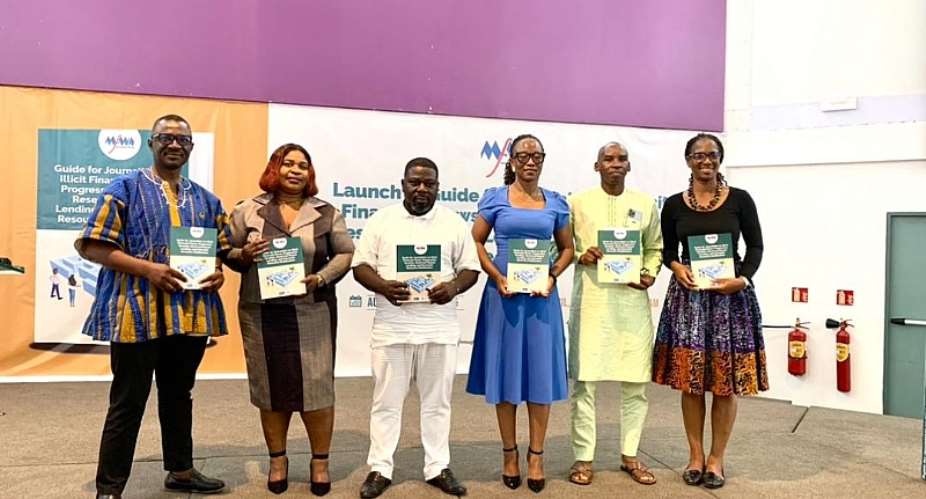
The Media Foundation for West Africa (MFWA) has launched a comprehensive media guide to support journalists to report on illicit financial flows (IFFs), progressive taxation, resource-based lending, and domestic resource mobilisation in Ghana.
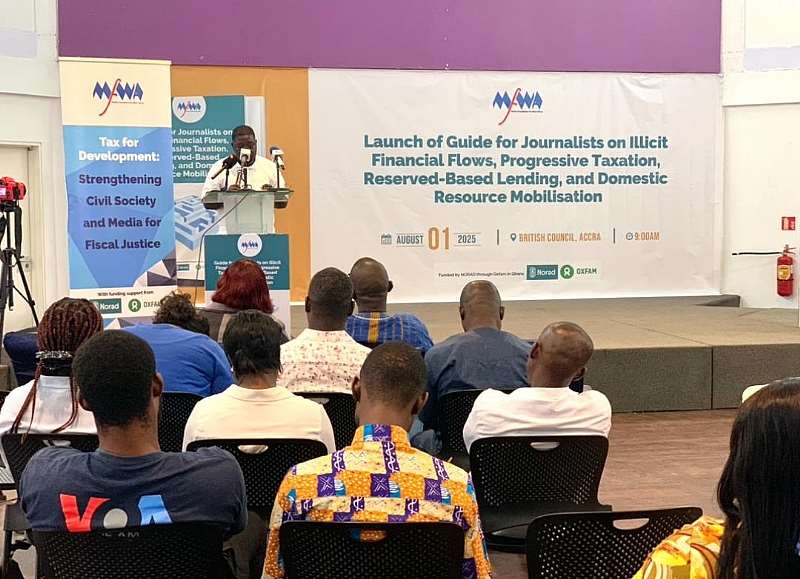
The guide, launched at the British Council in Accra on Friday, August 1, is a collaborative effort between MFWA and Oxfam in Ghana under the “Expose the Flow” initiative funded by the Norwegian Agency for Development Cooperation (NORAD).
Regional sensitisation activities are expected to follow.
This comes at a time Ghana is estimated to be losing about 3 billion dollars annually to IFFs, depriving the country of vital resources needed for critical development projects in health, education, and infrastructure.
According to the guide, IFFs take various forms including tax evasion, money laundering, trade mispricing, and offshore wealth concealment by multinational corporations, political elites, and individuals.
These practices, as explained in the guide, have undermined government revenue and widened inequality in Ghana.
Speaking at the event, Rosemond Ebi-Adwo Aryeetey, MFWA’s Senior Programme Manager for Media and Democracy, said the document fills a critical knowledge gap in the Ghanaian media space.
“When you speak to journalists about IFFs, there’s often a very low level of understanding.
“This guide provides the tools and insights journalists need to not only identify and understand illicit financial flows, but also to report on them in ways that promote transparency and accountability,” she noted.
The 142-page guide provides definitions, investigative techniques, ethical considerations, key questions to ask, and real-world case studies.
It also details the country's political economy and how IFFs, poor tax systems, and corruption interact to weaken the country’s development capacity.
Vice President of the Ghana Journalists Association, Rebecca Ekpe, described the launch as a significant step in the fight for economic justice.
She said the media must go beyond covering surface stories and delve into systemic issues like domestic resource mobilisation and tax evasion.
“Illicit financial flows and tax evasion deprive our country of vital resources. They affect every facet of society—from healthcare to education. This guide equips us with tools to expose the rot and amplify the voices of the voiceless,” she said.
Also present was the Executive Secretary of the Private Newspapers and Online Publications Association of Ghana (PRINPAG), Jeorge Wilson Kingson, who stressed the importance of responsible journalism in uncovering economic sabotage.
“This guide is more than a reference material; it should become the new standard for economic reporting in Ghana. As journalists, we must use it to question power with evidence and inform citizens with clarity and context,” he said.
Madam Ebi-Adwo Aryeetey further urged “journalists not to let this guide become a white elephant” but to let it “be your daily compass to hold the powerful accountable and tell the hidden stories behind our national struggles.”

 Thousands attend Kenya opposition rally amid anger over political violence
 Trump slams AI sceptics as Altman pauses OpenAI IPO plans over safety concerns
 WASSCE: School officials helped students cheat for years, but we now see the tru...
 Probe alleged military killing of lecturer in Bawku – Kusaug Youth demands
 ‘If we all pay GH¢1,000 each, we should be able to construct National Cathedral’...
 Mahama inspects proposed site for Upper West Regional Airport
 Mahama reiterates government's commitment to end double-track SHS system
 Police interdict officer over death of 23-year-old Ivan Baidoo on Tema Motorway
 Improved invigilation is exposing true performance of Ghanaian students — Mahama...
 There's no policy to introduce Arabic, Chinese in all public schools — Mahama


