




The Parliamentarian’s remark, a wake-up call or a passing comment?
Dr Stephen Amoah MP's declaration that "Christians hardly want to vote for a Muslim leader" has ignited fierce national debate whilst exposing troubling religious discrimination within Ghana's political landscape. The controversy presents a critical opportunity for Ghana to examine its commitment to religious equality and democratic inclusion.
Ghana's Muslim population, comprising approximately 20 percent of the nation's 34 million citizens and concentrated primarily in northern regions and Zongo communities, has long faced systematic challenges to their constitutional rights. These communities have experienced persistent discrimination across multiple sectors, from education to public service, creating a pattern of marginalisation that undermines Ghana's democratic principles.
The evidence of religious bias extends far beyond political rhetoric. In educational institutions, Muslim students have been compelled to attend Christian worship services, they face frustration when seeking public services, experience heavy handedness in the hands of the security agencies whilst healthcare professionals wearing hijab have faced penalties in public service roles. Professional Muslims across various sectors report restrictions on practising their faith in workplace environments, creating hostile conditions for observant practitioners.
The magnitude of these challenges became evident in October 2019, when thousands of Muslim professionals organised nationwide protests. Demonstrators carried placards declaring "Let me manifest my faith in peace," highlighting their struggle for religious freedom. This mobilisation represented a collective response to systemic exclusion from Ghana's public life.
Formal petitions to government bodies have documented exclusion from Friday prayers, unjust restrictions on religious attire, and discriminatory practices. These complaints reveal institutional patterns suggesting structural problems within Ghana's governance systems.
Both major political parties, the New Patriotic Party (NPP) and National Democratic Congress (NDC), have established mechanisms ostensibly designed to promote Zongo and Muslim inclusion. The NPP's Nasara wing contributed to the formation of the Zongo and Inner-City Ministry, whilst the NDC's Zongo caucus operates within party structures to amplify community voices and provide NDC numerical voting advantage.
However, critical evaluation reveals these platforms function primarily as symbolic gestures rather than genuine empowerment mechanisms. Despite establishing these representative bodies, both parties consistently fail to elevate qualified Zongo community members into meaningful positions of influence. The offices intended to represent Zongo interests typically receive minimal power or visibility, whilst party appointments continue marginalising highly qualified individuals from these communities.
Political inclusion remains tokenistic, substituting symbolic representation for substantive participation in decision-making processes. Qualified candidates from Muslim backgrounds find themselves overlooked for significant appointments, regardless of educational credentials or professional competence.
Muslim communities have not passively accepted these marginalisations. Dozens of protests and advocacy campaigns have demanded constitutional protection for religious practice, demonstrating sustained civic engagement despite systemic obstacles. In 2015, Muslim groups submitted formal petitions to the presidency, requesting intervention in systematic rights violations including forced church attendance and denial of hijab usage in public service.
These collective actions reflect persistent demands for equality that Ghana's democratic institutions must address. The consistency of advocacy efforts demonstrates that religious discrimination represents an ongoing challenge requiring systematic reform.
Dr Amoah's controversial assertions, whilst objectionable, illuminate a broader reality requiring serious attention. His suggestion that similar sentiments exist amongst numerous political actors deserves examination. The appropriate response involves comprehensive national dialogue addressing underlying prejudices.
Meaningful reform requires transparent appointment processes, rigorous enforcement of constitutional protections enshrined in Article 21, and accountability mechanisms addressing religious profiling. Political parties must transform their Zongo-affiliated wings from symbolic entities into genuine empowerment platforms.
As a nation, our collective response to this controversy has the potential determine whether the nation advances towards genuine religious equality or continues cycles of tokenistic inclusion. The political establishment must demonstrate courage by addressing systemic biases beyond condemning inflammatory rhetoric.
Success requires rigorous national dialogue, candid acknowledgement of existing prejudices, and structural changes ensuring constitutional principles apply substantively. Our democratic maturity depends upon creating conditions where citizens' faith or heritage never constrains their political participation.
Indeed, I acknowledge that one can mention a name, act or circumstance to argue that we do not have this disturbing reality in Ghana. Noted! The appeal here is for the nation to rethink and reconsider the impact, even if it is seen as a perception.
Transforming this uncomfortable revelation into catalyst for reform can strengthen our democratic foundations whilst affirming commitment to diversity. The path forward requires choosing meaningful reform over continued marginalisation to define our democratic trajectory.
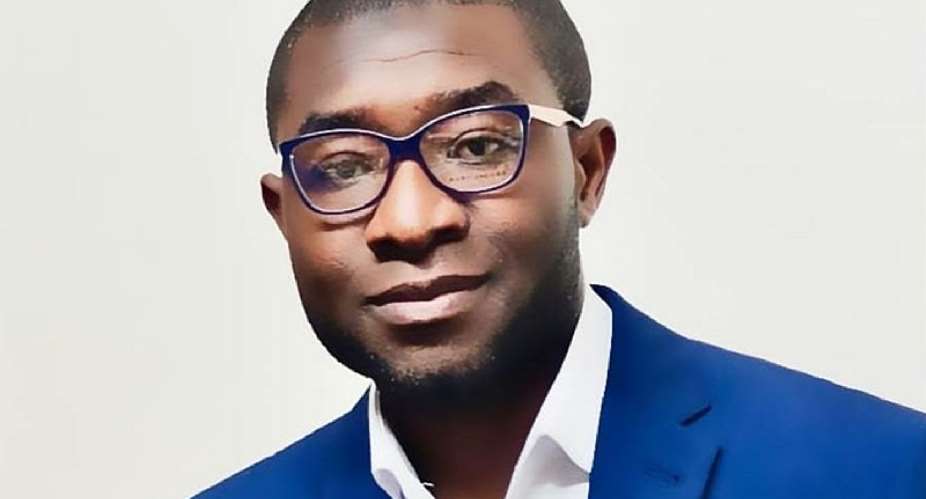
Issaka Sannie-Farakhan
Zongo Caucus Coordinator, UK&I.

 FDA warns against falsified Dr Alfred Capsules adulterated with sildenafil
 World Bank findings strengthen call for GoldBod probe – Jerry Ahmed
 Teacher salary delays now a human rights issue – Kofi Asare
 WASSCE, BECE outcomes threaten future of over 200,000 students – Osahen Afenyo-M...
 Nigerian presidential hopeful Obi promises anti-corruption drive
 US bans Canadian alcohol, motorcycles and dairy products as trade spat escalates
 Failing one or two BECE core subjects does not remove student from placement – E...
 Spiritualist found dead in suspected suicide at Assin-Amoabeng
 Court orders Ghana Police to file disclosures in Labone robbery case
 No businessman will sponsor NPP again because of its ‘evil and greedy nature’ – ...

