




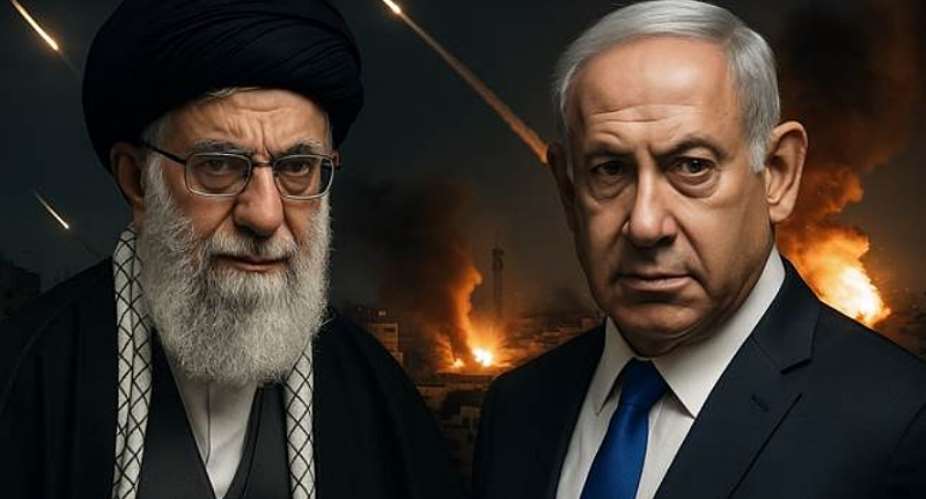
A tenuous ceasefire may have paused the missiles and bombardments, but the war between Iran and Israel rumbles on beneath the surface. This fragile truce, already strained by symbolic post-ceasefire strikes, raises a sobering question, can it hold? And if it doesn’t, what next? What began as a regional struggle has now drawn in global powers and triggered tremors across global markets and diplomatic institutions. With the United States bombing Iran's Fordow nuclear facility and Iran retaliating against U.S. bases in Qatar, the world now faces not just a Middle Eastern war but a planetary reckoning.
A War Forged in Ideological Steel
The seeds of enmity were sown in 1979 when Iran’s Islamic Revolution redefined its foreign policy through revolutionary anti-Zionism. Israel became the ideological antithesis of the Islamic Republic. For decades, Iran has refused to acknowledge Israel’s right to exist, while Israel has insisted that Iranian nuclear capability would mark the beginning of its own extinction.
This fundamental incompatibility has shaped the conflict into a mirror of mutual existential dread. Iran deploys its proxies, Hezbollah, Hamas, the Houthis, to encircle Israel through asymmetrical warfare, while Israel employs pre-emptive doctrine and precision strikes to keep Iranian ambitions in check.
The Fordow Strike and Strategic Calculus
The strike on the Fordow nuclear enrichment site marked a significant escalation. While Israel argued that Iran was weeks away from weaponization, others believe the action was timed to forestall a potential nuclear agreement between the Trump administration and Tehran. The implication was clear: if a deal returns, it must be shaped under Israeli terms.
Yet, speculation abounds. Was Fordow truly destroyed? Or did Iran remove the enriched materials beforehand, preserving its nuclear gains? Independent verification is scarce. With inspectors removed just before the attack, a fog of uncertainty shrouds the actual damage. What remains clear is that Israel intended not just to degrade capabilities but to deliver a psychological shock to Iran's strategic psyche.
Ceasefires as Tactical Interludes
History offers ample evidence that ceasefires in the Iran–Israel arena are rarely final acts of diplomacy. In 2006, during the Lebanon War, a UN-mediated ceasefire only materialized after 34 days of devastating conflict, by then, the damage had already been done. Again in 2021, after a short truce following conflict in Gaza, renewed hostilities quickly returned. The period between 2018 and 2020 was marked by ongoing Israeli airstrikes against Iranian assets in Syria despite multiple calls for de-escalation. Perhaps most dangerously, after the 2020 assassination of General Qasem Soleimani, diplomatic overtures evaporated as Iran launched missiles at U.S. bases in Iraq, underscoring how fragile ceasefire norms truly are.
Though a ceasefire was announced in this ongoing Iran-Israel conflict, it remains fragile. Initial post-ceasefire missile exchanges, reportedly limited and symbolic, triggered condemnation from Washington. The Strait of Hormuz, which Iran had earlier threatened to close, has not seen significant disruption since. For now, it recedes as a flashpoint, but its strategic significance remains intact. Any future provocation could re-ignite its centrality in global energy markets.
In truth, these truces function less as peace accords and more as strategic pauses, windows for rearming, repositioning, and diplomatic recalibration.
Israel uses ceasefires to reduce external pressure and shift its theatre of operations. Iran, on the other hand, frames limited retaliations as symbols of strength, designed to consolidate internal unity and signal deterrence without risking full-blown war.
Ceasefire Futures: Between Hope and Hazard
Having explored how past ceasefires have functioned as strategic pauses, the current truce demands a closer examination of what comes next. Several possibilities emerge. The most optimistic scenario would see both Iran and Israel yielding to diplomatic pressure, particularly from global actors like China and Russia, resulting in a sustained period of calm that paves the way for negotiations. However, even if official hostilities cease, their proxies, such as Hezbollah or the Houthis, could reignite the conflict through independent action, destabilizing the region by design or default. A more covert trajectory might see Iran opting for delayed retaliation through cyber-attacks or clandestine operations abroad, prompting Israel to respond militarily. In the absence of a robust diplomatic mechanism, the ceasefire may ultimately prove to be a deceptive lull, less a resolution than a reloading interval for both sides.
The Illusion of De-escalation: What Next?
While future scenarios offer insight into what might unfold, the deeper question remains, can the core causes of this conflict be defused at all?
With ceasefires proving more cyclical than conclusive, the broader question emerges, can this war end? Or is it merely morphing into new forms?
Iran’s nuclear ambitions remain alive. The assassination of Iranian nuclear scientists, whether by airstrikes or covert operations, may delay, but not destroy, the knowledge infrastructure behind uranium enrichment. The regime is more secretive, resilient, and hardened by past sabotage.
Israel, despite its military superiority, risks reputational loss. Its ongoing bombardments of Gaza and Lebanon have drawn increasing global condemnation, even as it maintains the upper hand militarily. The longer the war drags on, the more its strategic victories risk being undermined by diplomatic and moral erosion.
The New Scramble: Superpower Manoeuvres in a Polarized World
The involvement of the U.S. and U.K. on Israel’s side, with Russia backing Iran diplomatically and China maintaining strategic silence, mirrors a neo-colonial struggle for global influence. Just as the old scramble for Africa was about land and resources, today’s crisis reflects a scramble for ideological dominance, regional access, and military prestige.
If Russia can assault Ukraine, and the U.S. can bomb Iranian soil, then, Beijing might argue, the door is now open for a "justified" assault on Taiwan. This creeping normalization of pre-emption threatens to unravel the post-1945 order of international law (referring to the principles established after WWII to prevent wars of aggression and uphold state sovereignty).
Africa: Peripheral but Not Immune
While far from the battlefield, Africa is not insulated. Though oil prices have not yet spiked dramatically, any serious disruption in the Strait of Hormuz or Red Sea could prove catastrophic. A surge in energy costs, maritime insurance premiums, or delays in fertilizer and grain shipments would ripple across African economies already burdened by debt and inflation. African governments must anticipate these shocks and consider policy foresight that includes energy diversification, sovereign stockpiling, and diplomatic non-alignment.
Global Sentiment: A Crisis of Norms and Double Standards
Western nations, while lambasting Russian aggression in Ukraine, appear to greenlight Israeli operations. China and Russia highlight the hypocrisy, arguing that Western legalism is selectively applied. The UN, meanwhile, watches with muted authority, a toothless bulldog in the face of superpower impunity.
The weakening of international law emboldens not just Iran or Israel, but every nation with a score to settle. Without a coherent global response, the world risks descending into a multipolar arena of unchecked coercion.
Conclusion: Between Reckoning and Ruin
The Iran–Israel conflict is no longer a proxy war, it is the epicentre of a global contest where military calculus, ideological commitment, and strategic deception collide. While the current ceasefire offers a sliver of calm, it remains under immense strain. The big question posed at the start, can the ceasefire hold?, still echoes unanswered. What unfolds in the days ahead will determine whether this truce becomes a bridge to dialogue or a mere prelude to deeper confrontation.
The underlying causes remain unresolved. Nuclear aspirations endure. Proxies regroup. Superpowers plot their next moves. The Strait of Hormuz may have quieted, but the geopolitical currents beneath it remain volatile.
For the global South, especially Africa, this is not a distant spectacle but a strategic alarm bell. In a world where great powers bomb with impunity, small nations must prepare, not for war, but for resilience.
The question of whether this ceasefire can truly hold is not just diplomatic, it is existential. If restraint fails, the next spark may not be confined to the Middle East alone. It could ripple outward, drawing rival powers into broader confrontation and testing the limits of global diplomacy.
The next great rupture in the international order may not begin in the trenches of Europe or the plains of Asia, but in the drone-patrolled skies above Qom, the chokepoints of Hormuz, or the silence of a Security Council stripped of credibility.


 Creative Arts Agency Board Engages Lands Minister Over Welfare Project for Aged...
 I will rebuild demolished La Pleasure Beach if elected in 2028 to save jobs — Ba...
 Free primary healthcare requires recruitment of more nurses – GRNMA
 Ethiopia's Tigray rebels abandon regional capital as govt advances
 Mahama in Egypt for AU Mid-Year Summit
 SSNIT defends La Beach demolition, cites encroachment and security concerns
 Russia strikes another major bridge across Kyiv's Dnipro river
 Co-pilot on Flydubai flight was banned from flying by Oman for holding extremist...
 Spanish lawmakers vote down affordable housing bills in blow to Sanchez’s govern...


