




Early Life & Military Formation
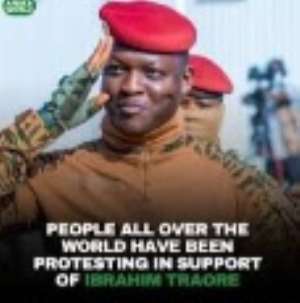
Born on March 14, 1988, in Kéra, Bondokuy, Mouhoun Province, Ibrahim Traoré’s upbringing in a nation shaped by revolutionary ideals ignited his commitment to national sovereignty and African self-reliance. A bright student, he pursued geology at the University of Ouagadougou, graduating with honors. His academic foundation was complemented by military training at the Georges-Namoano Military Academy, followed by specialized anti-aircraft training in Morocco, preparing him for Burkina Faso’s evolving security challenges.
Military Career & Rise to Power
Traoré’s journey in the Burkina Faso Army began in 2009, where his tactical expertise and combat resilience distinguished him in counter-insurgency operations. His deployment to Mali under the UN peacekeeping mission (MINUSMA) reinforced his strategic acumen, exposing him to the complexities of regional security. His leadership capabilities earned him a promotion to captain in 2020, positioning him as a critical asset in Burkina Faso’s fight against armed insurgency.
Amid growing dissatisfaction with security failures, Traoré led a military takeover on September 30, 2022, ousting Paul-Henri Sandaogo Damiba. His transition to power signaled a bold shift toward nationalist governance, prioritizing military reinforcement, resource sovereignty, and regional alliances.
Governance & Revolutionary Policies
From the outset, Traoré’s administration has embodied Burkina Faso’s historic revolutionary spirit, advocating for self-reliance, national security, and economic independence. His governance strategies focus on:
Education & Human Capital Development
Under his leadership, Burkina Faso has launched expansive educational reforms, particularly in technical and vocational training, equipping young citizens with skills aligned with industrial and agricultural needs. By revitalizing rural education, Traoré ensures that knowledge becomes a tool for national empowerment, not dependency.
Infrastructure & Economic Independence
Burkina Faso’s economic transformation under Traoré’s administration has been driven by strategic infrastructure development, including the expansion of transportation networks, industrial zones, and renewable energy projects. His focus on solar power initiatives reinforces the country’s commitment to sustainable development, reducing reliance on external energy sources while bolstering national resilience.
Agricultural Revitalization & Food Security
Echoing the agricultural vision of Thomas Sankara, Traoré has prioritized food sovereignty through large-scale initiatives, including the Agropastoral and Fisheries Offensive, aimed at bolstering agricultural productivity and livestock sustainability. His government’s Presidential Initiative for Agricultural Production and Food Self-Sufficiency mobilizes youth participation in farming, reinforcing national food security and economic stability.
Industrialization & Resource Nationalism
Traoré’s industrial policies underscore Burkina Faso’s pursuit of economic sovereignty, advocating for value-added processing and local entrepreneurship. His administration commissioned Burkina Faso’s first tomato processing factory, a significant milestone in reducing post-harvest losses and enhancing agricultural profitability. This initiative aligns with broader efforts to develop agro-industrial sectors, ensuring that Burkina Faso retains control over its economic assets rather than exporting raw materials at lower value.
Mining reforms under his leadership have also strengthened national ownership of resources, with policies ensuring local communities benefit from extracted wealth, reducing foreign exploitation of Burkina Faso’s mineral reserves.
Geopolitical Strategy & Regional Alliances
Traoré’s leadership has transformed Burkina Faso’s diplomatic approach, spearheading efforts to reduce Western military dependence while strengthening African-led security solutions. His administration was instrumental in the formation of the Alliance of Sahel States, a strategic pact uniting Burkina Faso, Mali, and Niger, focused on regional security and economic cooperation.
As part of his broader geopolitical vision, Traoré has redefined Burkina Faso’s role within Africa, advocating for Pan-African unity and economic self-reliance, positioning his nation as a symbol of African resistance against external interference.
Legacy & Future Prospects
Captain Ibrahim Traoré’s leadership marks a new era in Burkina Faso’s revolutionary trajectory, reinforcing national sovereignty, military strength, and economic independence. His policies signal a decisive move toward self-determined governance, ensuring that Burkina Faso’s future is shaped by its people rather than foreign interests.
Whether his security-driven governance model succeeds in stabilizing the nation, his legacy will be defined by his ability to sustain reforms, foster economic resilience, and maintain national unity. As one of Africa’s youngest leaders, Traoré’s tenure remains a critical test for Burkina Faso’s long-term stability, shaping the future of West African self-determination.
Retired Senior Citizen
Teshie-Nungua
[email protected]


 'Free speech is not a licence for defamation' – Supreme Court Judge warns
 Court adjourns Wontumi’s Exim Bank case to November 2 and 3 for prosecution’s di...
 Mahama receives honorary doctorate from Russian university nearly 40 years after...
 Oppong Nkrumah demands clarity on Women’s Development Bank, One Million Coders p...
 Obuasi SHTS sex scandal: Three students withdraw from State interventions
 'Ghana has same medium sweet crude with Ivory Coast and Nigeria; If TOR refines ...
 'For an institution keen on responsible sourcing; there's no way our CEO will en...
 Ghanaian twin brothers plead guilty in US romance fraud case involving $9m losse...
 Obuasi SHTS sexual abuse allegations: Emily Nyarko urges sustained pressure for ...
 Ghana, Canada sign agreement to deepen bilateral cooperation – Ablakwa


