




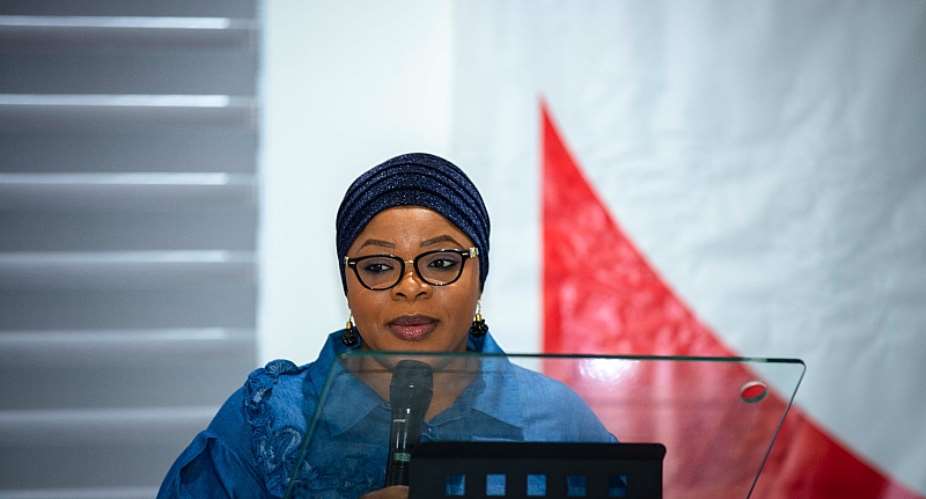
Deputy Presidential Spokesperson Shamima Muslim has cautioned journalists against sensational and unverified reporting, warning that irresponsible coverage of security-related issues could deepen ethnic, religious and political tensions in Ghana.
Ms Muslim said the media had a critical responsibility to prevent misinformation from escalating existing grievances into violence, particularly in communities affected by political, chieftaincy, ethnic and religious tensions.
She made the remarks at a capacity-building workshop on “Responsible Security Reporting” for members of the Private Newspapers and Online News Publishers Association of Ghana (PRINPAG), held under the theme “Media as a Strategic Partner in Preventive Security and Early Warning in Ghana.”
Speaking on behalf of the Minister for Government Communications, Felix Kwakye Ofosu, she said journalists needed to exercise particular caution when reporting sensitive security situations.
She cited political vigilantism, chieftaincy disputes, ethnic conflicts and religious tensions as areas where careless reporting could have serious consequences.
According to her, sensational coverage of political vigilante groups had sometimes inadvertently turned their members into celebrities, potentially giving prominence to individuals and groups involved in political violence.
She also referenced the violence recorded during the 2019 Ayawaso West Wuogon by-election as an example of how political violence could affect Ghana’s democratic reputation and public confidence.
Ms Muslim urged journalists to avoid simplistic or inflammatory descriptions when reporting ethnic conflicts.
She cited historical conflicts including the Konkomba-Nanumba conflict, the Dagbon crisis and tensions in Bawku as situations requiring careful and responsible reporting.
She also warned against the publication of unverified religiously sensitive videos and images, particularly digitally manipulated content that could inflame relations between Christian and Muslim communities.
She said the emergence of artificial intelligence and deepfakes had made the situation even more dangerous because fabricated videos, images and documents could appear authentic and spread rapidly online.
Ms Muslim said professional journalists must therefore distinguish themselves from social media users by providing verified information, context and responsible analysis.
She outlined four questions journalists should ask before publishing security-related information: whether the information had been properly verified, whether publication could endanger security personnel, victims or ongoing operations, whether the report revealed sensitive tactical information and whether the language could unnecessarily inflame ethnic or religious tensions.
She urged journalists to resist the pressure to publish first at the expense of accuracy.
“Let TikTok be first. Let PRINPAG be right,” she said.
She said Ghana’s peace and stability depended partly on the ability of citizens to access reliable information and urged media organisations to see information integrity as a national imperative.
Ms Muslim said responsible journalism did not mean shielding government or security institutions from scrutiny.
Instead, she said, government must remain accountable, journalists responsible, security institutions professional and citizens vigilant.


 Here are 100 unrecognised universities listed by GTEC as of August 2026
 Mahama arrives in Luanda for AU Summit
 Fallen live electricity cable kills 10 cattle at Abrewanko
 Ketu South residents to demonstrate against ECG due to over-billing
 Ghanaians outraged over cigarette-shaped candy targeting children
 Volta NPP in turmoil over appointment of 10 regional officers
 Bolgatanga events ban beyond 8pm will make government unpopular – Gabriel Agambi...
 Irresponsible security reporting could worsen ethnic and religious tensions – Sh...
 Missing toll from Nepal, China flood nears 3,000 as race for survivors continues
 Netanyahu condemns 'criminal acts of violence' by settlers in West Bank villages

