




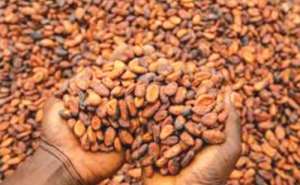
Few pleasures are as universally cherished as chocolate—but behind every indulgent bite lies a complex journey that begins in the cocoa farms of Ghana and across West Africa. As global consumers increasingly demand products that are not only delicious but also ethically and sustainably sourced, the onus is on cocoa-producing countries like Ghana to demonstrate that their beans are deforestation-free and legally cultivated.
Ghana exports at least 50% of its cocoa beans to Europe and generating significant revenues to support socio-economic development. However, a recent regulation, The European Union Deforestation Regulation (EUDR), mandates full traceability and legality of products entering the EU market. This regulation benchmarks producing countries as low, medium or high risk based on factors such as forest cover, deforestation rates, Free, Prior and Informed Consent (FPIC) with Indigenous Peoples, supply chain complexity, governance, data reliability, and third-party concerns. In this article, I explore Ghana’s cocoa supply chain and assess how its traceability system positions the country within the EUDR framework. The evidence suggests that Ghana is making a strong case to be classified as a low-risk country—thanks in large part to its streamlined, verifiable cocoa traceability system.
A Simple Three-Phase Traceability System
Unlike the often complex, fragmented systems seen in other commodity supply chains, Ghana’s cocoa traceability model is short, simple, and highly structured, consisting of three well-defined phases. Each phase adds a layer of accountability, enabling cocoa beans to be tracked from the farm gate all the way to the shipping terminal.
Phase One: From the Farm to the Community
Traceability begins at the production level. Once cocoa beans are harvested by farmers—particularly those producing under sustainability schemes—they are sent to designated weighing centers operated by Purchasing Clerks (PCs). These clerks, who serve as agents of Licensed Buying Companies (LBCs), record the weights and pay the farmers accordingly.
From this point forward, the beans no longer remain in the custody of the farmer. Instead, the Purchasing Clerks and their companies become solely responsible for tagging, bulking, and transporting the beans. Because each PC is associated with a specific community or society, every bag of cocoa collected can be traced back to its purchasing clerk and the community it originated from. This creates a powerful initial traceability anchor, directly linking cocoa beans to a known and geo-located source.
Phase Two: From Community to District Depot for Quality Control Checks
Once the beans are bulked and evacuated from community levels, they are moved to District Depots, where Ghana’s Quality Control Company (QCC)—a subsidiary of COCOBOD—takes over. Here, the QCC performs a rigorous process of inspection, grading, and sealing.
Beans that fail to meet the required quality standards are re-tagged accordingly, ensuring that non-conforming cocoa is clearly identified and separated. At this stage, the cocoa is essentially “certified” for its compliance and quality, and its chain of custody is maintained through physical tagging and documentation. The role of the LBCs also remains active, as they collaborate with QCC to oversee the secure movement of the graded beans.
The key achievement in this phase is that cocoa bags are now not only traceable to the PC and community but also verified and certified at a district level by a national authority. This adds a second layer of credibility to the traceability framework.
Phase Three: Final Checks and Port-Level Control
The final stage of traceability occurs at the export terminals, where the QCC and LBCs conduct another round of inspections. This includes verifying tagging integrity, checking for discrepancies, and ensuring the cocoa bags meet the export requirements.
Only after passing these checks are the cocoa bags cleared for shipping. This final layer ensures that each bag of cocoa exported from Ghana has passed through multiple verifiable checkpoints—each tied to a responsible party, a specific location, and a clear record of quality and compliance.
Implications for EUDR Risk Benchmarking
The structured and vertically integrated nature of Ghana’s cocoa traceability system holds profound implications for compliance with the EUDR. The regulation requires proof that cocoa entering the EU is: deforestation-free, legally produced and fully traceable to the plot of land where it was grown.
Ghana’s system delivers on all three fronts. It establishes a clear handover point, tagging mechanisms, and institutional oversight at each stage that provides the transparency and accountability that the EUDR demands.
Furthermore, because the traceability system is nationwide, centralized through COCOBOD, and involves quality oversight by QCC, it presents a unique opportunity for Ghana to be benchmarked as a low-risk country under the EUDR. A low-risk designation would simplify due diligence requirements for EU importers, reduce compliance burdens, and maintain Ghana’s vital access to the EU cocoa market.
Conclusion: A Model Worth Emulating
Ghana’s cocoa traceability combines simplicity with effectiveness, and institutional collaboration with community-level linkages. As the EUDR implementation deadline approaches, Ghana’s model offers a path to compliance and provides one of the strong grounds to classified with a low-risk country status.
The writer is a Development Consultant, Sustainability Researcher and Research Fellow of the Bureau of Integrated Rural Development (BIRD), Kwame Nkrumah University of Science and Technology. Ghana. His email address is: [email protected]

 OccupyGhana warns EOCO, BNI against using investigations as punishment
 Mahama visits Ahafo Region to inspect development projects
 CSA rejects claims of FBI command over Operation Blackout in Ghana
 Entertainment presenter Andy Dosty denies obtaining US visa through GTA
 “I will be on buses and lorries to preach, let them arrest me!” — Prophet Nigel ...
 October 9: Cedi sells at GHS12.30 on forex market, GHS11.79 on BoG interbank
 New York mayor to ask Trump for ICE withdrawal after agents shoot man in car wit...
 Ukraine takes Russia fight to 'scorching sands' of Sahel
 Clashes lead South Africa to withdraw asylum processing order
 Brazil’s Flavio Bolsonaro wins third-place candidate’s support against Lula


