




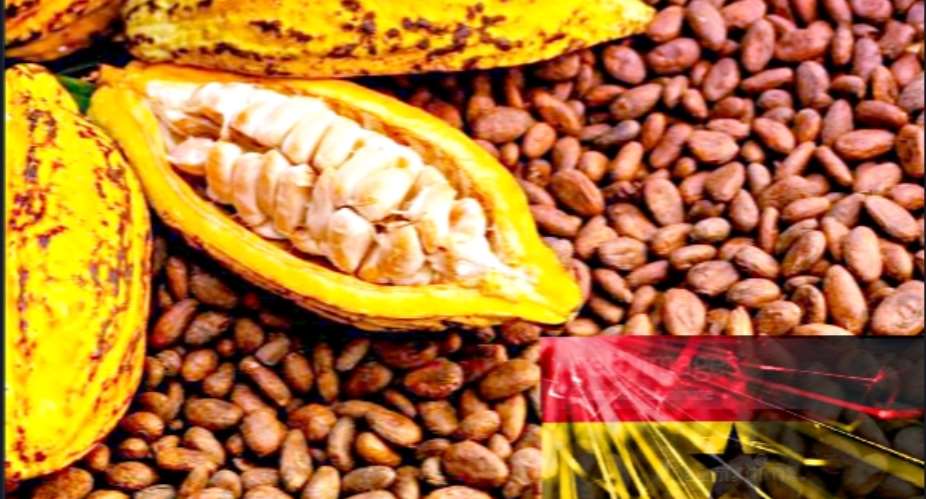
Cocoa is more than just a crop in Ghana—it is the lifeblood of rural livelihoods, a pillar of national revenue, and a symbol of identity on the global stage. As the world’s second-largest producer, Ghana earns over $2 billion annually from cocoa exports, with the sector supporting the incomes of nearly one million smallholder farmers and their families. Beyond its economic value, cocoa shapes community life, educational opportunities, and intergenerational wealth. Entire districts thrive on its seasonal rhythms. Yet, this vital sector also faces pressing challenges—climate threats, labour issues, and global sustainability demands. Protecting and transforming Ghana’s cocoa sector is not just about securing export earnings; it’s about safeguarding the future of countless families and ensuring Ghana’s continued relevance in a changing global market.
Across continents, a quiet revolution is reshaping the rules of global trade, including cocoa. Mandatory Human Rights and Environmental Due Diligence (MHREDD) laws are no longer proposals on paper—they are rapidly becoming enforceable frameworks that companies must comply with to access markets. From the European Union’s Corporate Sustainability Due Diligence Directive (CS3D) to Germany’s Supply Chain Act and France’s Duty of Vigilance Law, governments are requiring businesses to take responsibility not only for what they sell, but how it's made—right down to the smallest supplier.
For Ghana’s cocoa sector, this has profound implications. While global demand for chocolate remains high, the requirements for participation in this market are changing. It is no longer enough to have high-quality beans or artisanal chocolate bars. Buyers, regulators, and consumers now want proof that cocoa is grown and processed in ways that respect human rights, protect the environment, and uphold ethical business practices. This is where Environment, Social, and Governance (ESG) investment becomes essential.
The ESG Imperative for Ghana’s Cocoa Sector
At its core, ESG is about embedding sustainability and ethics into business operations. For cocoa value chain actors—farmers, cooperatives, processors, local buying companies (LBCs), and exporters—this means putting in place systems that demonstrate responsible land use, fair labour practices, gender equity, anti-corruption measures, and more.
This is not charity or corporate window-dressing. ESG is increasingly a matter of market survival. Global buyers want traceable cocoa, free from deforestation and child labour. Financial institutions are offering better terms to ESG-compliant firms. Governments are tightening rules around import conditions. The writing is on the wall: those who fail to adapt risk exclusion from premium markets, finance, and public-private partnerships.
Turning ESG into an Opportunity
Rather than viewing MHREDD as a threat, Ghanaian cocoa actors should see it as a prompt to modernize and differentiate. Investing in ESG practices now can position Ghana as a responsible origin and protect the livelihoods of smallholders and SMEs.
Here are three key ways that various cocoa sector value chain actors can begin:
- Build Environmental Accountability
Cocoa production in Ghana has long been linked to deforestation and land degradation. With MHREDD laws requiring companies to map and monitor environmental harms, actors across the value chain must adopt agroforestry, protect buffer zones, and invest in climate-smart practices. This can be done in partnership with civil society organizations, extension services, and certification schemes that offer technical support and data tools.
- Strengthen Social Responsibility
Child labour, gender discrimination, and unfair pricing still plague the sector. Embedding social safeguards—such as child protection policies, gender equity training, and farmer welfare programs—into operations is no longer optional. These elements can be incorporated into farmer cooperatives, supplier codes of conduct, and employee relations, and regularly monitored for improvement.
- Improve Governance and Transparency
Governance is often the weakest link for small enterprises. Yet, even basic steps—like documenting sourcing policies, maintaining labour records, or setting up grievance mechanisms—can make a major difference. ESG does not mean bureaucracy for its own sake; it means building trust with buyers and showing that a business is serious about compliance and continuous improvement.
Collective Action Is Key
No single actor can meet MHREDD requirements alone. Ghana’s cocoa sector must act collectively to lower costs and raise standards. This includes developing national ESG guidelines tailored to cocoa, creating shared traceability platforms, and offering pooled audit and training services through cooperatives or public-private partnerships.
The government and COCOBOD have a crucial role to play in facilitating this transition—by aligning national cocoa policies with global ESG norms, incentivizing compliance among SMEs, and ensuring that smallholder voices are included in standard-setting processes.
A Future Worth Investing In
The global shift toward MHREDD is irreversible—and largely for good reason. It reflects a growing consensus that profits cannot come at the expense of people or the planet. For Ghana, a country whose cocoa feeds the world, the choice is clear: embrace ESG now, or risk being left behind.
Cocoa is not just an agricultural commodity—it is a global symbol of value. Let’s ensure that value is built not only on taste, but on transparency, equity, and sustainability.
The writer is a Development Consultant, Sustainability Researcher and Research Fellow of the Bureau of Integrated Rural Development (BIRD), Kwame Nkrumah University of Science and Technology, Ghana. His email address is: [email protected]


 Ghana’s BRICS bid part of strategy to diversify international partnerships — For...
 'Let integrity, discipline guide your conduct' — Samson Lardi tells new lawyers
 Labour Minister optimistic teachers will suspend strike by close of day
 Dr Ato Forson urges MMDCEs to eliminate waste in public spending
 KMA Boss refutes bribery claims amid tears at Abrepo Junction demolition
 GRA summons Jamila Home management over alleged assault of revenue officer
 To suggest FBI acted solely to execute Cyberhunt operations in Ghana will hurt f...
 Eritrea, Ethiopia trade barbs as Tigray rebels retreat
 OccupyGhana warns EOCO, BNI against using investigations as punishment
 Mahama visits Ahafo Region to inspect development projects


