




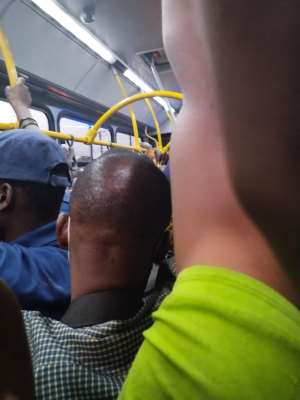
The much-celebrated Aayalolo Bus System, officially known as the Quality Bus System (QBS), is facing barrage of complaints from passengers over deteriorating service conditions, overloading, and a worrying departure from its original purpose under the Greater Accra Passenger Transport Executive (GAPTE) initiative.
Originally launched as a modern, efficient urban transport solution under the World Bank-supported Bus Rapid Transit (BRT) project, Aayalolo was meant to offer a reliable alternative to the city’s often chaotic commercial transport sector.
However, users say the system has lost its way, now mirroring the very “trotro” culture it sought to reform.
At the CMB terminal in Accra’s Central Business District, several commuters voiced frustration about the state of the Aayalolo buses, particularly along the Accra–Achimota–Ofankor–Amasaman corridor.
According to them, rampant overloading has become the norm, with safety guidelines routinely ignored by drivers and conductors.
“Each bus is supposed to take 40 seated passengers and only nine standing,” said one commuter.
“But every day, they pack in far more than that. It’s like the drivers are just focused on making more money, not our safety.”
Sources within GAPTE have confirmed that many of the buses have exceeded their optimal lifespan, with limited funding to replace ageing units.
A senior management official, speaking anonymously, admitted that the buses are suffering from wear and tear, worsened by consistent overuse and poor maintenance.
“Many of our buses have expired,” the source disclosed. “We’ve been unable to secure funding to replace them, and it's affecting the quality of service.”
Commuters also pointed to the gradual breakdown of features that once set Aayalolo apart from regular commercial buses.
The once-functional USB charging ports under the seats are no longer operational, and the onboard Wi-Fi service has been completely disabled.
Air conditioning systems in many of the buses have also broken down, further diminishing the comfort promised by the system at launch.
The situation has raised concerns about the sustainability of the BRT model in Ghana, as GAPTE struggles to maintain its fleet and adhere to international standards for safe and efficient urban transportation.
—classfmonline

 1,568 new lawyers must use law to advance justice — Chief Justice
 GH¢800,000 worth of goods lost in Kia Rhino truck fire at Amanfrom
 I never said Ghana has more nurses than it needs — Akandoh
 I have tried reaching Boakye Agyarko after NPP chairmanship race, but to no avai...
 Ghana’s Corporate Illusion: Why We Celebrate Professional Titles More Than Natio...
 Sam George, Armah-Kofi Buah, Phyllis Naa Koryoo and OPK among 1,568 lawyers call...
 Visa scandal: 'Ampofo Ankrah’s suspension not enough; Kofi Adams must also step ...
 'Let integrity, discipline guide your conduct' — Samson Lardi tells new lawyers
 Labour Minister optimistic teachers will suspend strike by close of day
 Dr Ato Forson urges MMDCEs to eliminate waste in public spending


