




Farming in the Age of Uncertainty
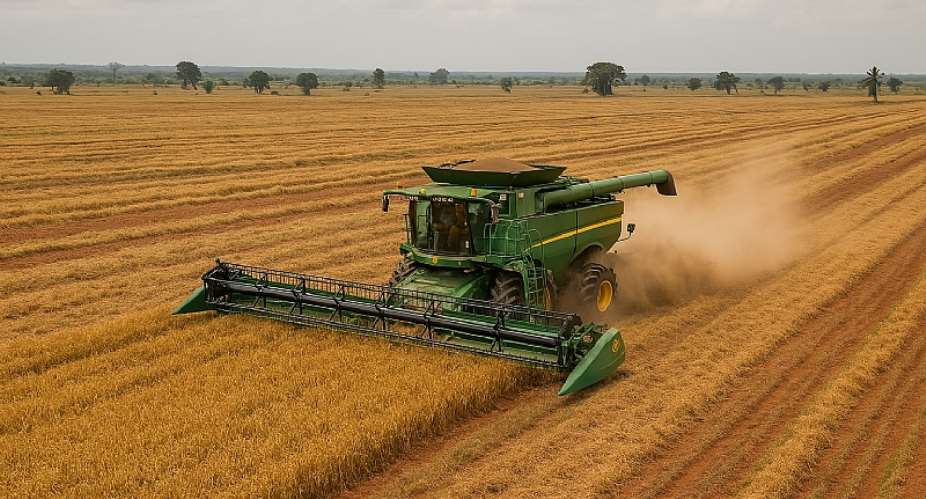
In the sweltering plains of Northern Ghana, a farmer looks to the sky, praying for rain. It never comes. In the rich cocoa lands of Ahafo, seedlings die under the fury of unexpected drought. Meanwhile, tomatoes rot at border posts, and imported rice floods our markets. This is not fiction—it is the lived reality of agriculture in Ghana today.
At the center of this national crisis sits the Ministry of Food and Agriculture (MoFA)—a body entrusted with feeding a nation of over 30 million. Yet MoFA, like the soil it seeks to cultivate, is under siege—from climate change, policy inertia, market distortions, and institutional fragmentation.
As we reset Ghana’s path to sustainable development, agriculture must no longer be treated as a rural relic. It must become a technologically driven, investment-ready, youth-centered engine of growth. This article proposes a revolutionary reboot of MoFA, rooted in real-world evidence and bold, implementable policies.
The Agricultural Paradox: Abundance Amid Scarcity
Ghana has over 13 million hectares of arable land, abundant sunshine, and access to global markets through AfCFTA (MoFA, 2023). Yet we spend over $1.5 billion annually importing food (GSS, 2023). This paradox is a direct result of underinvestment, fragmented extension services, and climate vulnerability.
A 2022 report by the World Food Programme found that nearly 3.6 million Ghanaians face moderate to severe food insecurity, especially in rural and peri-urban zones (WFP, 2022). The COVID-19 pandemic and the Russia-Ukraine war only worsened the crisis by disrupting food supply chains and inflating input costs.
Systemic Challenges Facing MoFA
1. Aging Farmer Population & Youth Apathy
The average age of a Ghanaian farmer is over 55. Meanwhile, the youth see agriculture as dirty, unprofitable, and disconnected from innovation.
2. Weak Extension Services
With a ratio of 1 extension officer to over 2,000 farmers, MoFA’s knowledge delivery mechanism is broken.
3. Post-Harvest Losses and Market Failure
Ghana loses up to 30% of food produced post-harvest due to poor storage, lack of processing, and market linkages (FAO, 2023).
4. Climate Vulnerability
Over-reliance on rain-fed agriculture makes smallholder farmers especially vulnerable to erratic weather patterns.
Reset Model
Cultivating a 21st Century Agricultural Future
1. Greenhouse Ghana Policy – Transform Urban and Youth Agriculture
Introduce an Urban Agriculture and Greenhouse Scheme tailored for the youth, modeled after Kenya’s “Young Agripreneurs Program.” Incentivize local assemblies to allocate urban spaces for hydroponics, mushroom farming, and rooftop gardens.
2. Build the Ghana Digital Agro Extension Platform (G-DAEP)
Develop a nationwide digital platform with AI-driven crop advisory tools, market prices, climate alerts, and voice-based agro-education in local languages—accessible via basic phones. India’s e-Choupal is a proven model.
3. Establish a National Agritech Investment Fund
Provide blended financing (grants + soft loans) for startups in agri-processing, irrigation systems, and climate-smart innovations. Nigeria’s Anchor Borrowers Programme showed significant results in rice and maize yields (CBN, 2021).
4. Reposition MoFA as an Inter-Ministerial Command Centre
Coordinate closely with Ministries of Trade, Finance, Environment, and Education to integrate food security, youth employment, and export diversification under a single strategic agricultural transformation agenda.
5. National Soil Recovery and Irrigation Plan
Launch a 5-year soil health and irrigation recovery plan focusing on restoring degraded lands, promoting agroforestry, and building solar-powered drip systems across the Northern and Savannah zones.
Côte d’Ivoire’s Cocoa Renaissance
Facing similar post-harvest and climate challenges, Côte d’Ivoire introduced cooperative-based solar dryers, expanded storage, and enforced cocoa traceability standards. This helped them maintain over 40% of global cocoa production and earn $3.5 billion in 2022 alone (ICCO, 2023). Ghana must follow suit with policy consistency and farmer-focused innovation.
Conclusion
Farming Is Nation-Building
We must abandon the outdated view of agriculture as a poor man’s hustle. The next generation of Ghanaian millionaires can—and must—emerge from farms powered by drones, artificial intelligence, and climate-smart technologies. MoFA must no longer be an institution of reports and seminars—it must become a delivery machine, rooted in data, driven by youth, and obsessed with results.
In replanting hope, Ghana will not only feed itself but become the food basket of West Africa. That journey begins now.
"If we don’t reset agriculture, we won’t just lose food—we’ll lose our identity. Because a nation that cannot feed itself cannot lead itself."
— Bismarck Kwesi Davis
References
Central Bank of Nigeria. (2021). Performance of the Anchor Borrowers’ Programme. Abuja: CBN Publications.
FAO. (2023). Reducing Post-Harvest Losses in West Africa. Rome: Food and Agriculture Organization.
Ghana Statistical Service. (2023). Ghana’s Food Import Bill. Accra: Ministry of Finance.
International Cocoa Organization. (2023). Cocoa Market Update. Abidjan: ICCO.
MoFA. (2023). Agricultural Sector Annual Progress Report. Accra: Ministry of Food and Agriculture
World Food Programme. (2022). Comprehensive Food Security and Vulnerability Analysis – Ghana. Rome: WFP.


 Justin Kodua Launches Bid to Retain NPP General Secretary Post Ahead of Crucial ...
 Zanetor Demands Continental Action: ‘Africa Cannot Progress While Women Live in ...
 Mahama assures transfer of UGMC to University of Ghana
 Wontumi told me he would get 20year jail term before judgment was read – Lawyer ...
 Sarkodie Warns Gov’t: ‘Explain the 24-Hour Economy or Risk Voter Backlash’
 ‘Ofori-Atta Must Account’: COPEC Boss Warns NPP of 2028 Backlash Over Lingering ...
 UG Economist Slams Gov’t: “24-Hour Economy Implementation Far From Reality”
 Ghana Flags 1.8m Housing Gap at UN Forum, Says Urban Pressures Demand Urgent Act...
 NDC Draws Red Line: Gov’t Appointees Who Don’t Resign Barred from Executive Elec...
 Kpebu Warns: “Judicial Independence Won’t Come From Law Alone — It Needs Judges ...

