




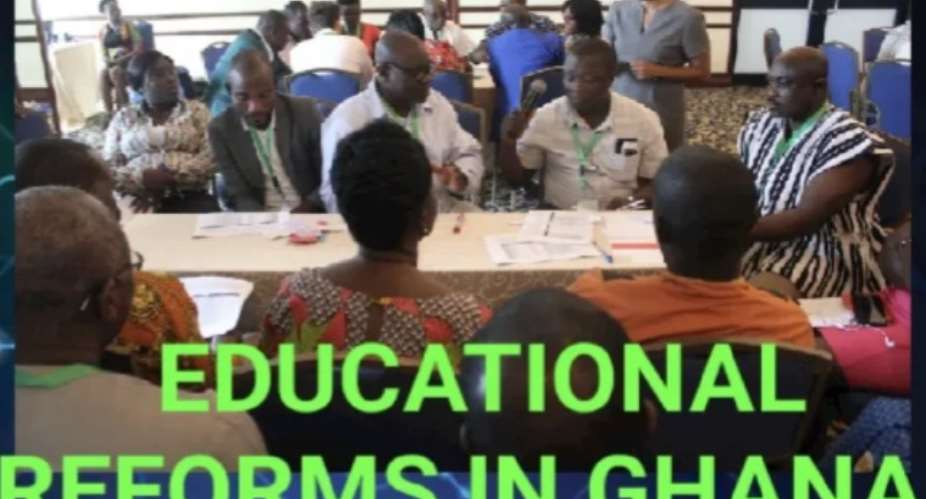
Education is the backbone of any nation’s development, and Ghana’s journey in this regard has been as inspiring as it has been challenging. Over the decades, Ghana’s educational system has undergone transformations, reflecting the nation’s evolving aspirations and realities. This article takes a thoughtful look at the historical evolution of education in Ghana, examines the disruptions brought by the Free Senior High School (Free SHS) policy, and charts a path forward with actionable reforms under a government truly committed to building a brighter future.
The Historical Foundations of Ghana’s Educational System
Ghana’s commitment to education was evident even before its independence. Traditional systems of knowledge transfer within communities were gradually formalized under colonial rule. Post-independence, education became a focal point for nation-building, with successive governments crafting policies to increase access and improve quality.
Key milestones in this journey include:
- The Accelerated Development Plan for Education (1951), which set the foundation for expanding access to primary education for Ghanaian children.
- The Education Act of 1961, which boldly made basic education free and compulsory, further entrenching the belief that education is a right, not a privilege.
- The Vision 2020 Plan, introduced in the 1990s, sought to align education with modern economic demands, particularly focusing on science, technology, and vocational training.
These reforms reflected a structured approach to creating a balance between access, quality, and sustainability. They also reinforced Ghana’s aspirations as outlined in the 1992 Constitution, specifically Article 25, which enshrines the principle of progressive free education. This constitutional mandate emphasized gradual and sustainable reforms to make education universally accessible without compromising quality or fiscal stability.
The Disruptions of the Free SHS Policy
The Free SHS policy, introduced by the Akufo-Addo-Bawumia administration, was a bold step in expanding access to secondary education by eliminating tuition fees. However, its implementation laid bare significant structural weaknesses:
- Double Track System: This approach to managing overcrowding led to disrupted academic calendars and reduced instructional time, impacting the quality of education.
- Insufficient Resources: The lack of essential learning materials, such as textbooks and teaching aids, left many students and teachers ill-equipped for effective education delivery.
- Student Welfare Concerns: Poorly fed students became a symbol of neglect in welfare programs, raising serious questions about the sustainability of the system.
- Curriculum Disparities: Without standardized learning materials, students across regions experienced inconsistencies in the quality of education they received.
While the policy succeeded in increasing enrollment, these challenges highlighted the importance of robust planning and a long-term vision to ensure that reforms achieve their intended impact.
A Vision for a Transformed Future
As Ghana stands at a crossroads, this moment calls for reflection, dialogue, and decisive action. A truly transformative educational system can be achieved through the following reforms:
1. A Comprehensive Policy Framework: Develop a cohesive framework that aligns with constitutional mandates and outlines clear objectives, timelines, and evaluation mechanisms.
2. Infrastructure Expansion: Invest in constructing and modernizing school facilities to accommodate growing enrollment and reduce overcrowding.
3. Equitable Resource Allocation: Ensure timely and adequate provision of learning materials, textbooks, and technology to empower both students and teachers.
4. Teacher Development: Strengthen professional development programs to equip teachers with modern instructional techniques and motivational support.
5. Nutritional and Welfare Programs: Implement sustainable feeding systems that prioritize student health and well-being, ensuring that no child learns on an empty stomach.
6. Curriculum Standardization: Enforce consistency in teaching materials and methods across the country to level the playing field for all students.
A Blueprint for Change Under Committed Leadership
Under the leadership of a listening and doing government—such as President John Dramani Mahama’s administration—these reforms can be implemented with the urgency they deserve. By revisiting the principle of progressive free education as enshrined in the Constitution, Ghana can create an educational system that not only increases access but also delivers consistent quality.
This is not merely an article; it is a call to action. The vision of building an empowered and skilled Ghanaian citizenry lies within our grasp, but only if the nation embraces this pivotal moment. Let us rise to the occasion, engage in meaningful dialogue, and demand reforms that secure a brighter future for the next generation.
Retired Senior Citizen
Teshie-Nungua
[email protected]

 NDC MP explains why Kevin Taylor was not arrested when he returned to Ghana
 Disruption of global order: 'We must expand opportunities for youth' – Mahama
 WN/R: Residents raise concern over abandoned truck on Benchemaa-Oseikojokrom hig...
 Gov’t invests GH¢4.12bn into road infrastructure in Bono Region — Asiedu Nketiah
 Mahama to cut sod for Sunyani Sports Stadium project in October
 Kwesi Pratt urges Ghana to revisit Nkrumah’s seven-year development Plan
 Ghana Jollof saga: 'Power is transient' — Annoh-Dompreh cautions against partisa...
 “I loved NDC but I’ve been disappointed and I’ve learned my lesson” — Mzbel
 Sista Afia laments how colleague musicians turned down her feature requests
 Joining NDC did me more harm than good – Mzbel


