




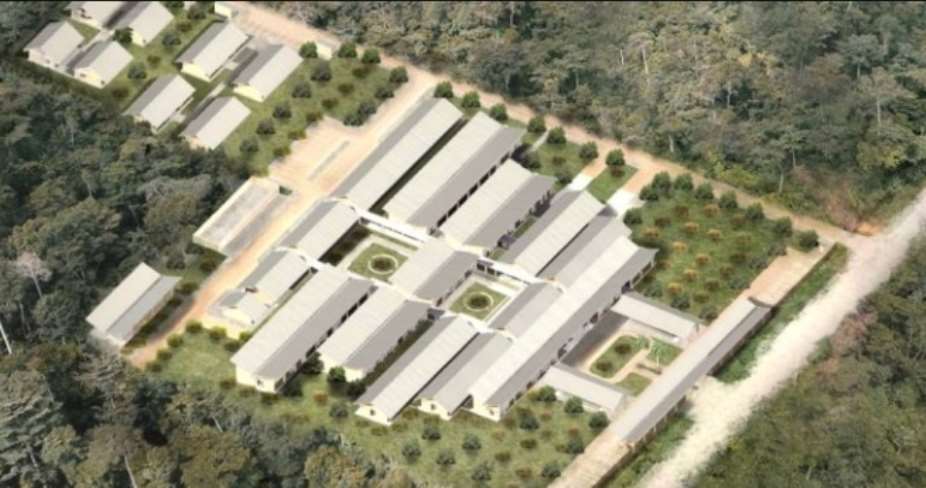
The Agenda 111 initiative, launched by the Akufo-Addo-Bawumia administration in August 2021, was heralded as a transformative project aimed at bridging Ghana's healthcare infrastructure gap. The ambitious plan sought to construct 111 hospitals across the country, including district hospitals, regional hospitals, and specialized facilities. However, nearly four years later, the state of these projects has raised significant concerns, with many questioning the transparency, progress, and financial management of the initiative.
Promises vs. Reality
The Akufo-Addo-Bawumia administration initially promised to complete the Agenda 111 hospitals within 18 months. As of March 2025, none of the hospitals are fully operational. Reports indicate that only one hospital has been completed, but it remains non-functional, lacking essential equipment and staff. The remaining projects are at various stages of construction, with some still at the foundation level.
Financial Expenditure
The total estimated cost of the Agenda 111 project was $1.7 billion. However, only $400 million has been spent so far, leaving a funding gap of $1.3 billion. Critics, including President John Dramani Mahama, have questioned the efficiency of resource allocation, suggesting that the amount spent could have completed at least 22 hospitals if managed effectively.
Challenges and Criticisms
The initiative has faced numerous challenges, including delays in funding, lack of dedicated financial sources, and poor project management. The decision to site hospitals in areas with existing mission hospitals has also been criticized, with some arguing that resources could have been better utilized to upgrade existing facilities.
A Call for Forensic Audit and Documentary
In light of these concerns, President John Dramani Mahama's administration, along with the Minister of Health, Hon. Kwabena Mintah Akandoh, has called for a forensic audit of the Agenda 111 project. This audit aims to uncover any irregularities in financial transactions, procurement processes, and project execution. Additionally, Hon. Akandoh has been tasked with overseeing the completion of the projects and producing a comprehensive documentary on their current status.
The Importance of Accountability
Transparency and accountability are essential to restoring public trust in government initiatives. The forensic audit and documentary will not only provide clarity on the state of the Agenda 111 hospitals but also serve as a valuable record for posterity. It is only through such actions that the nation can ensure prudent use of resources and build a healthcare infrastructure that meets the needs of its people.
Conclusion
The Agenda 111 initiative was a bold vision with the potential to revolutionize healthcare in Ghana. However, its current state underscores the need for better planning, execution, and oversight. The forensic audit and documentary will be crucial in ensuring that the lessons learned from this project guide future initiatives. As Fusaini Isah's Dagomba proverb reminds us, "When the rain falls on the leopard, it does not wash off its spots."True character is revealed in moments of accountability and action. It is time for Ghana to demand the truth and work collectively towards a brighter, healthier future.
Retired Senior Citizen
Teshie-Nungua

 Anti-LGBTQ Bill is duly passed, I believe it is too late in the day to reverse i...
 Here are areas to face power outages over maintenance works today
 RNAQ ex-wife petitions court to restrict Hajia4Reall’s closeness to her children...
 One dead, two children trapped after three storey building collapse at Adenta
 Obuasi Circuit Court jails farmer 8years over violent mining site attack at Obua...
 Health Minister summons KATH CEO over emergency centre closure
 Unauthorised structures demolished at Haatso
 Fire guts shops opposite Accra Central Police Station
 Stephen Yeboah appointed new registrar of Sunyani Technical University
 Abandoned 250-bed Sewua Regional Hospital rots as KATH battles congestion


