




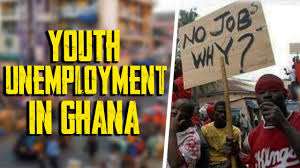
Ghana, a country rich in natural resources and human potential, is grappling with a pressing issue that threatens its economic stability and social fabric—unemployment. Despite numerous government interventions and a growing economy, the job market remains sluggish, leaving thousands of young graduates and skilled workers without opportunities. This article delves into the root causes of Ghana’s unemployment crisis, its impact, and potential solutions.
The Rising Tide of Unemployment
According to recent statistics, Ghana’s unemployment rate has been steadily increasing, particularly among the youth. The Ghana Statistical Service (GSS) reported that youth unemployment stands at over 13%, with underemployment affecting even more individuals. Many graduates leave universities and vocational institutions with high hopes, only to be met with a harsh reality—few job opportunities and fierce competition.
Causes of the Unemployment Crisis
1. Mismatch Between Education and Job Market Needs
Ghana’s education system produces thousands of graduates each year, but many lack the practical skills and industry-specific knowledge required by employers. There is a growing disconnect between what universities teach and what industries need. Technical and vocational training, which could offer hands-on skills, is often undervalued.
2. Overdependence on the Public Sector
For decades, many Ghanaians have aspired to work in government institutions due to perceived job security and better benefits. However, the public sector cannot absorb the increasing number of job seekers, leading to a backlog of unemployed graduates.
3. Lack of Industrialization
Despite its abundant natural resources, Ghana still relies heavily on raw material exports rather than developing industries that create jobs. The manufacturing sector remains weak, forcing the country to import goods that could otherwise be produced locally.
4. Limited Entrepreneurial Support
While entrepreneurship is often promoted as a solution, many aspiring business owners struggle to secure funding, mentorship, and a supportive business environment. High interest rates and bureaucratic red tape make it difficult for startups to survive and thrive.
5. Political Instability and Corruption
Nepotism and favoritism in job recruitment processes discourage merit-based hiring. Additionally, political instability and frequent changes in policies make it difficult for businesses to plan for long-term investments that could create jobs.
The Impact of Unemployment
The consequences of high unemployment are dire. Frustrated youth often turn to crime, cyber fraud, and other illegal activities to survive. Social unrest, brain drain, and mental health issues such as depression are on the rise. Additionally, economic growth is hindered when a significant portion of the population remains unemployed or underemployed.
Potential Solutions
1. Reforming the Education System
Curricula should be revised to include more practical skills, technical training, and entrepreneurship education. Collaboration between universities and industries can help bridge the skills gap.
2. Reviving the Manufacturing Sector
Ghana must invest in industrialization to create jobs. Policies that support local production, reduce import dependency, and encourage foreign direct investment in manufacturing are crucial.
3. Supporting Entrepreneurship
The government and financial institutions should offer low-interest loans, grants, and business incubation programs to help young entrepreneurs launch and sustain their businesses.
4. Strengthening the Private Sector
Creating a business-friendly environment through tax incentives, reduced bureaucracy, and stable policies can encourage local and foreign investment, leading to job creation.
5. Combating Corruption in Recruitment
Transparent hiring processes and strict penalties for nepotism and favoritism can ensure that job opportunities are awarded based on merit rather than connections.
Conclusion
Ghana’s unemployment crisis is a ticking time bomb that requires urgent action. The government, private sector, and educational institutions must collaborate to create a sustainable job market. By prioritizing industrialization, education reform, and entrepreneurship support, Ghana can unlock economic growth and provide meaningful employment opportunities for its citizens.
The time for action is now—before the crisis escalates further.

 Nigeria's Dangote refinery launches continent's biggest IPO
 Accra-Kumasi Expressway to cut travel time to 2hours, drive 120km per hour — Mah...
 'Our own money $2billion ready, we have not gone to borrow money from anywhere' ...
 Founder’s Day September 21 declared public holiday
 Council of State was not qualified to determine prima facie case against Torkorn...
 'Grounds for removal of Chief Justice and justice of superior court shallow, eph...
 Family of Gbewaa Training College lecturer killed by curfew soldiers vows legal ...
 Don't be a Bar that flips on principles but a Bar that is consistent — AG tells ...
 Prostate cancer may show no symptoms until advanced stage – Urologist warns
 Fully completed GH¢213,490 SOCO volleyball court abandoned after Bongo youth rej...


