




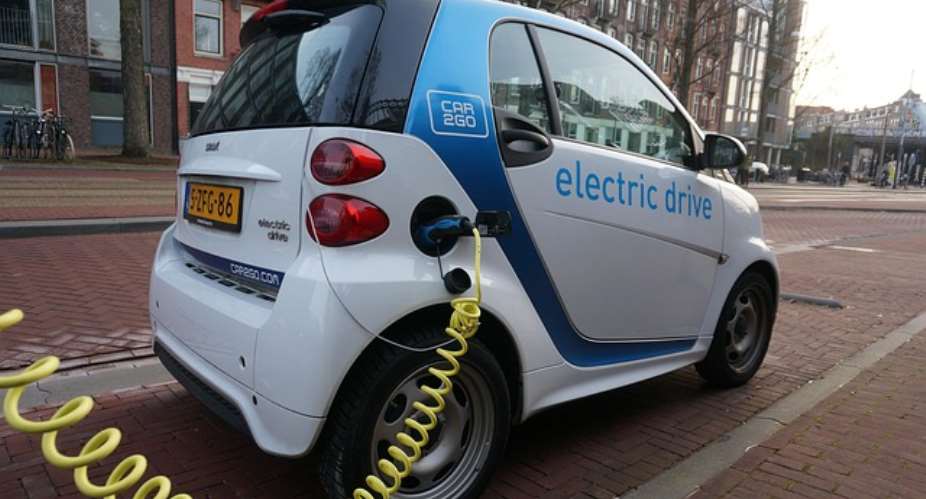
Africa stands at the precipice of a technological revolution, and quantum technology is poised to be the catalyst for transformative change. As the world shifts toward sustainable energy solutions, electric vehicles (EVs) have emerged as a cornerstone of this transition. For Ghana, a nation with burgeoning manufacturing capabilities and a strategic vision for economic development, the integration of quantum technology into EV innovation presents an unprecedented opportunity. This article explores how quantum-driven innovation can revolutionize Ghana’s EV manufacturing landscape, addressing opportunities, challenges, and future directions while emphasizing the societal and economic impacts of this transformation.
Africa’s transportation sector is undergoing a seismic shift. With over 1.3 billion people and a rapidly urbanizing population, the demand for efficient, sustainable mobility solutions is growing. According to the International Energy Agency (IEA), Africa’s vehicle fleet is expected to double by 2040, yet the continent remains heavily reliant on fossil fuels, which account for over 70% of its energy consumption. This dependency exacerbates energy insecurity and environmental degradation, particularly in urban centers like Accra, where air pollution levels exceed WHO guidelines. Ghana, however, is uniquely positioned to lead Africa’s EV revolution. With a stable political climate, a growing middle class, and a government committed to industrial transformation, the country has the potential to become a hub for EV manufacturing. The Ghana Automotive Development Policy (GADP), launched in 2019, has already attracted major automakers like Volkswagen and Toyota, laying the groundwork for local EV production.
Quantum technology, offers groundbreaking advancements in computing, sensing, and materials science. For EVs, quantum innovations can enhance battery efficiency, optimize energy management, and improve vehicle safety. For instance, quantum sensors can enable precise navigation systems, while quantum computing can accelerate the development of next-generation batteries with higher energy densities and faster charging times. In Ghana, where energy insecurity and frequent power outages pose significant challenges, quantum-enhanced energy storage systems could revolutionize EV adoption. By 2030, the global quantum technology market is projected to reach $65 billion, and Ghana can tap into this burgeoning industry to drive its EV ambitions.
The integration of quantum technology into EV manufacturing can create thousands of jobs across Ghana. From skilled technicians and engineers to researchers and supply chain managers, the sector offers diverse employment opportunities. According to the Ghana Statistical Service, the manufacturing sector contributes approximately 10% to GDP, and EV production could significantly boost this figure. By 2030, the global EV market is expected to generate 10 million jobs worldwide, and Ghana can capture a significant share of this growth. Ghana spends over $2 billion annually on fossil fuel imports, a figure that strains the national budget and increases energy insecurity. Transitioning to EVs powered by renewable energy sources can reduce this dependency, saving the country millions of dollars while promoting environmental sustainability. Quantum-enhanced solar panels and wind turbines could further bolster Ghana’s renewable energy capacity, ensuring a reliable power supply for EVs.
Road accidents are a major public health concern in Ghana, with over 2,000 fatalities reported annually. Quantum sensors and AI-driven systems can enhance vehicle safety by enabling real-time monitoring and collision avoidance. By incorporating these technologies into locally manufactured EVs, Ghana can set new safety standards for the continent. However, ambitions are hindered by inadequate infrastructure, including a lack of charging stations and unreliable electricity supply. According to the Energy Commission of Ghana, only 85% of the population has access to electricity, and frequent power outages remain a challenge. Addressing these gaps requires significant investment in grid modernization and renewable energy projects.
The upfront cost of EVs also remains a barrier to widespread adoption. While global EV prices are declining, they are still prohibitively expensive for many Ghanaians. Government incentives, such as tax breaks and subsidies, can make EVs more accessible, but these measures must be carefully balanced with fiscal constraints. The successful integration of quantum technology into EV manufacturing requires a highly skilled workforce. Ghana must invest in STEM education and vocational training to equip its youth with the necessary expertise. Partnerships with international universities and tech companies can facilitate knowledge transfer and capacity building.
Collaboration between the government, private sector, and academia is essential for driving quantum-driven EV innovation. Initiatives like the Ghana Innovation and Research Commercialization Centre (GIRC-C) can serve as a platform for fostering collaboration and attracting investment. The government must also enact policies that support EV adoption and quantum technology development. This includes incentives for local manufacturers, funding for research and development, and regulations that promote environmental sustainability.
The adoption of quantum-driven EV technology will have far-reaching impacts on Ghanaian society. Reduced air pollution will improve public health, while job creation will alleviate poverty and stimulate economic growth. Moreover, the transition to renewable energy will enhance energy security, reducing the country’s vulnerability to global oil price fluctuations. On a broader scale, Ghana’s success in EV manufacturing can inspire other African nations to embrace sustainable technologies, fostering regional cooperation and economic integration.
Dr. James Adu Ansere
Postdoctoral Research Fellow
Faculty of Engineering and Applied Science
Memorial University, Canada
Email:[email protected]


 NDC not worried about NPP’s Kojo Bamba, he is small boy – Azorka
 Obuasi SHTS: 'Children are not buffet' – NPP’s Fatimatu confronts Zuba
 'I didn’t know I was supposed to chop and not work' – Blakofe on her time at GTD...
 Resource exploitation fuelling Africa’s conflicts – Mahama
 Our ports' growth always depended on collaboration across maritime, logistics va...
 Stranded Ghanaian fishermen narrate how they ate fresh fish, drunk sea water to ...
 How notorious armed robber died on the way whiles leading police to arrest accom...
 'We must continuously improve cargo handling, coordination among port operators'...
 Nii Lante Vanderpuye confident of winning NDC national chairmanship despite Gold...
 Agalga dismisses critics, assures Builsa North of progress on Sandema–Wiaga Road


