




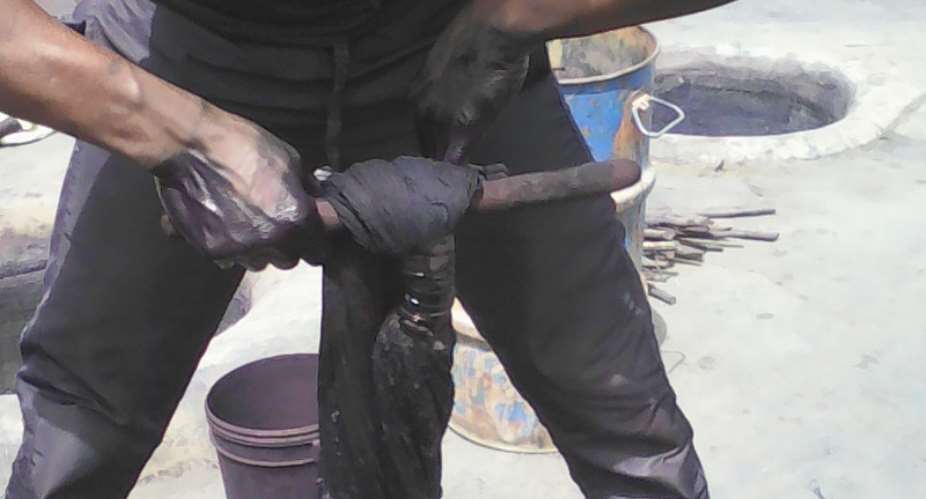
It was a trip to the historic rural community of Daboya in Northern Ghana which is home to a centuries-old centre of indigo dyeing and also one of the last surviving traditional indigo centres of West Africa. I had knowledge of the renowned Kofar Mata indigo centre in Northern Nigeria but did not know we had something similar in Ghana. Some West African societies were renowned in the past for producing highly sought after indigo cloths. Craftspeople with the skill of producing indigo guarded it jealously. In Europe indigo was so priced that some actually referred to it as blue gold.
I made the journey to Daboya about 6 years ago and there wasn’t much documentation and information about this community and its rich indigo tradition out there at the time . I actually only heard about it from someone who had limited information on how to get there because of its location in the suburbs.
It was a 12-hour journey from Accra and I had to finally get to the community by canoe. It was my first canoe ride as well. There was a lot going on in my mind on that canoe ride on the White Volta far away from home. The recurring thought on my mind was whether I will find that ancient indigo tradition still in practice in Daboya since I heard it was in fast decline. One of my informants wasn’t even sure if it was still in practice. As a fan of the colours of indigo and a history enthusiast, I wanted so much to visit this indigo community. This had lingered on my mind to the extent that it had started to feel like home. A home I had never been to.
It was exactly as I had imagined and it felt just like a home-coming. I could feel the joy of my fellow passengers on the canoe, women who were happy to be back home from a hard day’s work. I wanted to always remember that feeling. The feeling of finally arriving at a hard-fought destination, one that was worth it.
At the end of this memorable trip I would conclude that I came in search of a dying tradition but ended up finding a tradition very much alive. The trip to the historic rural community of Daboya was a very memorable and impactful experience.
In that year there were misleading trending reports published by major news outlets as well about African prints not being actually African but Dutch because of the Dutch textile print innovation. I was very concerned about this story which was more complex than was being presented on a face value and had ramifications on the rich African textile tradition as a whole which existed long before. Which can boast of indigo cloths, kente, mud cloth amongst others . This uninformed statement also had the potential of undermining African cultural heritage, in extension black history. The Dutch simply imitated the traditional African textiles as they had done earlier with Indonesian textiles. This was what pushed me to write a book on African textiles (at that time almost all authors on this subject were of Western origin). Why is it that others see the value of our cultural heritage than we do ourselves? In this life, if you cannot tell your own story others will tell it for you and you might not like it because chances are they will get it wrong. That is exactly why Africa’s rich history has been so much distorted and diluted because others are in control of it. For instance, even when Africans see fellow Africans who look just like them in historical depictions as original Egyptians they are told otherwise. The only way you can dominate a people is to control how they think, and see themselves.
These traditional textiles might not seem important to the ordinary person but they are highly significant. They are relics. Tangible representations of our history and documentation of traditions through time. Just one of these textiles can be a window of learning many things about a culture. Ghana is lucky to be home to a number of textile traditions but we have not made as much as we should have from this. We have made some efforts but there is much room for improvement. The sector lacks support and only sustained by a few rural folk. This threatens the survival of these priceless cultural heritage.
This centuries-old indigo dyeing centre in Daboya is a valuable resource for Ghana and needs to be safeguarded and promoted to harness its full tourism potential. I still get messages from foreigners interested in visiting there because of past publications on that. In the past, indigo was a very valuable commodity and people with the skill were in high demand. It was also one of the cash crops (sugar, cotton etc.) of the slavery era and the slave masters of America depended also on the knowledge of the enslaved who had this skill. Because they knew many came from a region with the knowledge of indigo cultivation and processing to a finished product. So they were not only exploiting these people’s strength but knowledge as well to create wealth for themselves which they still benefit from today.
Indigo is loved by many, the tradition of indigo is widely respected around the globe due to its impact on the world. Some groups of tourists travel to other parts of the world like Asia because of this. We need to position ourselves well to also reap such benefits. It is an amazing thing to have a community in Ghana that has kept this rich tradition alive till this day.
This article was made to commemorate the 5th anniversary of the book- Journey of West African Textile Traditions (2020).


 October 22: Cedi sells at GHS12.25 on forex market, GHS11.66 on BoG interbank
 Western Region: Seven missing fishermen rescued in Benin territorial waters – Po...
 Sammi Awuku calls for strict enforcement of child protection policies amid risin...
 Foreign Affairs Ministry denies Minority’s claim of harassing staff over South A...
 Nigerian police rescue 11 Ghanaians allegedly held hostage in Ogun State
 Mahama urges AES countries to open up to international support in fight against ...
 Websites shut down worldwide as critical cyber-security update issued
 South Africa evacuation expenditure: Ablakwa harassing Foreign Ministry staff ov...
 Bawumia engages health professionals on sector challenges
 Meta fined $25 billion in New Mexico over Cambridge Analytica scandal


