




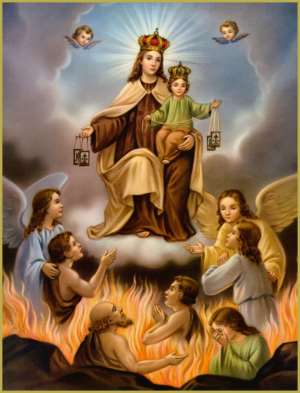
Purgatory is one of the most profound and consoling doctrines of the Catholic faith, yet it is frequently misunderstood. This state of purification underscores God's infinite mercy and justice, allowing souls to be fully sanctified before entering into the glory of heaven. Rooted in Scripture, Tradition, and centuries of theological reflection, purgatory invites us to deepen our understanding of the afterlife, appreciate the stages of purification, and recognize the spiritual duty to pray for the faithful departed.
According to my spiritual director, my friend and my mentor, Robert Bugre, "Purgatory is not a place of punishment akin to hell but a state of necessary purification for those who die in God’s friendship yet still bear the temporal effects of sin." Purgatory however reflects the truth that "nothing unclean will enter [heaven]" (Revelation 21:27) and affirms that God’s love demands perfect holiness from all who enter His presence.
This state is temporary, aimed at cleansing the soul of venial sins or the remaining consequences of forgiven mortal sins. Theologians, such as St. Thomas Aquinas, describe it as the “purifying fire” (cf. 1 Corinthians 3:15) that refines the soul in preparation for union with God. Far from a sign of condemnation, purgatory is a merciful process that transforms imperfection into sanctity.
While the Church has not defined a specific "stages" framework for purgatory, spiritual writers and mystics have offered insights into its progressive nature. These stages, often allegorical, reflect the soul's journey toward complete union with God:
Awareness of Sin
In the initial stage, the soul gains full awareness of its sins and their effects. This realization causes profound sorrow and a deep longing for reconciliation with God. This contrition is not despairing but hopeful, as the soul trusts in divine mercy.
The second stage involves the detachment from all earthly affections and imperfections. Whether it be excessive love for material things, uncharitable tendencies, or lingering pride, the soul is purged of anything that obstructs its complete love for God.
In the final stage, the soul experiences illumination—understanding God’s perfect will and aligning itself entirely with divine love. This stage prepares the soul for the beatific vision, where it will see God face to face.
The Church teaches that prayers, sacrifices, and acts of charity offered on behalf of the dead aid their purification process. This practice finds its roots in Scripture, such as in 2 Maccabees 12:46: "It is therefore a holy and wholesome thought to pray for the dead, that they may be loosed from sins." The Church also affirms this tradition in the Eucharistic prayer, imploring mercy for the departed.
Prayer for the souls in purgatory is a profound act of charity and solidarity. As members of the Communion of Saints, the faithful on earth have a spiritual obligation to assist those in purgatory through:
Mass Offerings: The Holy Sacrifice of the Mass is the most efficacious means of helping souls in purgatory.
Indulgences: Plenary or partial indulgences, offered for the dead, can reduce or eliminate their time in purgatory.
Personal Prayers and Rosaries: Devotions such as the Rosary, especially when offered for the intentions of the faithful departed, carry immense spiritual benefits.
Praying for the faithful departed not only aids their purification but also deepens our own faith and reliance on God’s mercy. It fosters a profound sense of humility and reminds us of our own mortality and need for sanctification.
Moreover, the souls we help in purgatory often intercede for us, forging a powerful spiritual bond that transcends death. This mutual exchange of prayer strengthens the unity of the Church across time and eternity.
Understanding purgatory sheds light on God’s immense love and the soul’s journey toward perfection. The stages of purification reveal His desire for each person to achieve holiness, while the call to pray for the faithful departed underscores the interconnectedness of the Church.
Praying for the dead offers profound spiritual benefits not only for the departed but also for the living. It strengthens our faith in the resurrection and the promise of eternal life, cultivates a deeper reliance on God's mercy, and fosters humility as we acknowledge our shared need for sanctification. This act of charity connects us to the Communion of Saints, uniting us with the faithful departed who often intercede for us in return. It also helps us grow in love, compassion, and gratitude as we participate in God’s salvific plan for all souls.
As we honor this sacred duty, we not only assist those on their path to heaven but also prepare ourselves to join them in the eternal embrace of God’s glory. Let us, therefore, pray unceasingly for the faithful departed especially during this month of November which is the month of the dead, trusting that our acts of love and devotion bring them—and us—closer to the joy of heaven.
This article is inspired by the spiritual catechesis of Brother Robert Bugre.


 [VIDEO] How Ghanaian allegedly defrauded Dutchmen of €200,000 in romance scam
 NPP to stage 'Y3gye y3 sika' protest on November 3 over South Africa evacuation ...
 'Ama Sey is no pushover' – Hawa Koomson justifies choice as deputy
 Sucking breasts, deodorants do not cause breast cancer – Dr. Tackie
 Kufuor backs proposal for five-year presidential term
 22-year-old arrested over murder of mother in Tarkwa
 NPP parliamentary aspirants to pay GH¢5,000 for declaration of intent
 Six NIA staff arrested, seven others sacked over alleged extortion at Galaka Gha...
 Here are new guidelines for prospective NPP parliamentary candidates
 NPP has no plan to remove Osahen Afenyo-Markin as Minority Leader – Justin Kodua...


