




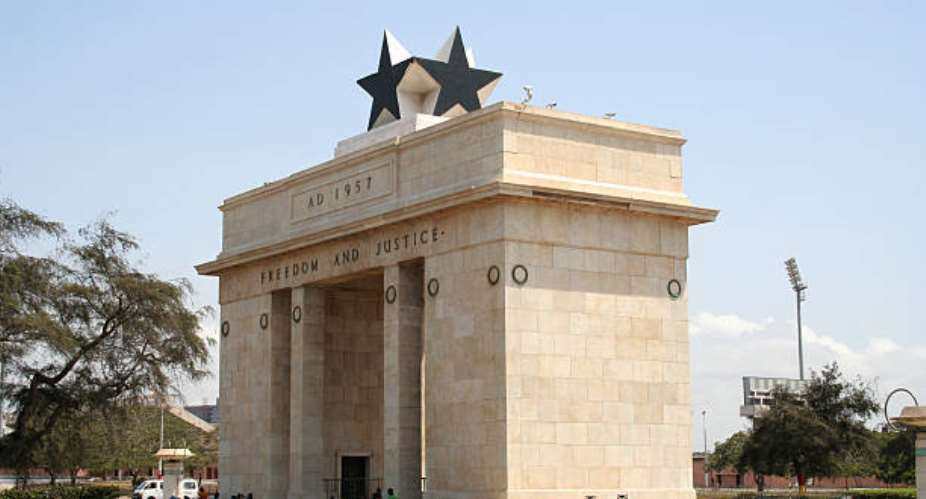
Since gaining independence in 1957, Ghana has strived to establish itself as a stable, democratic, and economically prosperous nation in West Africa. Often regarded as a beacon of democracy on the continent, Ghana has made significant strides in areas such as political stability, economic reform, and social progress. However, the nation still faces challenges that hinder its ability to achieve its full potential. The Ghana that many envision – a country with strong governance structures, an unbiased judiciary, robust infrastructure, inclusive growth, and sustainable development – remains a work in progress, contrasting with the Ghana that currently exists. This analysis examines the disparities between the Ghana we have and the Ghana we aspire to create, focusing on governance, economic development, social equity, and environmental sustainability.
1. Governance: Transparency, Accountability, and Citizen Engagement
The Ghana We Have
Ghana has a multiparty democracy that is celebrated for peaceful transitions of power and regular elections. However, governance challenges persist, particularly concerning transparency, judiciary independence, and accountability. Corruption remains a pervasive issue, affecting public trust in the three arms of government and government institutions. According to Transparency International’s Corruption Perceptions Index, Ghana has consistently ranked high on corruption, reflecting systemic issues in public sector accountability. Instances of nepotism, embezzlement of public funds, and lack of transparency in government projects reduce citizens’ confidence in their leaders and erode democratic values. Additionally, the engagement of citizens in the policymaking process remains limited, with political elites often making decisions without adequately consulting the public.
The Ghana We Want
The Ghana we envision is one where governance is synonymous with accountability, transparency, and inclusivity. A transparent government would prioritize eliminating corruption by strengthening institutions such as the Office of the Special Prosecutor, enhancing legal frameworks, and ensuring the independence of anti-corruption agencies. This Ghana would have open channels for public consultation and civic engagement, where citizens participate meaningfully in shaping policies that affect their lives. For true democracy to thrive, Ghana needs a governance model that prioritizes ethical leadership, holds public officials accountable, and empowers citizens through consistent, transparent communication. Such a governance structure would inspire trust in the executive, the judiciary, and the legislature and foster a culture of integrity across all sectors.
Given my background in philosophy and the fact that the judiciary has been in the news lately – albeit – for all the bad reasons, I cannot discuss issues of national interest without offering my uninitiated philosophical opinion on the importance of judicial independence. Ancient philosophers, particularly from the Greek and Roman traditions, held the judiciary as a fundamental pillar of society, essential for justice and the stability of the polis or state. They emphasized the necessity of impartiality in judicial processes, understanding that bias could corrupt the very foundations of justice and, by extension, the community’s moral and social order.
Plato, for instance, in his works, particularly The Republic, argued that justice is an ideal form, a harmonious order where everyone performs their rightful role without interference. For Plato, an unbiased judiciary was an extension of this concept, where judges act not out of personal preference or benefit but as embodiments of this higher justice. He believed that rulers and judges must transcend individual interests, cultivating wisdom and virtue to ensure impartial rulings aligned with the well-being of society. Aristotle, in his Nicomachean Ethics and Politics, viewed justice as central to the functioning of a balanced society, distinguishing between distributive and corrective justice. For Aristotle, judicial impartiality was necessary to achieve corrective justice, where the law is applied equally, irrespective of status or personal relations. He emphasized that judges should be neutral mediators, upholding an objective moral order and reasoning through logical principles rather than emotions or affiliations.
The Roman philosopher and statesman, Cicero, saw justice as a universal principle, aligned with natural law, which he believed governed all humans and should guide judicial processes. In De Legibus (On the Laws), he argued for a judiciary independent of external influences like power or wealth. Cicero advocated that judges act as guardians of the law and moral order, ensuring that their rulings reflect a commitment to fairness rooted in rationality and integrity. Although not Greek or Roman, Confucianism in ancient China provides a relevant perspective. Confucius emphasized the role of moral character in officials, believing that just governance derived from rulers and judges who prioritized the common good over personal interests. Confucian thought held that an unbiased judiciary required judges to embody virtues such as honesty and compassion, promoting social harmony by rendering impartial judgments. Some other philosophers, like the Sophists, argued that justice could be subjective, shaped by societal norms and power dynamics. However, they also recognized that a society where justice is perceived as impartial enhances social cohesion. Although less idealistic about impartiality, the Sophists acknowledged that an unbiased judiciary could stabilize society by curbing elite excesses and appeasing the public’s sense of fairness.
So, what is my point? The point is that ancient philosophical perspectives on the judiciary underscore the belief that an unbiased judiciary is central to justice, as it maintains societal balance, curbs the influence of personal biases, and upholds an objective moral or rational order. These views laid the intellectual groundwork for later legal principles, highlighting the universal importance of impartiality in judicial systems. That is why I cannot but agree with Prof. Ransford Gyampo of the University of Ghana, when he argued in the TV3 weekly analytical program, The Key Points, that philosophical and/or political thinking preceded legal opinions. In other words, before the judiciary, there was intellectualism. Therefore, legal opinions must not be seen to defy intellectual or logical reasoning.
2. Economic Development: Sustainable Growth and Job Creation
The Ghana We Have
Under the current democratic dispensation, Ghana’s economy has seen periods of robust growth, especially following the discovery of oil in 2007, which significantly boosted the country’s revenue. However, this growth has been uneven and unsustainable. The country remains heavily dependent on primary exports like cocoa, gold, and oil, making its economy vulnerable to global price fluctuations. Despite economic gains, Ghana’s unemployment rate remains high, particularly among young people, who constitute a significant portion of the population. Many Ghanaians face job insecurity, low wages, and limited access to economic opportunities, which contributes to income inequality. What is more, Ghana’s rising debt levels have led to austerity measures that restrict the government’s subsidy for essential services, further affecting economic stability.
The country’s incessant run to the International Monetary Fund (IMF) for financial bailouts is becoming an unforgiving embarrassment to the political elites. Thus, the effectiveness of the IMF bailouts in promoting sustainable economic development in Ghana has become an extensive political chess game in almost every eight political years. While the IMF provides necessary financial assistance to stabilize economies facing balance of payments challenges, the conditionalities and structural reforms that accompany these bailouts often pose challenges for long-term development. A nuanced understanding of Ghana’s economic, social, and political landscape would have been essential in assessing the potential for development under continued IMF bailouts. However, this platform is limited in scope for such discussions. Suffice it to say that while IMF bailouts can offer Ghana the financial support needed to address short-term crises, their impact on long-term development remains questionable. The trade-offs between stability and growth, coupled with dependency and social costs, pose substantial obstacles. For Ghana to develop under IMF assistance, there would need to be a reorientation of bailout programs towards fostering inclusive growth, economic diversification, and structural transformation – elements that are often secondary in traditional IMF stabilization agendas. The journey toward sustainable development requires Ghana to balance immediate financial relief with a strategic vision that prioritizes economic independence and socio-economic equity.
The Ghana We Want
The Ghana we want is one where economic growth is inclusive, diversified, and resilient. This Ghana would prioritize industrialization and value addition to its primary exports, creating a self-sustaining economy less dependent on foreign markets. Developing the manufacturing sector, for example, would create jobs, increase exports, and reduce Ghana’s dependency on raw material exports. Furthermore, Ghana’s economic model would focus on job creation, especially for the youth, by investing in skills training, entrepreneurship programs, and infrastructure that supports small and medium-sized enterprises (SMEs). The ideal Ghana would also prioritize reducing its debt burden through prudent fiscal management, enabling increased investment in social services and sustainable development initiatives that improve citizens’ quality of life.
3. Social Equity: Education, Healthcare, and Poverty Alleviation
The Ghana We Have
Ghana has made notable progress in education and healthcare access; however, significant gaps remain. While free primary and secondary education have improved school enrollment rates, the quality of education varies widely, especially between urban and rural areas. Many public schools lack adequate resources, trained teachers, and infrastructure, limiting educational outcomes for Ghanaian children. It is unpardonable for pupils to lay on their stomachs to take lesson notes in class in 21st century Ghana. Similarly, healthcare in Ghana has expanded through initiatives like the National Health Insurance Scheme (NHIS), but it faces issues such as funding shortages, inadequate facilities, and limited access in rural communities. Poverty remains a persistent challenge, with disparities in wealth distribution and access to basic services affecting marginalized populations, particularly in the northern and some parts of the southern sector.
The Ghana We Want
The Ghana we want is a nation committed to social equity, where every citizen, regardless of background, has access to high-quality education, healthcare, and opportunities for economic advancement. This vision includes a robust public education system that equips students with the skills needed for the 21st-century economy, supported by investment in teacher training, curriculum modernization, and school infrastructure. Healthcare would be accessible, affordable, and well-resourced, with a focus on preventive care and universal coverage. Poverty alleviation efforts would target rural and marginalized areas, addressing the root causes of inequality through job creation, social services, and targeted development programs. The Ghana we want would be a society that values inclusivity and works toward a fair distribution of resources and opportunities for all citizens.
4. Environmental Sustainability and Climate Resilience
The Ghana We Have
Factors such as illegal gold mining (galamsey), deforestation, and unregulated waste disposal are driving environmental degradation, a growing concern in Ghana. These activities have led to the pollution of water bodies, loss of biodiversity, and soil degradation, threatening both human health and agricultural productivity. The persistence of illegal gold mining in Ghana reflects a concerning lack of political will to address the issue comprehensively. Political and economic incentives, weak regulatory enforcement, and entrenched corruption continue to obstruct meaningful action against galamsey, allowing its environmental and social damages to proliferate. Combating illegal mining will require not only stronger policies but also a genuine commitment from political leaders to prioritize the nation’s environmental and social welfare over short-term financial gains. To truly address the galamsey crisis, Ghana’s leadership must demonstrate an unwavering resolve to enforce regulations, combat corruption, and promote sustainable development alternatives for communities affected by illegal mining. It is only in Ghana that parliamentarians would enact laws to give impeded access to people to mind in forest reserves. I am still struggling to come to terms with the reasoning that went into the passage of that law. This reminds me of what the current Vice President of the United States of America, Kamala Harris, said recently: “When you know what to stand for, you know what to fight for.” It does seem to me that the Ghana we have does not know what to stand for, so it cannot fight for anything. The Ghana we have is also increasingly vulnerable to the impacts of climate change, including rising temperatures, erratic rainfall, and coastal erosion. Despite national policies aimed at environmental protection, enforcement remains weak, and environmental sustainability is often deprioritized in favor of short-term economic and political gains.
The Ghana We Want
The Ghana we anticipate would place environmental sustainability at the forefront of its development agenda. This vision includes stringent enforcement of environmental regulations to combat illegal gold mining, protect water bodies, and promote sustainable land use. Ghana would invest in renewable energy sources, such as solar and wind, to reduce its dependence on fossil fuels and meet its energy needs sustainably. Climate resilience would be integrated into development planning, with initiatives that promote sustainable agriculture, coastal protection, and disaster preparedness. In addition, environmental education and community involvement in conservation efforts would foster a culture of sustainability, ensuring that development does not come at the expense of future generations.
5. The Role of Civil Society and Citizen Participation
The Ghana We Have
Ghana boasts a vibrant civil society that plays a crucial role in holding government accountable and promoting democratic values. However, CSOs face challenges such as limited funding, political interference, and public apathy. Many citizens are disengaged from political processes due to disillusionment with governance and a lack of trust in political institutions. While there are mechanisms for citizen participation, such as town hall meetings and consultations, these are often underutilized or dominated by political elites or party apparatchiks of the ruling party, limiting genuine citizen engagement.
There is no point belaboring the obvious that CSOs play a vital role in holding governments accountable, promoting democratic values, and advocating for social justice in Ghana. However, there are concerns about selective activism within some sections of Ghana’s civil society, where certain groups are more vocal in their critique only when specific political parties are in power. This selective criticism, often rooted in partisan bias, can affect the credibility and effectiveness of civil society in promoting fair and consistent governance. Since 1992, Ghana’s political landscape has been dominated by two major parties: the New Patriotic Party (NPP) and the National Democratic Congress (NDC). Some CSOs and advocacy groups have been observed to be more active or less active depending on which party holds power. This partisan alignment can result from various factors, including political affiliations of CSO leaders, funding sources, and perceived ideological alignment. When a CSO is associated with a particular party, it may feel pressured to minimize criticism of that party when it is in power or to intensify scrutiny when it is in opposition. This selective engagement, however, undermines the objectivity expected of civil society actors.
The Ghana We Want
The Ghana we are looking for would be a country where civil society organizations (CSOs) and citizens are active participants in governance and decision-making irrespective of which political party is in power. CSOs would operate freely, supported by both local and international funding, and collaborate closely with the government on policy formulation and implementation. A strong culture of civic engagement would ensure that citizens participate actively in elections, advocacy, and local governance, holding leaders accountable for their actions. Through education and public awareness campaigns, the Ghana we want should empower its citizens to understand their rights and responsibilities, fostering a democratic culture that is both resilient and participatory.
Conclusion
The Ghana all Ghanaians want is within reach, but it requires a concerted effort from government, civil society, and citizens to bridge the gap between the current reality and the aspirational vision of a prosperous, inclusive, and sustainable nation. To achieve this, Ghana must commit to transparent governance, diversify its economy, invest in social equity, protect its environment, and foster a culture of civic participation. It is only when we address these challenges that Ghana can lay the foundation for a future where democracy, economic growth, and social well-being flourish hand in hand. While the journey is complex and demands sacrifice and innovation, the Ghana we demand from our leaders is possible through shared responsibility, determination, and a collective commitment to creating a better future for all citizens.
Bibliography
Asmis, E. (2008). Cicero on Natural Law and the Laws of the State. Classical Antiquity, 27(1), 1–33. https://doi.org/10.1525/ca.2008.27.1.1
Davies, O., Fage John D., Boateng, Ernest Amano and Maier, Donna J. (2024, November 3). Ghana. Encyclopedia Britannica. https://www.britannica.com/place/Ghana
Frimpong, J. O. (2020). Oiling the Wheels of Multi-Party Politics in Africa: How Power Alternation Affects Party Financing in Ghana. Journal of Asian and African Studies, 55(5), 666-682. https://doi.org/10.1177/0021909619891188
HUANG, X. (2007). Justice as a virtue: An analysis of Aristotle’s virtue of justice. Frontiers of Philosophy in China, 2(2), 265–279. http://www.jstor.org/stable/27823292
Lennart, R. (2020). Worldmaking after empire: the rise and fall of self-determination. International Affairs, 96(5), 1407–1408. https://doi.org/10.1093/ia/iiaa108
McAleer, S. (2020). Plato’s Republic: An Introduction. Cambridge, UK: Open Book Publishers, https://doi.org/10.11647/OBP.0229
Sherman, C. R. (1977). Some Visual Definitions in the Illustrations of Aristotle’s Nicomachean Ethics and Politics in the French Translations of Nicole Oresme. The Art Bulletin, 59(3), 320–330. https://doi.org/10.2307/3049666


 'Some NPP members did not vote in 2024 election because I left NPP' – Alan Kyere...
 How €225 million cocaine from Ghana traced to fugitive Dutch drug kingpin based ...
 'Galamsey remains an existential threat' – Gyampo demands more action
 'I’m like Akpeteshie, I don’t need adverts to win' – Hawa Koomson storms home tu...
 'Excessive bail conditions must be reviewed' – GBA President
 Ketu South: Four-year water crisis deepens hardship in Agbozume
 Show evidence of higher operating costs to justify fare hike – NPA CEO to transp...
 Four Ghanaians arraigned over alleged €225 million cocaine shipment to France
 Agbogbloshie: Police kill suspected robber, recover AK-47, 186 rounds of ammunit...
 DVLA opens 29 new offices in 18 months; 62 offices nationwide - CEO


