




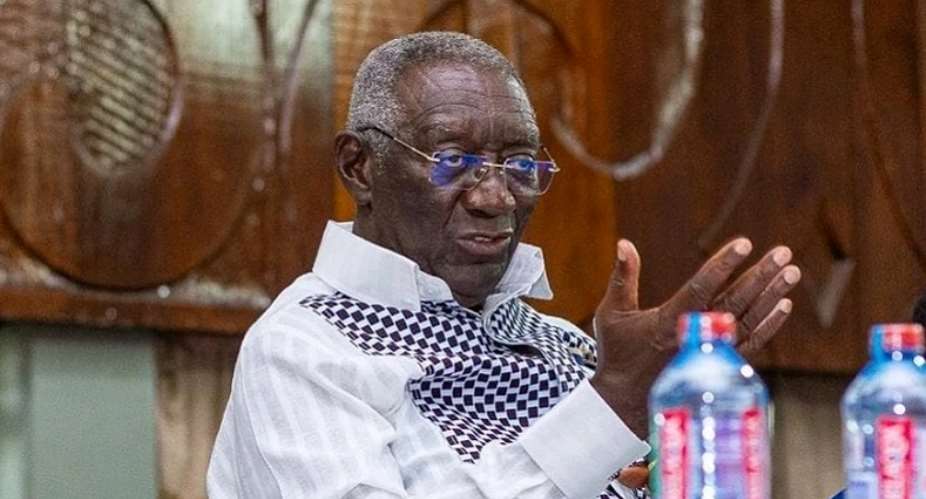
In the annals of political history, few figures have the moral standing to influence the future course of a nation. Former President John Agyekum Kufuor is one such figure in Ghana. Having served as president from 2001 to 2009, Kufuor’s leadership was largely associated with stability, growth, and a spirit of unity. However, as his successor, Nana Akufo-Addo, ascended to the presidency in 2017, there was a growing perception that Kufuor was privately concerned about his longtime colleague's leadership style and potential to govern effectively.
Though Kufuor is known for his dignified restraint, there were whispers throughout Ghana’s political circles that he was wary of Akufo-Addo’s suitability for the highest office. Yet, despite these reservations, Kufuor did not boldly/openly oppose Akufo Addo’s candidature, and eventually fell in line with party loyalty, as is common in Ghanaian politics. Eight years into Akufo-Addo’s presidency, the alarm bells Kufuor might have rung in private have been vindicated by a litany of governance failures: economic mismanagement, a spiraling debt crisis, unprecedented levels of corruption, state capture, nepotism, and environmental degradation.
The question remains-could Kufuor have acted differently? Should he have, like former U.S. Vice President Dick Cheney and his daughter Liz Cheney, stood as a voice of principle against a president whose actions were deemed harmful to the nation?
In the U.S., the Cheneys and others, such as Rep. Adam Kinzinger, took the courageous step of publicly opposing Donald Trump, a president from their own Republican Party, when they believed his behavior was detrimental to American democracy. By refusing to compromise their integrity for the sake of partisan unity, they prioritized the welfare of their country over party loyalty. In contrast, Kufuor’s quiet acquiescence to Akufo-Addo’s leadership could be seen as a missed opportunity for Ghana.
The consequences of Akufo-Addo's tenure are stark: the collapse of several indigenous banks, runaway inflation, depreciation of the cedi, and the near-ruin of Ghana’s cocoa sector. Illegal mining, known locally as "galamsey," has devastated Ghana's water bodies and ecosystems, while rampant corruption and allegations of cronyism have eroded trust in governance. The government’s response to dissent, characterized by the persecution of political opponents and a growing intolerance for criticism, has further diminished democratic accountability.
Amid this turmoil, Ghana is grappling with record-high unemployment, a heavy tax burden on its citizens, and an escalating cost of living. These challenges have made life harder for the average Ghanaian, leading many to question how things might have been different if Kufuor had acted on his concerns earlier.
Had Kufuor emulated the Cheney-style defiance, his opposition could have set a new precedent for political leadership in Ghana. By publicly condemning Akufo-Addo’s candidacy, Kufuor would have signaled that national interest must always come before party allegiance, creating a space for future leaders to speak out when necessary. Such a stance could have strengthened Ghana’s democracy by encouraging more open dialogue and preventing blind loyalty to parties over principles.
History may well judge Kufuor’s silence as a missed opportunity to avert the current economic and social crises. Akufo-Addo’s incompetence, ineptitude, and penchant for corruption is solely to blame for all of Ghana’s problems now. His administration’s governance failures and the subsequent suffering of the populace stand as a stark reminder that leadership requires more than just rhetoric and following the party line.
In hindsight, had Kufuor taken a page from Dick Cheney’s book and acted decisively to oppose Akufo-Addo, he might have been hailed as a true patriot who put country over party. While Dick Cheney, Liz Cheney, and Adam Kinzinger faced fierce backlash for their opposition to Trump, they have been praised for their willingness to sacrifice political power for the integrity of the nation. Similarly, Kufuor could have been remembered as the leader who stood up for Ghana’s future in the face of political pressure.
As Ghana struggles through its current challenges, it is worth reflecting on the paths not taken. If Kufuor had publicly opposed Akufo-Addo, he might have saved the nation from the economic turmoil and political strife that now define this period of its history. It is a sobering reminder that, sometimes, true patriotism lies in having the courage to dissent.
Cletus Siebune
NY-USA


 ICC chief prosecutor Karim Khan dismissed over sexual misconduct allegations, so...
 'I shall continue to walk in late President Atta Mills' footsteps' — Mahama mark...
 Flood Mitigation Task Force begins demolition of structures on waterways in Accr...
 Refund GH¢60 deductions in two weeks — Service personnel to NASPA
 Parliament expected to adjourn sine die on July 31
 Police bust motorbike theft cartel, seven suspects arrested in Upper West
 GoldBod suspends Dominic Bonsu Ventures' gold trading licence, secures bench war...
 Being better than the last NPP gov't should never be the standard — Sulemana Bra...
 Migration challenges will not strain Ghana-South Africa relations — Ronald Lamol...
 'You had your priorities wrong' – NPP's Peter Ayinbisa rejects govt's new SHS fo...

