




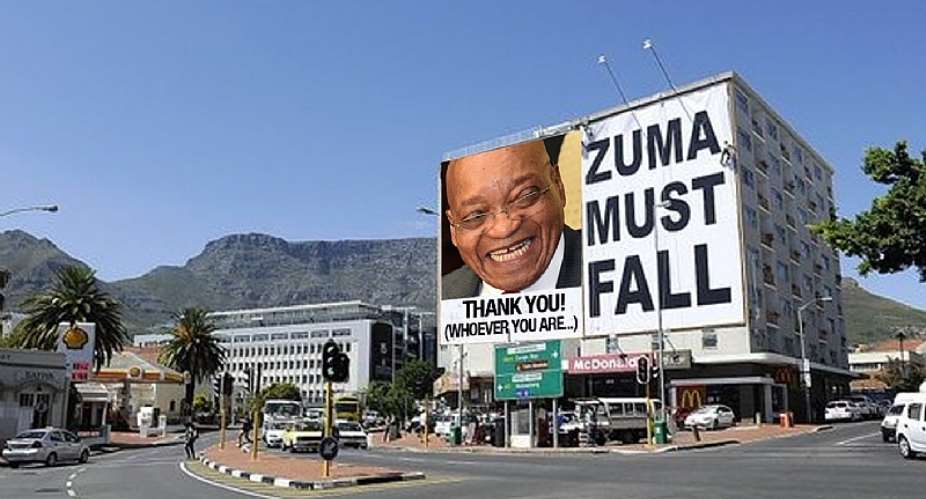
South Africa’s time to really understand the impact and real meaning of state capture has arrived much quicker than everyone had expected. The South African Human Rights Commission (SAHRC) is going through pain and is failing to comprehend liberal intolerance and violence. A legal outcome involving human rights violations in Mpumalanga by farmers is a good reason to be believe that real state capture is now
What has been happening in South Africa in the past three decades is an extreme form of violence directed at keeping dissenting voices in their lane using false narratives. The media and powerful liberal voices fashioned a state capture discourse, which was sold a reality to the novice voter in South Africa.
Undeniably, a South African voter is to inexperienced and ill-informed to detect when he or she is being misled. That goes for many political players whose naivety and eagerness to be recognised in certain quarters. A combination of these two factors means that the black majority continues to be blindsided in all issues that are important, from economic transformation to land reform.
The strategy to marginalise the black majority is quite simple but also sophisticated at the same because it takes an incessive eye to detect misdemeanour. We live in a liberal world where a powerful minority, usually wealthier and influential, dictates what people should eat, say, watch and listen. Some core liberal values, pluralism, inclusiveness and egalitarianism, have been converted into a rigidly intolerant dogma.
Everywhere in the world, “Liberals are increasingly religious about their own liberalism, treating it like a comprehensive view of reality and the human good.” This is a form of intolerance that is currently emasculating and marginalising a black voter. Liberal autocracy is busy poisoning South African civic life and this manifests in more ways than one.
The highest stage of liberal intolerance in South Africa
We are at the highest stage of intolerance that fosters one-directional thinking and weaponised secularism. Liberal secularists use their power to impose their will and dictate what everyone has to, deteriorating South Africa’s democracy into a big fuss that is worthless for the black majority. As Aubrey Matshiqi argues, the black majority is a cultural minority that has no say in the re-shaping of the post-apartheid society.
Liberal violence and intimidation are potent weapons surpass violent street crimes. Framed under the ‘best constitution in the world’ that prioritises sexual rights, private property and re-apartheidisation ahead of hunger, land, decent jobs, freedom of choice and dignity for black South Africans. A vote is used to legitimise this violence, and 29 May elections put everything to context.
Since the early days of democracy, violence has been routinely used to control plurality of voices and equality in South Africa. Liberal violence is obscured by the concealment and displacement of violence to spatial ‘peripheries’ where they are less likely to be detected. The media and the law have been instrumental in executing anyone who is perceived not to be identifying with South Africa’s liberal project.
Although there are many instances where this violence was brutally unleashed, there are few instances that worth mentioning: Ostracisation of NN7, state capture, Marikana massacre, John Hlophe impeachment and Zuma law. All these violent acts were not initiated in Soweto or Mbumbulu but in Sandton and Western Cape suburbs, which now want to secede from their botched liberal project of the ‘new South Africa. The mess will take years to be fully understood.
South African Huma Rights Commission caught up in confusion
The SAHRC is one the Chapter Nine institutions together with the Public Protector, Commission for Gender Equality and the Auditor-General. These institutions are in place “to ensure that organs of state live up to the ideals of constitutionalism and are held to account for their actions or inactions.” Appreciably, every citizen has the right to launch a complaint at the SAHRC and the Public Protector in South Africa, thereby exercising their human rights. This was necessary to allow the downtrodden to access the protection by the constitution and the law in general.
Without exception, the SAHRC received a case in 2018 of Mr. Tubatsi Mosotho and other occupiers of the De Doorn Hock Farm in Mpumalanga who alleged that their human rights had been violated after Francois Boshoff deprived them of access to this water source. In 2016, Boshoff reportedly unilaterally introduced restrictions on the occupiers’ use of borehole water on the farm. It was logical for these complainants to reach out to the SAHRC for help since litigation is too expensive.
The SAHRC found Agro Data CC and Boshoff had breached the occupiers’ rights of access to water protected by the Extension of Security of Tenure Act (ESTA) and the constitution. Then it tried to flex its muscle by issuing directives to Agro Data CC and Boshoff in 2019. It ordered the parties “to restore the supply of borehole water to the occupiers, begin engaging with the occupiers about the management of water on the farm, and provide the occupiers with relevant information about the water supply, such as scientific reports and costs.”
When the Agro Data CC and Boshoff failed to comply with the directive, the SAHRC approached the Mbombela High Court in 2022, which dismissed its application for declaratory relief. As a protector of human rights itself, the SAHRC received a dose of neoliberal violence: it was told its arm is not as long as it believed. It then appealed the court’s decision to seek clarity about its powers. Again, the Supreme Court of Appeal affirmed the lower court’s decion as recent as August 2024.
Now the SAHRC is going to the Concourt to access the privillege of Zuma law, the the Public Protector enjoys.
Zuma Law as part of liberal violence
For many years, legal experts always argued that the remedies of the Public Protector were not political and not judicial, until it was time to persecute the boogeyman of South African politics, Jacob Zuma. Today, South Africa sits with a complex situation where one Chapter Nine institution has teeth of steel and another is like a little baby without teeth.
Zuma law is an interesting developemnt in South Africa jurisprudence and common law for two reasons. The Zuma headache not only turned the Concourt to a court of first instance but also made to sentence its first prisoner. To this day, this topic still attracts attention and controvery but liberal dogma makes legal experts indifferent whether the Concourt erred or not. As a weapon of the powerful, the law was unfairly discharged to violate Zuma.
Many years earlier, courts turned a little chihuahua into a bull dog when it was ruled that Public Protector decisions were binding. Zuma was the target of unbated liberal violence, who continue to use every platform to humiliate him. This has become normal because a naïve South African voter has become numb to human rights violations: rules of fairness and justice lose meaning when a person he or she does not like is denied rights.
The SAHRC has fallen victim of this extreme violence. It tried to do what it thought was within its scope of the law but it has been told that its directives are not binding, a complete opposite of the empowerment of the Public Protector. Unfortunately, the matter concerned South Africa’s foremost invisible citizens (land and rightless people on farms) have borne the worst forms of violence under democracy and nobody even remembers them.
As SAHRC Chair Chris Nissen points out, “People who work on farms continue to face many human rights challenges such as evictions, deprivation of basic services and continue to be marginalised. The Commission’s role is to be the protector of the vulnerable and the marginalised.” The neoliberal dispensation continues to protect the pwerful and their violence on the subaltern classes.
The law is now going beyond neglecting the lower classes but now targets institutions that want to protect these former victims of slavery, colonialism and apartheid. It is shameful that the SAHRC is now caught up in a deadly storm created by liberal indiference and brutality. Nissen thinks the Concourt will “provide legal clarity, enabling the Commission to protect human rights and restore dignity to the thousands of people who seek our help."
May be the SAHRC should also investigate Zuma to get strong teeth as the Public Protector.
Siya yi banga le economy!


 “We need payment, not meetings” – Striking teacher unions tells Education Minist...
 NPP challenges GH¢2,650 cocoa producer price for 2026/27 season
 Mahama explains why 'humiliating' US, Ghana health deal was thrown out with spee...
 Education Minister meets teacher unions today for threatening strike
 Galamsey: 'Either Mahama is lying or suffering amnesia for denying promise to de...
 Adu-Boahen’s lawyer files no-case submission in GH¢49.1m trial
 BoG Governor Dr Johnson Asiama explains why he exited from GoldBod Board about f...
 Akuapem Odwira @200: 'Don’t abuse power, Ghanaians are watching us' — Osahen Afe...
 GES says NCPTA has no authority to impose prospectus purchases on schools
 2nd Deputy BoG Governor Matilda Asante-Asiedu replaces Dr. Asiamah on GoldBod bo...


