




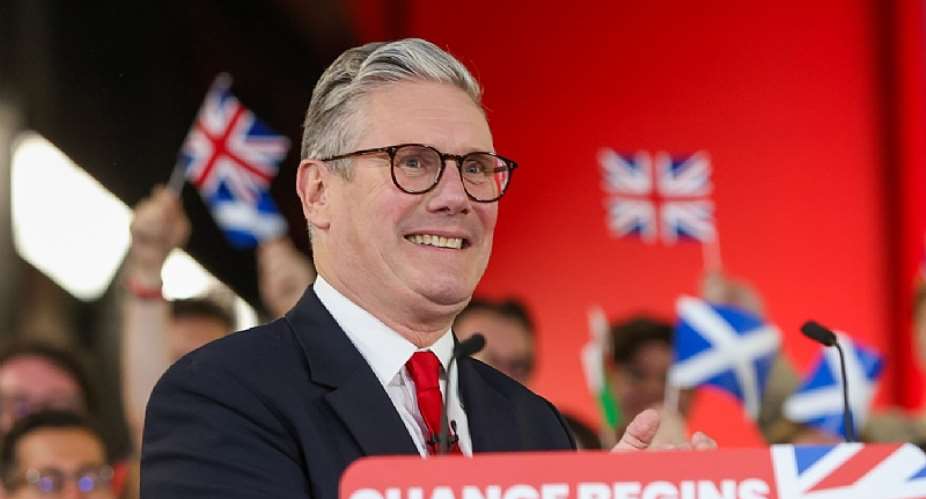
In British politics, the formation of a new Labour government often heralded renewed hope and anticipation among British people. Long before the 4 July 2024 general election, Labour governments were distinguished for their progressive reforms which centred on commitment to social justice, public welfare and reduction of inequalities.
As the Sir Starmer-led Labour administration takes over the helm of affairs in the lives of British people, it is normal that the citizens have great expectations. There are things they expect the new government to do, or to put in place. These include stabilising the economy, improving public services, dispensing social justice, and offering a robust response to such contemporary challenges as climate change, digital transformation and global peace.
Since it was founded in 1900, the party has traditionally championed the cause of the working class families in an effort to create a more equitable society. Memorable times in Labour's history include the post-World War II government of Clement Attlee which established the National Health Service (NHS) and nationalized major industries, and the Tony Blair administration, which introduced the minimum wage and invested heavily in education and health. Understanding this historical context will be crucial in any attempt to appreciate the expectations British citizens have for the new Labour government of Sir Kier Starmer. For one thing, the party's past achievements set a high bar for performance, especially in such areas as healthcare, education, and social welfare. The electorate's current expectations are therefore informed by a blend of Labour's historical successes and the urgent need to address contemporary issues.
Talking of contemporary issues, economic inequality remains a pressing concern of British citizens, with disparities in wealth and income seemingly continuing to widen. Therefore, British people expect the new Labour government to prioritize reducing this gap through progressive taxation, higher minimum wages, and robust social safety nets. Policies aimed at wealth redistribution, such as increasing taxes on the highest earners and corporations, will be expected to fund public services and welfare programmes.
Labour governments are traditionally known as champions of employment rights and job creation. The new administration is consequently expected to focus on creating high-quality jobs, particularly in boroughs that may have suffered from economic neglect. For the government, therefore, investing in infrastructure projects, green technologies and digital industries will be a pathway to generating sustainable employment opportunities. And while ambitious spending plans are often associated with Labour policies, British people will expect the government to manage public debt responsibly. Knowing that balancing the need for investment in public services with fiscal responsibility is a delicate task, they expect transparent communication on how the Sir Starmer-led government plans to fund its initiatives without compromising the country's financial stability.
The National Health Service (NHS) is a crucial cornerstone of British society and its update is of paramount concern to Britons who anticipate substantial investment in the organisation. They desire the new government to reduce waiting times, increase staffing levels and improve the quality of care. Addressing the backlog of procedures and appointments caused by the COVID-19 pandemic is also a critical priority to them.
Investing in education is another significant expectation. British citizens expect the Labour government to improve on the quality of primary, secondary and higher education in the country. This will include addressing such issues as overcrowded classrooms, teacher shortages and outdated curricula. There is also a strong demand for increased funding for vocational training and apprenticeships to equip the workforce with skills relevant to modern economy.
Affordable housing and social care still remain perennial issues in today's UK. The new Labour government is expected to address the housing crisis by building more affordable homes and regulating the private rental market to protect the interest of tenants. In addition, improving social care for the elderly and vulnerable, ensuring that it is both accessible and affordable, is a crucial expectation.
British people expect the Labour government to take a firm stance against all forms of discrimination, including racism, sexism, and homophobia. This should not only involve legislative measures but also initiatives to promote diversity and inclusion in all sectors of the society. Strengthening legislation on hate crime and ensuring that the rights of marginalized groups are protected are very vital to most Britons. By the same token, gender equality remains a significant issue, and citizens expect the Labour government to work towards closing the gender pay gap, ensuring equal representation of women in leadership roles, and supporting policies that promote work-life balance, such as flexible working hours and parental leave. In the same vein, enhancing social mobility is an equally critical expectation, with policies aimed at providing equal opportunities for individuals, their backgrounds notwithstanding. This will include ensuring that children from disadvantaged backgrounds have access to high-quality education, mentorship programmes, and pathways to higher education and employment.
As climate change becomes an increasingly urgent issue, the British people expect the Labour government to take decisive action towards environmental sustainability. This will include a commitment to transitioning to green energy sources, reducing carbon emissions and investing in renewable energy infrastructure. Such policies as subsidies for electric vehicles, support for green technology innovations and incentives for businesses to adopt sustainable practices will definitely be anticipated. Beyond energy, there is a broad expectation for policies that protect the natural environment. This will include initiatives to preserve biodiversity, reduce pollution and manage waste more effectively. Strengthening regulations to protect green spaces and wildlife, as well as promoting recycling and sustainable consumption practices, are key expectations.
The digital divide remains a sensitive issue in Britain, with disparities in access to technology and the internet affecting education, employment and social inclusion. The Labour government is expected to prioritize bridging this divide by investing in digital infrastructure, ensuring that all citizens have access to high-speed internet, and providing digital literacy programmes. As innovation has become a driver of economic growth and societal advancement, British people expect the Labour government to support research and development, particularly in such emerging fields as artificial intelligence, biotechnology and clean energy. This will also include funding for scientific research, partnerships with universities, and support for start-ups and small businesses in innovative sectors.
The new Labour government is expected to take a proactive approach in rebuilding and strengthening Britain's international relationships, particularly in the post-Brexit era. This will include fostering strong ties with especially the Commonwealth countries, as well as enhancing relationships with global partners. The British public expects a robust foreign policy that promotes peace, cooperation, and mutual respect on the global stage. British people also anticipate that the Labour government will play a leading role in addressing global humanitarian issues. This will include providing aid to conflict zones, supporting international development projects and taking a strong stance on human rights violations worldwide. Promoting global health initiatives, such as supporting vaccine distribution and combating pandemics, is also a critical expectation.
By any stretch of the imagination, what Britons expect from their Labour government are both extensive and multifaceted but they reflect the diverse and dynamic needs of contemporary society. From economic stability and growth to healthcare, social justice, environmental sustainability, digital transformation, and global leadership, the Labour government faces the challenge of addressing a wide array of pressing issues.
Meeting these expectations requires not only bold and innovative policies but also transparent communication and a commitment to inclusive governance. By drawing on its historical legacy of social justice and reform, the Labour government has the opportunity to enact meaningful changes that can improve the lives of millions of Britons and set a progressive course for the future. The success of this government will be measured by its ability to deliver on these expectations and the assurance that British citizens' desire for equity, prosperity and sustainability translates into reality for all residents.
Furthermore, the British monarchy, with its rich history and enduring presence, remains more than just a historic documentation. In the contemporary world, it serves as a symbol of unity in diversity, particularly in a multicultural nation like the United Kingdom. As people from various parts of the world, with their unique traditions and cultures, have adopted Britain as their home, the monarchy stands as a unifying force that embodies the essence of this coexistence. For the Labour government, therefore, this monarchical symbolism offers a profound opportunity to foster global cooperation, beginning with the Commonwealth Nations and extending to the broader international community.
The British monarchy has long been a fixture of stability and continuity in the United Kingdom. Over the centuries, its role has evolved from wielding absolute power to serving as a constitutional monarchy where the sovereign's duties are largely ceremonial. Despite these changes, the monarchy has retained its significance as a symbol of national identity and unity. In today's globalized world, the British monarchy represents more than just British heritage. It envelopes a diverse and multicultural Britain. With members of the Royal Family actively engaging in various cultural and charitable activities, the monarchy demonstrates an inclusive approach that resonates with the diverse population of the UK. This modern interpretation of monarchy aligns with the values of unity and diversity that are crucial in a multicultural society.
The Commonwealth of Nations, a political association of 56 member-states, most of which were territories of the former British Empire, represents a significant sphere of influence for the British monarchy. King Charles III, as the head of the Commonwealth, symbolizes the shared history, values, and aspirations of these diverse nations. This connection provides a unique platform for the Labour government to engage with these countries on matters of mutual interest, including trade and peace initiatives.
The Labour government can utilize the monarchy's symbolic value to strengthen ties with Commonwealth nations. By visiting shared history and values, the government can foster a sense of unity and cooperation among member states. The Commonwealth represents a significant economic bloc with immense potential for trade. By leveraging the monarchy's symbolic influence, the Labour government can negotiate favourable trade agreements that benefit all parties involved. This can include reducing trade barriers, enhancing market access and promoting sustainable development initiatives that align with the values of the Commonwealth. Cultural diplomacy can also play a crucial role in strengthening Commonwealth ties. By promoting cultural exchange programmes, educational partnerships, and collaborative research initiatives, the Labour government can foster a deeper understanding and appreciation of the diverse cultures within the Commonwealth. This can help build stronger, more resilient relationships that go beyond economic interests.
The British monarchy's historical and contemporary role as a symbol of unity and continuity can be leveraged to promote global peace initiatives. The Labour government can use this symbolic power to foster dialogue and cooperation on such critical issues as conflict resolution, climate change and human rights. By positioning the UK as a mediator and advocate for peace, the government can contribute meaningfully to resolving international conflicts and fostering a more stable global environment. Hosting global peace conferences under the auspices of the British monarchy can also provide a platform for international leaders to come together and discuss pressing global issues. These conferences can facilitate the exchange of ideas, promote collaborative solutions, and build consensus on actions needed to address such challenges as terrorism, regional conflicts, and humanitarian crises. The Labour government can equally leverage the monarchy's symbolic value to garner support for international development initiatives. By championing projects that promote education, healthcare, and economic development in developing countries, the government can contribute to global stability and peace. These initiatives can also enhance the UK's reputation as a leader in international development and cooperation.
To effectively leverage the monarchy's symbolic power, the Labour government must integrate these strategies into its policy formulation and implementation processes. This will involve developing a comprehensive strategy that outlines how the monarchy's symbolic value can be used to achieve specific foreign policy objectives. This strategy should include clear goals, actionable plans, and measurable outcomes. It will involve engaging with members of the Royal Family to support and participate in initiatives that align with the government's objectives. This collaboration can enhance the visibility and impact of these initiatives, both domestically and internationally. Using public diplomacy to communicate the government's efforts and achievements in leveraging the monarchy for global engagement is a worthwhile key. This can include media campaigns, public speeches, and social media outreach to raise awareness and garner support for the government's initiatives.
The British monarchy, with its deep historical roots and contemporary relevance, stands as a powerful symbol of unity in diversity. For the Labour government, this symbolism offers a unique opportunity to enhance global cooperation, beginning with the Commonwealth Nations and extending to the broader international community. By leveraging the monarchy's symbolic power, the Labour Party can strengthen trade relations, promote cultural exchange, and advance global peace initiatives. Through strategic planning, collaboration, and partnership-building, the Labour government can position the UK as a leader in fostering unity, diversity, and global cooperation. In doing so, it can contribute to a more peaceful, prosperous, and interconnected world. These are what Britons expect from Sir Kier Starmer's government.
* Asinugo is a London-based British-Nigerian veteran journalist, author and publisher.


 EOCO returns seized £6,700, ¢2,750 cash, phones and laptops to Hanan Abdul Wahab
 Africa launches own credit agency in bid for cheaper borrowing
 'We want new friends who'll treat us as equal partners' — says Foreign Affairs M...
 ‘Let’s not be too hard on civil Society groups who are still critical of us’ — A...
 Trump says he will speak to Putin over reported plague death in Russia
 'I will not share NPP strategies with my twin brother Alhassan Abanga in NDC' — ...
 Afenyo-Markin insists National Cathedral should be completed
 ‘GoldBod’s structure encouraging galamsey, buys whatever aggregators bring’ – Af...
 Mahama holds discussions with India's External Affairs Minister
 Afenyo-Markin cautions NPP members against acts that undermine the party


