




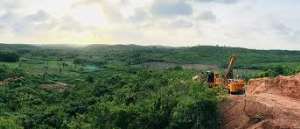
The mining sector plays a crucial role in Ghana's economy, contributing significantly to its GDP and providing employment opportunities for thousands of Ghanaians. However, the political economy surrounding this sector is complex, with various stakeholders vying for control and influence. This essay aims to explore the political economy of the mining sector in Ghana, analyzing the key actors, their interests, and the impact of their actions on the country's economic development.
Historical Context: To understand the political economy of the mining sector in Ghana, it is essential to examine its historical context. Mining in Ghana dates back centuries, with gold being the primary mineral of interest. During the colonial era, the British exploited Ghana's mineral wealth, leading to the establishment of large-scale mining operations. After gaining independence in 1957, Ghana nationalized its mining industry, creating the Ghana Consolidated Diamonds (GCD) and the Ghana Consolidated Goldfields (GCG). However, economic challenges and mismanagement led to the decline of these state-owned enterprises.
Policy Reforms and the Rise of Foreign Investment: In the 1980s, Ghana implemented structural adjustment policies recommended by the International Monetary Fund (IMF) and the World Bank. These reforms aimed to attract foreign direct investment (FDI) and promote private sector participation in the mining industry. As a result, multinational mining companies, such as Newmont, AngloGold Ashanti, and Gold Fields, entered Ghana and established large-scale mining operations. While these investments brought much-needed capital and technology, they also raised concerns about the exploitation of Ghana's mineral resources and the distribution of benefits.
Key Actors and their Interests: The political economy of the mining sector in Ghana involves several key actors, each with their own interests and motivations. These include:
1. Government: The Ghanaian government plays a central role in regulating the mining sector, setting policies, and granting licenses. Its primary interest lies in maximizing revenue generation, attracting FDI, and ensuring sustainable development. However, balancing these objectives with environmental protection and social welfare remains a challenge.
2. Multinational Mining Companies: Foreign mining companies have a vested interest in maximizing profits and shareholder value. They bring capital, technology, and expertise to the sector but are often criticized for their environmental impact, labor practices, and the repatriation of profits.
3. Local Communities: Communities living in mining areas have a significant stake in the sector. They expect job creation, infrastructure development, and social investments from mining companies. However, they also experience negative externalities, such as land degradation, displacement, and pollution.
4. Civil Society Organizations (CSOs): CSOs play a crucial role in advocating for the rights of local communities and the sustainable management of natural resources. They often act as watchdogs, monitoring the actions of mining companies and the government.
5. Traditional Authorities: Traditional authorities, such as chiefs and elders, hold considerable influence in mining areas. They negotiate with mining companies on behalf of their communities and play a role in resolving conflicts and ensuring equitable resource distribution. Challenges and Opportunities: The political economy of the mining sector in Ghana faces several challenges. These include:
1. Environmental Degradation: Mining activities, especially illegal small-scale mining (galamsey), have led to deforestation, water pollution, and land degradation. Balancing economic development with environmental sustainability remains a significant challenge.
2. Revenue Management: Ghana has struggled with effectively managing revenue generated from the mining sector. Issues of corruption, mismanagement, and lack of transparency have hindered the equitable distribution of mining proceeds.
3. Social Conflicts: The mining sector has been a source of social conflicts, particularly between mining companies and local communities. Disputes over land rights, compensation, and benefits sharing have often resulted in protests, violence, and disruptions to mining operations.
Despite these challenges, the mining sector in Ghana also presents opportunities for economic development and poverty reduction. These include:
1. Job Creation: The mining sector provides direct and indirect employment opportunities, contributing to poverty reduction and economic empowerment.
2. Infrastructure Development: Mining companies often invest in infrastructure development, including roads, schools, hospitals, and water supply systems, benefiting both mining communities and the broader population.
3. Technology Transfer: Foreign mining companies bring advanced technologies and best practices, which can enhance Ghana's mining capabilities and promote knowledge transfer.
Conclusion: The political economy of the mining sector in Ghana is a complex web of interests, with the government, multinational mining companies, local communities, civil society organizations, and traditional authorities all playing crucial roles. Balancing economic development, environmental sustainability, and social welfare remains a challenge. However, with effective governance, transparent revenue management, and inclusive stakeholder engagement, the mining sector can contribute to Ghana's economic growth and sustainable development.


 Macron promises tough punishments for rioters during nationwide day of action
 Trump endorses embattled Israeli PM Netanyahu ahead of October 27 election
 We are going to provide emergency airstrip in regions without airports — Mahama
 Nana Konadu maiden memorial mass set for October 23
 'Double standards are not helpful, wrong yesterday is wrong today' – Ablakwa on ...
 NPP has resolve internal wrangling — Bawumia
 Ghana, US Virgin Islands agree on recruitment of Ghanaian teachers, nurses
 “Soldiers Will Stay There”—Mahama Declares Permanent Military Presence in Forest...
 ‘No Borrowing Involved’ — Mahama Rolls Out US$10bn New Economy Policy
 “Ask Jean Mensa to resign first”—Tanko-Computer fires back


