




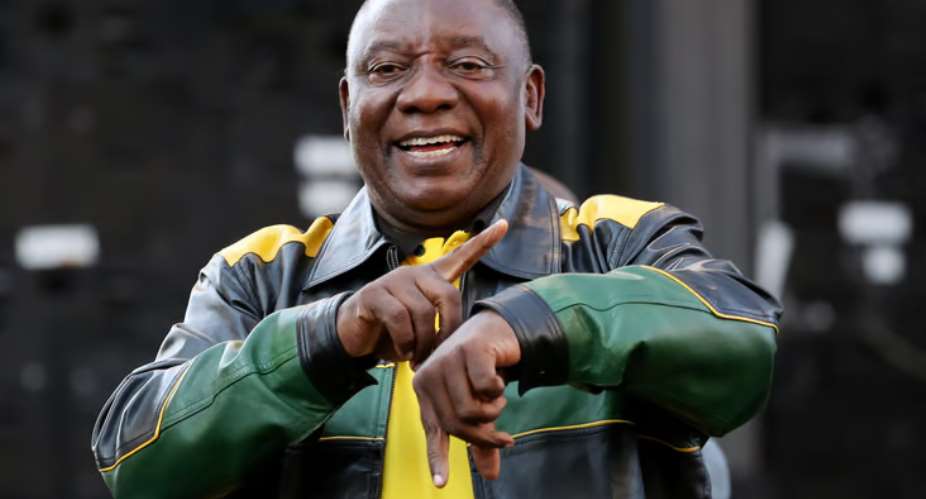
The democratic elections in South Africa have been more about the ANC losing its one-party dominance than anything else. The arrival of the MK Party on the national political scene was initially dismissed as a non-issue, with the focus being on new players like Rise Mzansi, BOSSA and others. Much impact was expected to come from the DA, the IFP and the EFF, which have historically given the ruling party a run for its money.
However, the gains made by the MK Party and the Patriotic Alliance will likely significantly change South Africa's political landscape for years. In KwaZulu-Natal and the Northern Cape, the ANC quickly went from being dominant and arrogant to much weaker. Even Gauteng province, in addition to its three large metros – Johannesburg, Ekurhuleni and Tshwane – has joined the ANC’s state of wilderness, mirroring the party’s struggles elsewhere.
Given these electoral setbacks, the ANC must undertake weighty introspection and re-evaluation of its policies and strategies. It must address the root causes of voter discontent, such as economic stagnation, corruption and inadequate service delivery, which have eroded its support base. Reconnecting with its values and addressing the country’s pressing issues will be crucial for the ANC if it hopes to regain its footing and remain a significant force in South African politics.
This post-mortem would be incomplete without the party seriously looking at internal squabbles and rampant factionalism. However, one issue that typically garners attention is how the ANC has dealt with its presidents when they reach their second terms as heads of state. Before their terms ended, former leaders like Thabo Mbeki and Jacob Zuma were unceremoniously removed from the Union Buildings. It is likely that the incumbent, Cyril Ramaphosa, has always been aware that he may face a similar fate.
The ‘two centres of power’ phenomenon and tensions
Following the ANC’s poor showing at the polls, political scientist Sizwe Mpofu-Walsh asked on X, “Will Cyril Ramaphosa survive this?” The ANC is not known for accountability and decisiveness when it comes to enforcing its code of conduct and holding its leaders or public representatives accountable for their indiscretions. Neither Ramaphosa nor the leadership of the ANC GP were held responsible for poor results in the last municipal elections, which led to the party’s displacement in Tshwane, Johannesburg and Ekurhuleni.
This time around, Ramaphosa will be scapegoated for the 29 May elections, and his resignation will be demanded. Only he will be made to dance to the music, not the Top Seven, the NEC, Siboniso Duma (KZN), Panyaza Lesufi (Gauteng), Zamani Saul (Northern Cape), or grassroots leaders. The reason for this impending decision to dislodge Ramaphosa traces back to the same issues that led to the demise of Mbeki and Zuma.
The predatory tendencies will inform the motivation to remove him from many players within the ANC. Mbeki observed that “the historic value system of the ANC serving the people with honesty‚ sacrifice and selflessness has been replaced by a rapacious and predatory value system”. In short, la politique du ventre (politics of the belly) drives many interests and actions in the ruling party. This implies that holding positions within the ANC ensured individuals access to state power at the expense of serving the people. People vying for positions and influence within the ANC often aim for the presidency as a means of personal advancement, leading to slates and factionalism.
The lack of synchronisation of party and state elections is at the core of the instability between Luthuli House and the Union Buildings and helps factionalists, mafias and careerists in the ANC. This disconnect in timing exacerbates tensions and complicates governance by creating conflicting mandates and priorities. For example, the expression ‘two centres of power’ was used in 2007 because Mbeki sought a third term as ANC president. This scenario could have resulted in Mbeki leading the ANC while a different individual governed the country.
In 2017, the ANC attempted to manage the notion of ‘two centres of power’ to prevent past conflicts caused by Mbeki's recall. Ultimately, the ‘two centres of power argument’ was again advanced to remove Zuma in 2018. Zuma responded to the ANC’s decision to recall him as head of state, stating that the argument against the existence of two centres of power in the country was a “very immature way of analysing politics.” Both Mbeki and Zuma trivialised the ‘two centres of power’ phenomenon, indicating the ANC’s lack of readiness to address the situation.
Mbeki argued that there was no such thing as two centres of power, but it was cooked up to achieve a particular thing: careerism in the ANC. This is exactly the same beast that not only led to his downfall but also his successor. Mukoni Ratshitanga dismissed the “two centres of power concept as irritating bubble gum,” suggesting he viewed it as a trivial and bothersome distraction. This explains the ANC’s lack of readiness to address the situation.
Ratshitanga also suggested that the ‘two centres of power’ argument could be manipulated to seize power, resulting in disastrous consequences for the country. While this narrative destabilises the state, its most significant impact is on the ANC, with elections catalysing this recurring issue. Many in the ANC are more concerned about the pork barrel than the election outcome. This implies that it is now Ramaphosa’s turn to be roasted has come: rogue elements and groups are ready to prolong their life-term feasting on state coffers.
The many lives of mercenary-led factions going for ANC leaders
To understand how opportunists, careerists, criminals and mafiosi manipulate ANC processes, it is imperative to scrutinise how the misalignment of party and state elections facilitates the state of mayhem for the party and the country. This allows individuals with ulterior motives to infiltrate the political system solely for personal gain. These elements continuously seek positions of power within the ANC to advance their agendas, such as amassing wealth or exerting control over state resources.
Rogue individuals within the ANC promote factionalism by strategically positioning seating presidents to serve the interests of particular groups or factions within the party. In this way, they present themselves as staunch supporters of a presidential candidate to gain influence and control over the party’s leadership and decision-making processes. Once a faction-backed candidate assumes the presidency, they use their collective position of power to reward loyalists and allies within the party. Hence, there is desperation to be in the NEC, cabinet or any other position of influence in the party or state.
As the faction-aligned president consolidates power within the ANC, supporters strengthen their faction's influence while marginalising dissenting voices and deepening internal divisions. Faction leaders exploit patronage networks, offering favours for loyalty and incentivising alignment with the dominant faction, undermining party unity. This leads to infighting and weakens the ANC’s ability to govern effectively. Operating like a mafia, these leaders use state resources to consolidate power, eliminate rivals, and position loyalists in critical roles, siphoning public funds for personal gain and further entrenching their dominance within the party and state.
In municipalities, the ruthless pursuit of power leads to politically inspired killings and persecutions, silencing dissent and eliminating threats. Rival factions or individuals challenging ring-leaders’ authority are targeted, creating a climate of fear and solidifying control over resources and contracts. This blurs the line between politics and organised crime, resulting in a criminalised state. Within the ANC, ruthless factional individuals exploit public tender systems to divert state resources into their coffers, fueling corruption and patronage that intertwine state and party interests. This ensures control by silencing dissent and intimidating rivals, similar to the terror seen in mafia-controlled southern Italy.
State institutions become vehicles for personal enrichment and political vendettas while the rule of law is eroded. The ring-leaders operate with impunity, their power unchecked by accountability mechanisms, exploiting the state’s resources for their nefarious ends. Some of these details emerged at the Zondo Commission, where the ANC’s murky financing model gained little or no attention. Testimonies before the Commission failed to highlight this entanglement, reflecting the misconception of state capture as the ANC’s factions capture the state apparatus for their individual and faction benefit.
Will Cyril Ramaphosa survive this?
Despite the ANC’s steep slide, Ramaphosa is commended for improving South Africa’s worldwide image, particularly by bringing a historic genocide case against Israel to the ICJ. On the other hand, he has presided over the ANC’s precipitous decrease in voter support, which has coincided with deteriorating public infrastructure, social inequality and crime. Loadshedding has also hampered the economy, and the unemployment rate stands at 33%, with young unemployment at over 45%.
It appears that both internal and external pressures will quicken Ramaphosa’s exit. Externally, the MK and others demand his removal before any deal with the ANC. Meanwhile, perennial survivalists are already pushing for his ouster, highlighting their influence within the ANC. At the 2017 OR Tambo Memorial Lecture, Mbeki emphasised the need to remove these “mercenaries” exploiting the party for personal gain, a sentiment he reiterated in 2021, underscoring the urgency for the ANC to purge opportunists and fulfil its commitment to the people.
For Ramaphosa, the post-election phase is a “difficult position” hallmarked by the talk of coalitions. Analysts suggest that instead of forming a coalition with the MK, a grand coalition with the DA could offer stability for both the ANC and South Africa. They argue that such a partnership could unite the nation and boost investor confidence. However, the situation is not straightforward: pushing for a DA coalition could signal the end of Ramaphosa’s tenure and other options remain equally complex.
Regardless of the choice the ANC makes, opportunists lurk in the background like hawks, waiting to capitalise on any change in leadership.
Siya yi banga le economy!

 President Urges Ghanaians to "Clean Ghana, Save Lives"
 'Stop using our logo on unapproved books' — NaCCA threatens action against offen...
 Nearly 50,000 students receive over GH¢187 million in loans — Student Loan Trust...
 July 10 and 11 declared National General Cleaning Days in seven flood-affected r...
 Recruitment process for 36th batch of Medical Officers and Dentists to begin Jul...
 Here are areas to be affected by ECG's planned maintenance from July 6 to 7
 Deteriorating road in front of Korle Bu hospital raises safety concerns
 JHS student suffers deep cutlass wound after allegedly fondling colleague's brea...
 100% of cabbage samples from Agbogbloshie, Madina Markets fail safety test — Sta...
 Order A-G to give me access to Abu Trica to know his whereabout – Lawyer tells c...

