




The news last week that the long-awaited Consumer Protection Law is soon to become a reality was extremely heartening. It is needed now more than ever because of the practically ‘free-for-all’ prices and practices regime currently tormenting consumers.
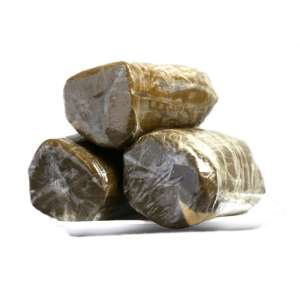
A notable example is what is happening with the Central Region staple food, Fante kenkey – which I confess I’m very partial to, hence this piece.
It seems that the Food and Drugs Authority (FDA) and other food safety monitors have stopped their campaigns against the use of polythene for boiling foods, especially kenkey and banku (types of dumplings made from corn/maize flour). If it’s because the FDA and other agencies think their education has been accepted and their advice being implemented, they need to do a review.
Unfortunately, the reality on the ground is that some kenkey makers still use polythene as the base or foundation wrapper of the kenkey dough, before they add the traditional (plantain) leaves and boil it.
However, the teaching by food specialists is that polythene contains chemicals which when the polythene-wrapped dough is boiled could leach into the kenkey, with serious health consequences, including cancer. Therefore, polythene should not be used at all to boil foods.
In August last year, as widely reported, the Minister for Environment Science, Technology and Innovation, Dr Kwaku Afriyie, met with the Caterers Association in Accra to discuss with them the effects of plastics and government policy.
He even warned them that his ministry intends to liaise with the Ministry of Local Government to make it a criminal offence to use plastics in kenkey and banku preparation, because “studies had found that certain chemicals could leach out of the plastics into the foods …
“Some of these chemicals have been linked to health problems such as metabolic disorders, including obesity and reduced fertility.”
Before that, an earlier caution had been reported, from the Principal Dietician of the Tema General Hospital, Prime Baidoo. He said “when polythene is heated, it releases ‘Bisphenol A’, which when consumed can cause cancer.” Mr Baidoo also advised against the serving of hot foods, such as porridge (‘kooko’), in polythene.
One explanation given for the use of the polythene as the first wrapper is the belief, allegedly, that it moulds the dough better, makes the kenkey firmer.
But if other producers still cook their kenkey successfully without polythene, going the traditional way of using plantain leaves, why should the recalcitrant ones be allowed to put patrons’ health at risk? Why should the deception be allowed to continue?
My recent experiences show a disturbing situation.
On Saturday, February 4, while travelling from the Central Region back to Accra, as many travelers do, I bought some kenkey at Yamoransa Junction, famous for its Fante kenkey. I had requested kenkey that had no polythene wrapper and the seller swore that hers were not polythene-wrapped.
(Incidentally, as with countless other things in this ‘free-for-all era’, kenkey price has now doubled, to GHȼ4 at most places.)
On reaching home and readying for a taste of Yamoransa, I discovered that not only were the leaves three or four times the weight of the mini kenkey they covered, under the multi leaves padding, the kenkey had a polythene wrapper!
Secondly, at the Mankessim lorry station, where I was looking for ‘etsew’, (or banku), another Central Region staple traditionally supposed to be wrapped in leaves, it was the same result: polythene-wrapped! In fact, those on the Mankessim seller’s tray were not even disguising the use of polythene. They were all packaged in polythene; no leaves!
Thirdly, the batch I bought at Winneba Junction, to compare with the Yamoransa competition gave me the same result: polythene base wrappers!
Furthermore, it appears that even in Accra, the problem persists in some vending areas. Samples from the Achimota Police Station area, a known Fante kenkey spot, also turned out to be polythene-wrapped!
Although cooking kenkey with polythene is not yet an offence attracting prosecution, I found it ironical that in this particular case, the kenkey of doubtful safety was being sold directly across the street from a police station!
So, how can consumers be protected from kenkey makers who are either acting out of ignorance, or those who are downright stubborn?
Hopefully, the Consumer Protection Bill, currently in its last stages, as the acting Minister for Trade and Industry, Mr Samuel Abu Jinapor assured Parliament on February 15, includes penalties for using polythene to cook foods, such as kenkey.
And clearly the education needs to be resumed and stepped up, nationwide.
Kenkey is not a delicacy; it’s a staple. This means that some people are regularly eating kenkey boiled in polythene-wrappers, unknowingly poisoning themselves slowly, possibly making them candidates for a ‘gone too soon’ poster.


 ‘Today it’s okay for BoG to make losses, but under Akufo-Addo it was criminal’ –...
 Bawku peace talks yielding encouraging commitment to dialogue – National Peace C...
 Explain GH¢4.55bn ‘revolving capital’ in your accounts – Abena Osei Asare to Gol...
 CDD-Ghana warns money-driven politics could put Ghana at risk of state capture
 11 arrested, weapons seized in joint military-police operation at Kromase
 Two arrested for lynching man accused of stealing shea nuts in Daboya
 GH¢1.7bn loss merely accounting issue, not GoldBod loss – IEA
 GoldBod's 2025 accounts: The Unanswered GH¢4.5477 question — Hon Abena Osei-Asar...
 Agbodza unhappy with slow pace of Tema-Dawhenya road rehabilitation
 Volta NPP divided over appointment of new regional officers

