




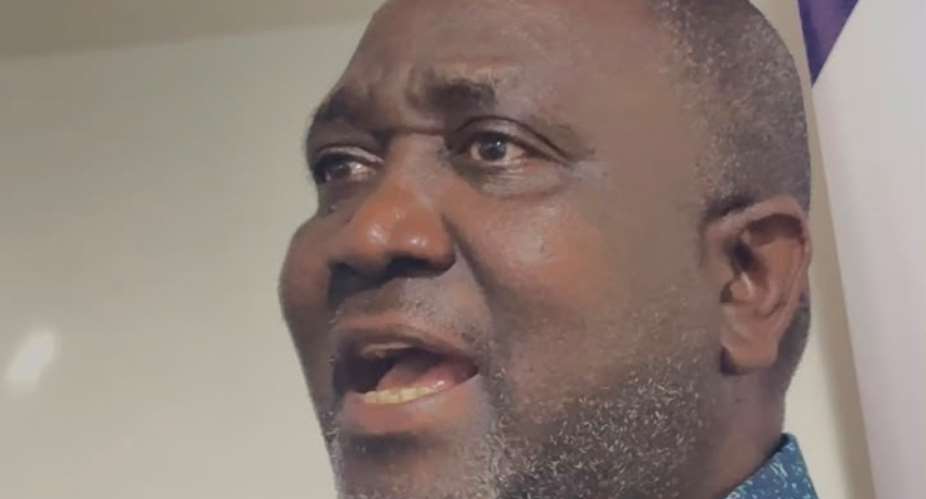
Legal practitioner and journalist George Sarpong has warned that the growing influence of money in Ghanaian politics could create conditions for criminals and powerful individuals to gain control of the state.
He said Ghana risks a dangerous regression if political competition becomes increasingly dependent on who can spend the most money, stressing the need for political leadership to be based on character, ideas and commitment to national development.
“If we allow money to drive our democracy, we will end up having criminal gangsters control the state,” Mr Sarpong said.
He was speaking at a media workshop organised by the Ghana Center for Democratic Development (CDD-Ghana) on regulating political party financing in Ghana.
The workshop formed part of CDD-Ghana’s efforts to build support for a Draft Model Political Finance Law, developed with support from the British High Commission.
The proposed law seeks to improve transparency, accountability and fairness in political party and campaign financing, while addressing gaps in Ghana’s existing legal and regulatory framework.
Mr Sarpong said the media has an important role to play by investigating and bringing greater public attention to the sources of money used to finance political parties and election campaigns.
He urged journalists to go beyond reporting political campaigns and scrutinise who finances candidates and political parties, how much money is involved and what influence such financing could have on political decisions.
He said citizens should also take an interest in the issue because the way political campaigns are financed can determine the quality and character of people who eventually gain control of state institutions.
According to him, if individuals who profit from activities that damage the country are able to use their wealth to gain political power, they could eventually influence the state institutions responsible for regulating those activities.
Mr Sarpong said this could weaken the ability of the state to make and enforce laws in the public interest.
He also suggested that public financing of political parties could be considered as part of efforts to reduce the influence of wealthy individuals, whom he described as “political oligarchs”, over Ghana’s democracy.
He, however, said there must first be broad agreement on what constitutes legitimate and necessary campaign expenditure and how much funding political parties actually require.
Mr Sarpong said stakeholders could determine an appropriate level of campaign financing and establish what portion of that cost the state could reasonably support.
He expressed optimism that political parties could reach consensus on the proposed reforms, noting that representatives and senior figures from different political traditions have participated in the discussions leading to the draft model law.
The CDD-Ghana workshop brought together journalists to examine the current state of political party and campaign financing in Ghana, the gaps in the existing framework and proposed reforms to strengthen regulation of political finance.

 ‘We have turned the tide’ – Ato Forson says Ghana is ready to take off
 Sammy Gyamfi refuses to file defence, hides behind technicalities — Lawyers
 Osahen Afenyo-Markin vows to pursue case against Sammy Gyamfi despite high court...
 Let us all be mentors to our younger generation - Mahama
 Court stops Osenase homecoming over security concerns
 Supreme Court dismisses Solomon Asamoah's bid to stop Sky Train trial
 GRA denies imposing new 20% tax on Netflix, Google and Amazon subscriptions
 Police arrest 16 suspects, seize 209 rounds of ammunition at Gbane mining site
 ‘Mahama has lost his moral high ground’ – Dr Zaato on Affi Agbenyo’s EC appointm...
 Cassava, hemp could offer alternatives to plastics – Zanetor challenges scientis...


